Introduction
Picture this: It is a crisp Sunday morning in your suburban kitchen. You have a fresh batch of pasture-raised eggs ready to go, and you are craving that diner-style, buttery scramble. You pull a shiny pan from your cabinet, drop in a pat of unsalted butter, and crack the eggs. Within seconds, the edges begin to grip the metal, turning into a stubborn, crusty mosaic that requires a copper scrub brush and ten minutes of aggressive soaking later.
Every home cook eventually faces this kitchen crossroads. Standing in the cookware aisle—or scrolling through endless online reviews—you are met with a dazzling array of gleaming metal and vibrant, colorful nonstick surfaces. The debate usually boils down to two heavy hitters: sleek, modern ceramic and indestructible, professional-grade stainless steel.
Choosing between ceramic and stainless steel cookware is not just about aesthetics. It is about how you cook, how much time you want to spend cleaning up, and how your tools perform over years of daily family dinners. During testing in various American home kitchens, we have watched both materials shine under the right circumstances—and falter when mismatched with the wrong cooking style.
This guide breaks down everything you need to know about ceramic vs stainless steel cookware, giving you the real-world clarity required to make an informed investment for your culinary space.
Understanding Ceramic Cookware
Ceramic cookware has taken modern kitchens by storm, largely driven by health-conscious consumer trends and the desire for effortless cleanup. But what actually is it?
True ceramic cookware is made entirely of clay and minerals, baked at high temperatures to create a solid, heat-retentive vessel. However, the vast majority of what consumers buy as “ceramic cookware” today consists of an aluminum or stainless steel core coated with a sol-gel (silicon dioxide-based) nonstick finish. This inorganic coating is completely free of traditional nonstick chemicals like PTFE, PFOA, lead, and cadmium.
The Appeal of Ceramic
- Slide-off release: Eggs, delicate fish fillets, and cheese slide right out of the pan with minimal butter or oil.
- Aesthetic versatility: Available in matte neutrals, pastel shades, and vibrant pops of color that look gorgeous hanging from a pot rack or sitting on open shelving.
- Lightweight handling: Aluminum-core ceramic pans are remarkably light, making them easy to flip, lift, and maneuver with one hand.
Where Ceramic Falls Short
One practical lesson homeowners often discover the hard way is that ceramic coatings have a notoriously finite lifespan. Even with meticulous hand-washing and silicone utensils, the slick nonstick property degrades over time. High heat is the sworn enemy of ceramic; cranking your burner to high can micro-crack the sol-gel surface, permanently ruining its nonstick capabilities.
Understanding Stainless Steel Cookware
Stainless steel is the undisputed workhorse of commercial restaurant kitchens and dedicated home culinary spaces. It is an alloy typically composed of steel, chromium, and nickel, which creates a non-reactive, rust-resistant surface that can withstand decades of heavy use.
Because stainless steel on its own is a relatively poor heat conductor—leading to hot spots that burn your food—quality stainless pans are constructed using multi-clad (or ply) technology. Manufacturers bond layers of aluminum or copper sandwiched between inner and outer layers of stainless steel, ensuring rapid, even heat distribution across the entire cooking surface.
The Appeal of Stainless Steel
- Indestructible build: You can bang it with metal spoons, toss it in a 500°F oven, run it through the dishwasher, and scrub it with steel wool without compromising its structural integrity.
- Superior browning (Fond): Stainless steel encourages food to stick slightly at first, developing a gorgeous caramelized crust (fond) that forms the base of incredible pan sauces and gravies.
- Lifetime investment: A high-quality multi-clad stainless steel skillet bought today will easily perform just as well for your grandchildren.
Where Stainless Steel Falls Short
Stainless steel requires a learning curve. If you drop a cold egg onto a dry, unheated stainless steel pan, you will experience culinary disaster. Mastering temperature control—specifically preheating the pan properly before adding fats—is essential to prevent sticking.
Ceramic vs Stainless Steel Cookware Comparison
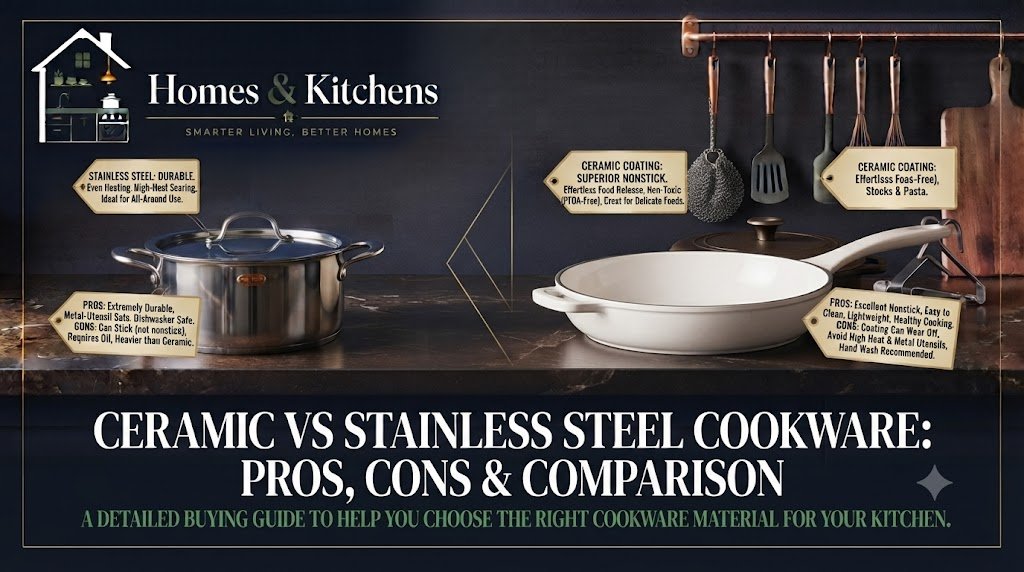
To help you weigh your options at a glance, here is a detailed breakdown comparing how ceramic and stainless steel stack up across critical performance and maintenance categories.
| Feature | Ceramic Cookware | Stainless Steel Cookware |
| Nonstick Performance | Exceptional initially; food slides off effortlessly with minimal oil. | Requires proper preheating technique; food sticks if technique is incorrect. |
| Durability & Lifespan | Moderate; typically lasts 1 to 3 years before nonstick coating degrades. | Exceptional; lasts a lifetime with proper care and maintenance. |
| Heat Tolerance | Low to medium; high heat ruins the nonstick coating. | High; oven-safe to extreme temperatures and handles high burner heat easily. |
| Cleaning & Maintenance | Requires gentle hand-washing; dishwasher use ruins the coating. | Highly forgiving; dishwasher safe and can be scoured with abrasive pads. |
| Browning & Searing | Fair; difficult to achieve deep, rich crusts or fond for sauces. | Excellent; creates incredible crusts, sears meats, and builds rich fond. |
| Chemical Safety | Free of PTFE, PFOA, lead, and cadmium; inert sol-gel coating. | Completely inert metal alloy; non-reactive with acidic foods like tomatoes. |
Pros and Cons of Each Material
Weighing the advantages and drawbacks ensures you select the material that matches your household’s cooking habits.
Ceramic Cookware Pros & Cons
Pros:
- Beginner-friendly: Virtually zero learning curve for cooking delicate foods like eggs, crêpes, and pancakes.
- Low-oil cooking: Requires significantly less butter or cooking oil for healthy daily meal prep.
- Easy cleanup: A quick wipe with a soapy sponge and warm water leaves the pan spotless.
Cons:
- Short lifespan: Designed as a consumable kitchen item rather than an heirloom piece.
- Heat sensitivity: Cannot handle broiler heat or high-temperature searing without degrading the coating.
- Utensil restrictions: Metal spatulas, whisks, and tongs will scratch and ruin the surface instantly.
Stainless Steel Cookware Pros & Cons
Pros:
- Built to last: Zero coatings to chip, flake, or wear away over time.
- Culinary versatility: Excels at searing steaks, sautéing vegetables, simmering acidic tomato sauces, and finishing dishes in the oven.
- Aggressive cleaning allowed: Baking soda, bar keepers friend, and steel wool can restore a scorched pan to mirror-shine perfection.
Cons:
- Sticking learning curve: Demands attention to preheating and fat management to prevent sticky messes.
- Weight: Multi-clad pans can feel heavy and fatiguing to lift when loaded with food.
- Initial cost: Premium tri-ply or five-ply stainless steel sets represent a significant upfront financial investment.
Step-by-Step Guide: Mastering Stainless Steel Cooking
If you are intimidated by stainless steel because food tends to stick, follow this foolproof method to achieve professional results every single time.
- Start with a clean pan: Ensure your stainless steel skillet is thoroughly washed and free of residual oils from previous meals.
- Preheat on medium heat: Place your dry pan on the burner over medium heat for 2 to 3 minutes. Do not blast it on high heat immediately.
- Perform the Leidenfrost water test: Sprinkle a few drops of water into the hot pan. If the water droplets immediately evaporate into a sizzle, the pan is not ready. If the water droplets form a single cohesive bead that dances and skates around the surface, your pan has reached the optimal temperature.
- Add your cooking fat: Once the water test succeeds, wipe the pan dry if necessary, then add your cooking oil, ghee, or butter. Allow the fat to shimmer for 10 to 15 seconds to coat the bottom evenly.
- Add your food: Introduce your protein or vegetables. You should hear an immediate, healthy sizzle. Do not try to move or flip the food right away; allow a natural crust to form, after which the food will release from the metal on its own.
Common Mistakes to Avoid
Avoiding these frequent missteps will extend the life of your cookware and improve your daily cooking experience.
- Using cooking spray on ceramic pans: Aerosol cooking sprays contain lecithin and other propellants that leave an invisible, sticky residue on ceramic coatings. Over time, this buildup bakes onto the surface and ruins the nonstick release. Always use bottled oil or butter instead.
- Cooking on high heat with ceramic: Cranking your stove to high in an attempt to boil water faster or sear a steak in a ceramic skillet destroys the sol-gel coating. Reserve ceramic for low-to-medium heat applications.
- Adding salt to cold water in stainless steel: Pouring salt into cold water inside a stainless steel pot can cause pitting corrosion, leaving tiny permanent speckles on the bottom of the interior. Always wait until water is boiling vigorously before adding salt.
- Thermal shock: Plunging a scorching hot stainless steel or ceramic pan straight into ice-cold sink water can warp the metal, ruining its flat contact with the stovetop. Let pans cool down naturally before washing.
Expert Tips for Longevity
- Storage protection: If you stack your ceramic pans to save cabinet space, always place felt pan protectors or soft cloth dishtowels between them to prevent scratching the delicate coatings.
- The magic cleaner: Keep a container of Bar Keepers Friend powder on hand. It safely erases heat tints, burnt-on grease, and water spots on stainless steel without scratching the finish.
- Match your burner size: Use a burner that matches the diameter of your pan base. Flames licking up the outer sides of a ceramic pan will discolor the exterior paint and degrade the handle attachments.
Practical Checklist: Which Should You Buy?
Answer these quick questions to determine whether your kitchen needs ceramic or stainless steel:
- [ ] Do you cook eggs, pancakes, and delicate fish multiple times a week with minimal fuss? (Lean toward Ceramic)
- [ ] Do you love searing meats, making pan sauces, and want a pan that will last for the next 20 years? (Lean toward Stainless Steel)
- [ ] Are you willing to hand-wash your pans gently and replace them every few years? (Lean toward Ceramic)
- [ ] Do you want dishwasher-safe convenience and the freedom to use metal utensils? (Lean toward Stainless Steel)
- [ ] The Hybrid Approach: Many expert home cooks maintain a hybrid kitchen: a single high-quality ceramic skillet strictly reserved for eggs and quick sautés, alongside a robust stainless steel skillet or set for everything else.
Frequently Asked Questions
Is ceramic cookware completely non-toxic?
Yes, high-quality ceramic cookware featuring sol-gel nonstick coatings is free from PTFE, PFOA, lead, and cadmium. When heated within recommended temperature ranges, it does not release toxic fumes. For deeper insights into home safety and material standards, regulatory bodies such as the U.S. Consumer Product Safety Commission offer helpful consumer resources.
Why does food stick to my stainless steel pan?
Food sticks to stainless steel when the pan is either too cold or too hot when the food is introduced, or when insufficient oil is used. Mastering the preheat phase and allowing a natural sear to occur solves this issue entirely.
Can I put ceramic cookware in the dishwasher?
No. The harsh detergents, high water temperatures, and aggressive water jets inside a dishwasher will break down and ruin the ceramic nonstick coating prematurely. Always hand-wash ceramic pans with a soft sponge.
How long does ceramic cookware last?
With careful daily maintenance—avoiding metal utensils, high heat, and dishwashers—most quality ceramic pans last between 1 to 3 years before their nonstick properties begin to diminish.
Final Verdict
When comparing ceramic vs stainless steel cookware, there is no single universal winner—only the right tool for your specific culinary workflow. Ceramic cookware wins on effortless release and beginner-friendly egg-cooking, making it a darling for quick morning routines. Stainless steel wins on unmatched durability, high-heat searing capability, and lifetime value. For most American home kitchens, adopting a hybrid approach—pairing a dedicated ceramic skillet for breakfast duty with a versatile stainless steel set for daily dinners—delivers the ultimate balance of convenience and performance.
Key Takeaways
- Ceramic cookware offers effortless food release and health-conscious non-toxic coatings, but requires gentle hand-washing and has a limited 1-to-3-year lifespan.
- Stainless steel cookware is virtually indestructible, dishwasher safe, and excels at high-heat browning, though it requires a brief learning curve regarding temperature control.
- Heat management is vital: keep ceramic on low-to-medium heat, and properly preheat stainless steel to prevent sticking.
- A hybrid collection featuring one ceramic pan for delicate foods and a stainless steel set for heavy-duty cooking provides the best of both worlds.
Conclusion
Equipping your kitchen with the right cookware transforms cooking from a daily chore into an enjoyable, creative ritual. Whether you lean toward the vibrant, effortless slide of ceramic or the professional-grade resilience of multi-clad stainless steel, understanding how to care for your tools ensures delicious results for years to come. For more inspiration on upgrading your culinary space, explore our guides on Kitchen essentials and design ideas across Homes.