
Introduction
Picture this: You pull a crisp head of romaine lettuce and a vibrant pint of organic strawberries from your grocery bags on Sunday afternoon. You slide them into the crisper drawer with high hopes of healthy weeknight salads and berry-topped oatmeal. Fast forward to Thursday night. You open that exact same drawer, only to be met by a soggy, slimy puddle of greens and fuzzy, gray-spotted berries. Into the garbage can they go—along with twenty dollars of hard-earned grocery money.
If this scenario sounds painfully familiar, you are certainly not alone. In many U.S. homes, food waste is an invisible budget leak that quietly drains hundreds of dollars every single year. According to estimates often cited by the USDA, American households toss out a staggering amount of edible food simply because of improper storage, mismanaged refrigerator zones, or confusion over expiration labels.
Mastering the art of smart food storage does not require an industrial commercial kitchen or a degree in food science. It relies on understanding the distinct needs of different food groups, controlling moisture and temperature, and choosing the right vessels for the job. Whether you are unpacking a bulk run from Costco or organizing a compact apartment pantry, this comprehensive guide explores the proven methods to extend shelf life, preserve rich flavors, and keep your kitchen running efficiently.
For more inspiration on upgrading your culinary space, explore our curated collection of Kitchen ideas and expert Homes guides.
The Science of Spoilage: Why Food Goes Bad
To keep food fresh longer, you first need to understand the enemy: moisture, oxygen, temperature abuse, and ethylene gas. Every piece of produce, every cut of meat, and every dry grain reacts differently to its environment.
The Enemy Elements
- Moisture: Too much moisture breeds mold and bacterial growth, while too little moisture causes wilting and dehydration.
- Oxygen: Oxidation alters the flavor, color, and nutritional profile of oils, nuts, and cut produce.
- Ethylene Gas: Certain fruits and vegetables naturally emit this odorless, invisible ripening hormone, which accelerates decay in neighboring items.
Expert Insight: One practical lesson homeowners often discover the hard way is that placing ethylene-producing fruits right next to leafy greens is the fastest ticket to spoilage. Keeping them separated changes everything.
Refrigerator Zone Mastery: Where Things Actually Belong
Your refrigerator is not a uniform climate box. The door, the top shelf, and the crisper drawers all experience distinct temperature fluctuations and humidity levels. Loading your fridge correctly is the foundation of effective food preservation.
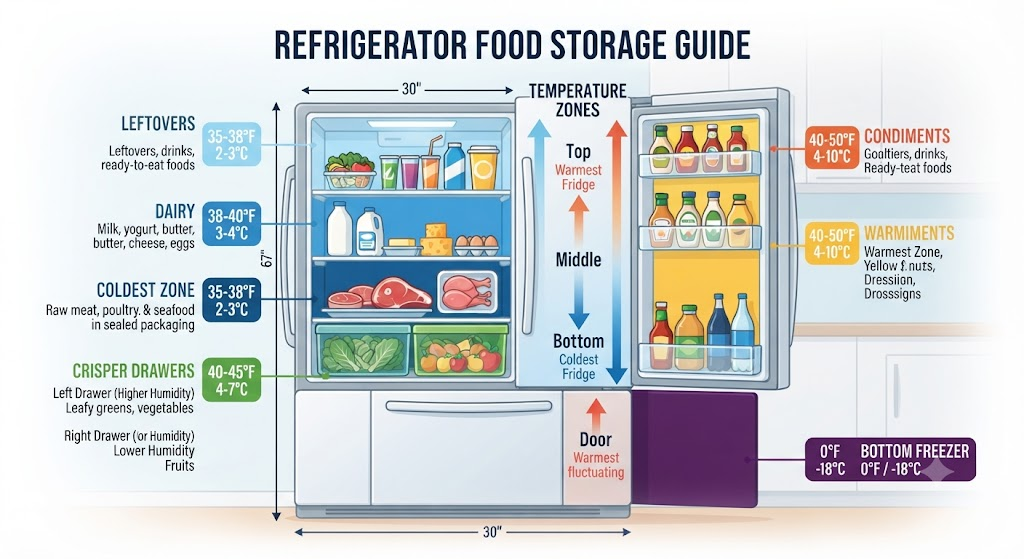
The Door: The Warmest Zone
- What goes here: Condiments, salad dressings, hot sauces, and beverages.
- What to avoid: Milk, eggs, and raw meats. The frequent opening of the door creates temperature swings that spoil perishable proteins quickly.
The Upper and Middle Shelves: Stable Temperatures
- What goes here: Leftovers, dairy products (yogurt, cottage cheese, butter), ready-to-eat snacks, and packaged foods.
- Why it matters: These shelves experience the most stable temperatures in the appliance, making them ideal for items that do not require deep-freeze cold.
The Lower Shelves: The Coldest Zone
- What goes here: Raw meat, poultry, and seafood stored on a rimmed plate or tray to catch accidental drips.
- Why it matters: Keeping raw proteins at the bottom prevents cross-contamination if juices happen to leak onto foods below.
The Crisper Drawers: Humidity Control
- What goes here: Fruits and vegetables. Many modern refrigerators feature high-humidity and low-humidity sliders.
- How to set them: Keep leafy greens and moisture-loving veggies in the high-humidity drawer. Keep ethylene-emitting fruits (like apples and pears) in the low-humidity drawer with the vent open.
Produce Preservation: Keeping Fruits and Vegetables Crisp
Produce is notoriously finicky. Treating a delicate herb the same way you treat a rugged russet potato is a recipe for rapid spoilage.
Leafy Greens
Wash greens thoroughly when you get home, but dry them completely before storing. During testing of various moisture-absorbent methods, wrapping dry greens in a clean paper towel and sealing them inside a breathable container or reusable silicone bag extended their crunch for up to two weeks.
Root Vegetables
Onions, garlic, potatoes, and winter squash belong in a cool, dark, and well-ventilated space—never in the refrigerator. The cold, humid environment of a fridge converts the starches in potatoes into sugar, altering their taste and accelerating rotting. Furthermore, keep onions and potatoes physically separated; onions emit gases that cause potatoes to sprout prematurely.
Berries
Do not wash berries until the exact moment you are ready to eat them. Moisture encourages mold spores to multiply rapidly. Store them in a breathable clamshell container lined with a dry paper towel to absorb stray condensation.
Meat, Poultry, and Seafood Storage Strategies
Proteins demand careful handling to prevent foodborne illness and maintain texture.
- Short-Term Refrigeration: Fresh meat and poultry should be kept in their original store packaging if you plan to cook them within one to two days. If storing longer, transfer them to airtight vacuum-sealed bags or wrap them tightly in butcher paper followed by plastic wrap.
- The Freezing Pivot: If you are not cooking fresh meat within 48 hours, freeze it immediately. To prevent freezer burn—which happens when moisture escapes and oxygen damages the surface—wrap cuts tightly in plastic wrap, slide them into heavy-duty freezer bags, and press out as much air as possible before sealing. Label and date every package.
Pantry Staples and Dry Goods Defense
Pantry pests like weevils, moths, and grain beetles can turn a well-stocked baking cabinet into a nightmare.
Upgrade Your Containers
Paper and cardboard bags offer zero defense against pantry bugs. Once you open a bag of flour, rice, oats, or pasta, transfer it immediately into heavy-duty glass, rigid plastic, or BPA-free containers with silicone airtight gaskets.
The Freezer Trick for Flour and Grains
If you purchase bulk grains or flours, place them in the freezer for 48 hours before storing them in your pantry. This simple step kills any microscopic insect eggs that may have hitched a ride from the manufacturing facility.
Comprehensive Storage Comparison
| Food Category | Optimal Environment | Ideal Container | Average Extended Shelf Life |
| Leafy Greens | Refrigerator Crisper (High Humidity) | Breathable container with paper towel | 10 to 14 days |
| Root Vegetables | Cool, dark pantry/basket | Mesh bag or open-weave basket | 3 to 5 weeks |
| Berries | Refrigerator Main Shelf | Clamshell with paper towel liner | 5 to 8 days |
| Dry Grains & Flour | Cool, dark pantry | Airtight glass or rigid plastic canisters | 6 to 12 months |
| Fresh Meat (Raw) | Bottom Shelf of Refrigerator | Sealed vacuum pouch or original wrap | 1 to 3 days (or freeze) |
| Hard Cheeses | Refrigerator Cheese Drawer | Parchment paper followed by loose plastic | 3 to 6 weeks |
Best Practices Checklist for Every Kitchen
- Audit your fridge temperature: Ensure your refrigerator sits at or below 40°F and your freezer is at 0°F.
- Wash produce only before eating: Keep moisture off fruits and veggies until meal prep time.
- Separate ethylene producers: Keep bananas, apples, and tomatoes away from sensitive greens.
- Invest in clear, airtight containers: Eliminate half-open boxes and bags to protect against pests and staleness.
- Adopt the FIFO rule: “First In, First Out.” Rotate older items to the front of shelves and push new groceries to the back.
- Date your leftovers: Use painter’s tape and a sharpie to mark when casseroles and cooked proteins were prepared.
Common Mistakes to Avoid
- Storing tomatoes in the refrigerator: Cold refrigerator temperatures break down cell walls inside tomatoes, turning their texture mealy and stripping away their vibrant flavor. Keep them on the counter stem-side down.
- Overcrowding refrigerator shelves: Cool air must circulate freely to maintain a consistent temperature. Stuffing your fridge to the brim creates warm pockets where food spoils faster.
- Ignoring the power of foil and parchment: Wrapping blocks of hard cheese in breathable parchment paper instead of airtight plastic wrap stops them from sweating and developing off-flavors.
- Rinsing mushrooms too early: Mushrooms act like natural sponges. Wash them only right before cooking; store them in a brown paper bag in the fridge to absorb excess moisture.
Frequently Asked Questions
How long do cooked leftovers safely last in the refrigerator?
Most cooked meals, soups, and roasted meats remain safe and flavorful for three to four days when stored in airtight glass containers at 40°F or below. When in doubt, rely on the visual and smell test, but remember that dangerous foodborne bacteria do not always produce a foul odor.
Can I freeze milk and eggs?
Yes, but with caveats. Standard milk expands as it freezes; pour out a small amount from the jug before freezing, and thaw it in the fridge before shaking well. Whole eggs cannot be frozen in their shells because the liquid expands and cracks the shell. However, you can crack eggs, whisk the yolks and whites together gently, and freeze them in ice cube trays.
What is the best material for food storage containers?
Glass containers are the gold standard for versatility, durability, and health. They do not stain, absorb odors, warp in the dishwasher, or leach chemicals into warm foods. High-grade, BPA-free plastic or silicone options are ideal for lightweight storage, travel, or freezer use where shattering is a concern.
Final Verdict
Smart food storage is not about adopting a rigid, joyless routine; it is about respecting your ingredients, protecting your household budget, and enjoying fresher, better-tasting meals all week long. By mapping out your refrigerator zones, upgrading flimsy packaging to airtight containers, and understanding moisture control, you can dramatically cut down on food waste without turning your kitchen upside down.
Key Takeaways
- Match your food items to the correct refrigerator zone, placing raw meats at the bottom and condiments in the door.
- Keep moisture away from berries and leafy greens until you are ready to consume them.
- Separate ethylene-producing fruits from sensitive vegetables to prevent premature decay.
- Replace cardboard and paper packaging with airtight glass or plastic containers to defeat pantry pests and lock in freshness.
- Adopt the First In, First Out (FIFO) system to ensure older groceries get used before they expire.
Conclusion
Transforming your kitchen habits takes time, but starting with just one or two small changes—like moving your greens into proper breathable containers or clearing out your refrigerator door—will yield immediate results. Enjoy the peace of mind that comes with an organized, efficient kitchen, and revel in fresher meals every single day.