Introduction
Picture this: You just moved into a new craftsman bungalow or upgraded your suburban kitchen, and you are ready to cook. You stroll down the aisle of a major home goods retailer—or spend hours scrolling through a cluttered online store—and spot a massive 20-piece cookware set gleaming under bright lights. It has every pot, pan, and lid imaginable, all matching in a sleek metallic finish, and the price tag looks like an absolute steal. You click “Add to Cart,” feeling like a master chef ready for your culinary debut.
Fast forward six months. The frying pan’s nonstick coating is flaking into your morning eggs, the sauté pan has warped into a wobbly saucer on your glass stovetop, and half of those 20 pieces are buried in the back of your cabinet gathering dust.
If this scenario sounds familiar, you are not alone. In many U.S. homes, kitchen storage is crowded with impulse-buy cookware that fails under real-world cooking conditions. Buying cookware feels simple until you realize how many technical variables—like gauge thickness, cladding, and heat distribution—impact daily meal prep.
One practical lesson homeowners often discover the hard way is that cheap, bundled cookware sets cost more over time because you replace them every few years. This guide breaks down the most frequent pitfalls, helps you analyze your cooking habits, and shows you how to invest in kitchen tools that last decades.
The All-In-One Set Trap
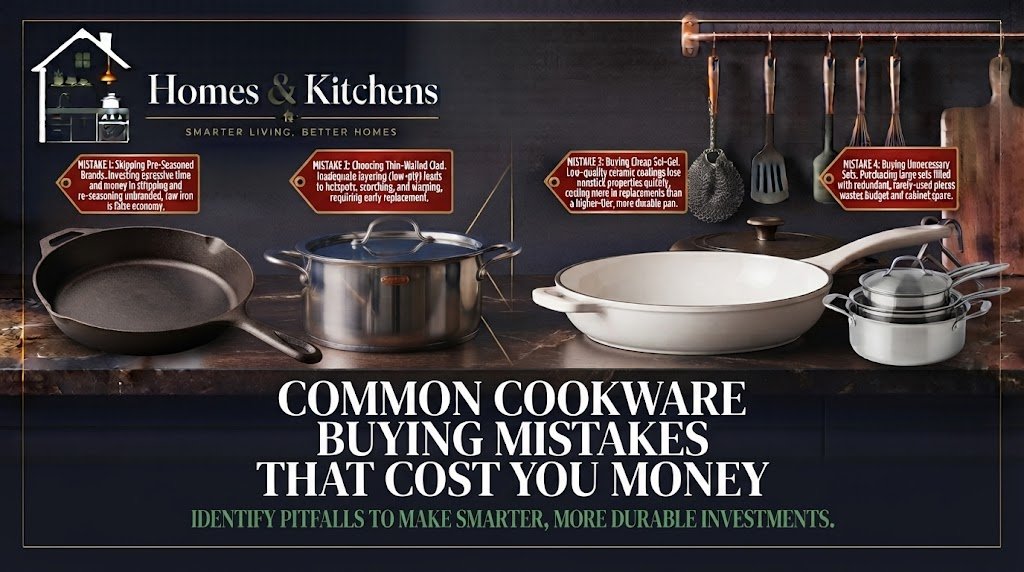
Buying massive, multi-piece cookware sets is one of the quickest ways to waste money. Manufacturers love packaging 10, 15, or even 20 pieces together because it creates an illusion of incredible value. However, these bundles are usually padded with redundant items you will rarely use.
Why Bundles Cost More
When you purchase a massive set, you are paying for filler items like mini saucepans, duplicate lids, cheap nylon utensils, and tiny frying pans that barely fit a single chicken breast. Instead of buying a curated collection tailored to your actual cooking style, you end up with clutter. Furthermore, manufacturers often cut corners on manufacturing quality to keep the box price low.
What to Buy Instead
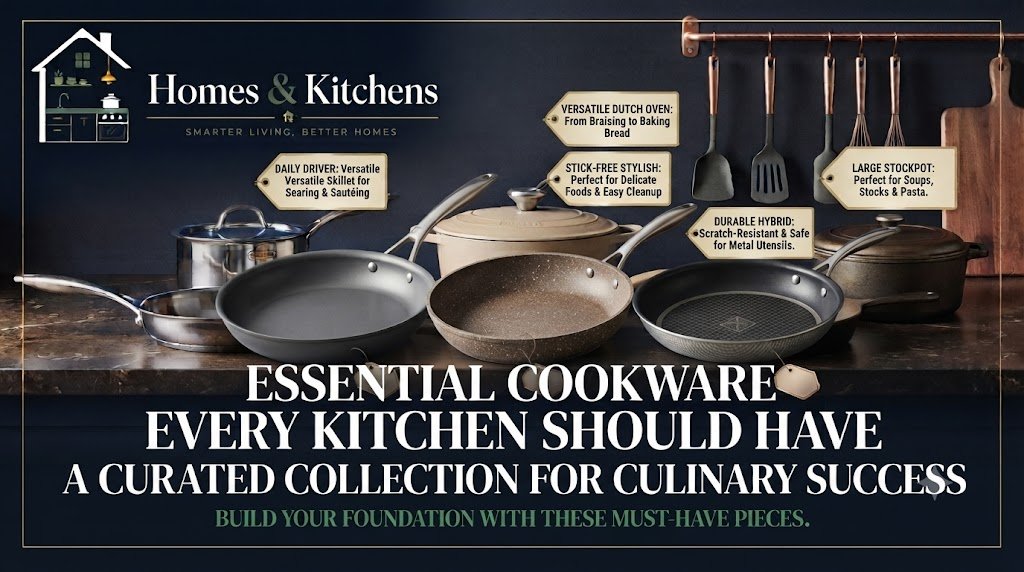
Build an open-stock collection or buy a smaller, high-quality starter set of 3 to 5 essential pieces.
- 8-inch or 10-inch Stainless Steel Skillet: For searing meats and pan sauces.
- 10-inch or 12-inch Nonstick Skillet: Strictly for delicate items like eggs and fish.
- 3-Quart Saucepan with Lid: For grains, sauces, and reheating soups.
- 6-Quart Saute Pan or Dutch Oven: For braising, boiling pasta, and batch cooking.
Expert Tip: Audit your current kitchen cabinet. Pull out every pot and pan you have used in the last three months. You will likely find that you rely on the same three pieces for 90% of your cooking.
Ignoring Stovetop Compatibility
A frustrating and expensive mistake is purchasing gorgeous cookware only to discover it does not function properly on your specific kitchen range. With the rise of induction cooktops across modern American housing renovations, stove compatibility has never been more critical.
How Different Cooktops Interact with Cookware
- Gas Stoves: Highly forgiving. Almost any material works, though thin aluminum or copper can develop hot spots over open flames if the base is too thin.
- Electric Coil Stoves: Flat-bottomed pans are essential to ensure even contact with the heating element. Warped pans wobble and cook unevenly.
- Glass and Ceramic Cooktops: Require completely flat, heavy-bottomed pans. Textured bottoms (like some cast iron) can scratch glass surfaces, and lightweight aluminum can leave metallic marks.
- Induction Cooktops: Require magnetic materials. If a magnet does not stick firmly to the bottom of the pan, it will not heat up on an induction burner.
Material Compatibility Reference
| Cookware Material | Gas Stoves | Electric Coil | Glass Cooktop | Induction Cooktop |
| Pure Aluminum | Excellent | Good (if flat) | Good (if flat) | No (unless base has magnetic plate) |
| Stainless Steel (Multi-Clad) | Excellent | Excellent | Excellent | Yes (check for magnetic exterior layer) |
| Traditional Cast Iron | Excellent | Good (handle with care) | Fair (risk of scratching) | Excellent |
| Hard-Anodized Aluminum | Excellent | Good | Good | No (unless induction-ready base) |
Misunderstanding Cookware Materials and Construction
Marketing terms like “titanium reinforced,” “diamond infused,” or “triple-ply” can easily confuse buyers. Understanding the actual construction of pots and pans prevents you from overpaying for hollow hype.
The Myth of Solid Copper and Pure Aluminum
While copper is a legendary heat conductor, solid copper pans are astronomically expensive and require constant polishing. Many cheap “copper” pans are simply stainless steel or aluminum with a thin copper-colored coating that offers none of the thermal benefits.
Similarly, pure aluminum heats up fast and is lightweight, but it is soft, reactive to acidic foods (like tomato sauce or lemon juice), and warps easily under high heat.
The Standard of Excellence: Clad Stainless Steel
For general cooking, multi-clad stainless steel—where a core of aluminum or copper is sandwiched between layers of stainless steel—is the gold standard. It provides the superior heat conductivity of aluminum with the durability, non-reactivity, and ease of maintenance of stainless steel.
Treating Nonstick Cookware as a Forever Investment
Nonstick pans are kitchen workhorses, but treating them like heirloom pieces is a costly error. No matter how much money you spend on a nonstick skillet, its coating has a finite lifespan.
The Lifespan Reality
Even premium polytetrafluoroethylene (PTFE or Teflon) or ceramic nonstick pans last roughly 2 to 5 years with regular use and careful maintenance. When consumers spend $150 or more on a single nonstick skillet expecting it to last a lifetime, they feel betrayed when the coating starts sticking after a few years.
How to Maximize Nonstick Lifespan
- Never use metal utensils: Always use wood, silicone, or heat-resistant plastic.
- Avoid high heat: Nonstick coatings break down at high temperatures. Use low to medium heat settings.
- Skip the dishwasher: Hand wash your nonstick pans with a soft sponge and mild dish soap. Dishwasher detergents are abrasive and harsh chemicals degrade the coating prematurely.
- Do not use aerosol cooking sprays: Propellants in commercial cooking sprays leave a sticky, invisible residue that bakes onto the coating and ruins its nonstick properties over time. Use a mister with pure oil instead.
Overlooking Weight and Ergonomics
You can buy the most technologically advanced pan on the market, but if it causes wrist fatigue or feels clumsy to maneuver, it will sit in your cabinet. Ergonomics matter just as much as thermal dynamics.
Testing Weight and Balance
- The Heave Test: Lift the empty pan. Is it too heavy to lift comfortably with one hand when loaded with food? A heavy-bottomed pan is good for heat retention, but an overly massive commercial-grade pan can be exhausting for everyday home cooking.
- Handle Design: Look for handles securely attached with sturdy rivets rather than flimsy spot-welds or screws that loosen over time. Stainless steel handles stay cooler on the stovetop than hollow metal handles, but watch out for sharp edges that dig into your fingers.
- Helper Handles: For large stockpots, Dutch ovens, or heavy sauté pans (anything over 4 quarts), a small helper handle opposite the main handle is essential for safe transport from stove to sink.
Step-by-Step Guide to Buying Cookware Wisely
Follow this straightforward decision-making process the next time you need to upgrade your kitchen setup.
- Audit Your Cooking Habits: Write down the meals you cook most frequently. Do you sear steaks, simmer sauces, or mostly scramble eggs and boil pasta? Buy for your actual routine, not your aspirational lifestyle.
- Check Your Stovetop: Confirm your heat source. If you have an induction cooktop, filter your search results immediately to only show induction-compatible cookware.
- Determine Your Budget Strategy: Allocate your budget wisely. Spend more on stainless steel skillets, sauté pans, and Dutch ovens that will last decades. Spend less on nonstick pans, knowing you will replace them every few years.
- Buy Open-Stock First: Purchase individual pieces or a small core set. Fill in gaps later as you discover specific cooking needs.
- Inspect the Warranty: Reputable cookware brands stand by their craftsmanship with lifetime warranties against manufacturing defects (though normal wear and tear on nonstick coatings is usually excluded).
Comprehensive Cookware Buying Checklist
Use this checklist on your smartphone or print it out before heading to a home goods store or browsing online retailers.
- [ ] Verified stovetop compatibility (gas, electric, glass, or induction)
- [ ] Checked construction type (multi-clad stainless steel, cast iron, or hard-anodized)
- [ ] Avoided large multi-piece bundles with filler items
- [ ] Tested pan weight and handle comfort
- [ ] Confirmed oven-safe temperature limits (especially for lids with plastic knobs)
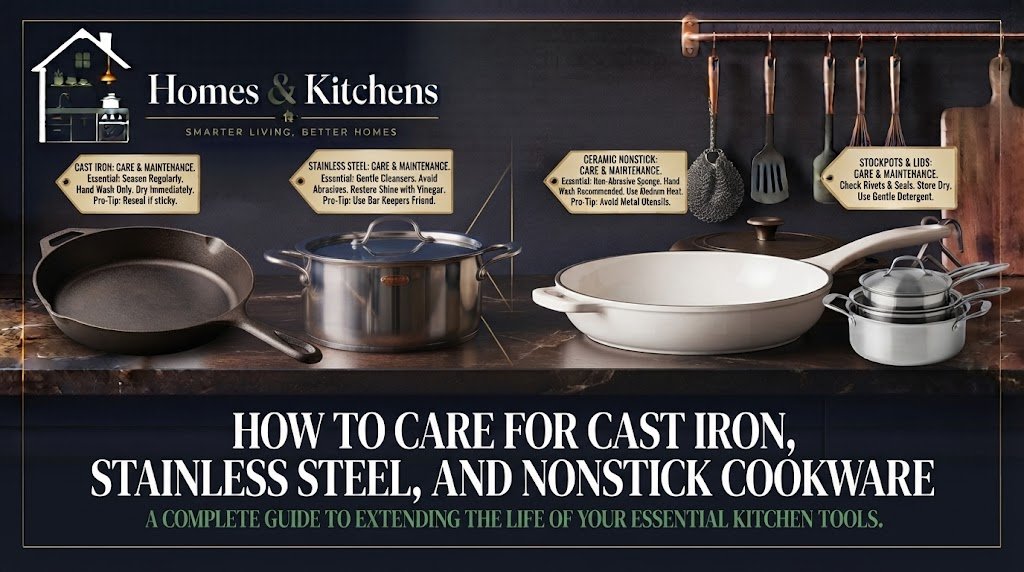
- [ ] Read care and maintenance instructions (hand wash vs. dishwasher safe)
Frequently Asked Questions
Are expensive cookware brands actually better than budget brands?
In many cases, yes, but primarily due to construction quality and material thickness. Cheap pans often use thin metal that warps easily and creates hot spots. However, you do not need ultra-luxury luxury brands to get great performance; mid-tier restaurant-supply brands often offer the same multi-clad construction at a fraction of the cost.
Can I put stainless steel cookware in the dishwasher?
Technically, most high-end stainless steel is dishwasher-safe. However, harsh dishwasher detergents and high heat cycles can dull the exterior finish and cause pitting over time. Hand washing preserves the mirror shine much longer.
Why does food stick to my stainless steel pan?
Food sticks to stainless steel when the pan is not heated properly before adding oil. To prevent sticking, preheat your stainless steel pan over medium heat for a couple of minutes, add a small amount of oil, let the oil shimmer, and then add your food.
What is the safest nonstick coating?
Modern PTFE nonstick coatings (when manufactured without PFOA, which has been banned for years) and ceramic (sol-gel) coatings are safe for home cooking when used within recommended temperature ranges (under 500°F). Avoid overheating any nonstick pan.
Final Verdict
Avoiding common cookware buying mistakes comes down to prioritizing build quality over quantity and matching tools to your actual cooking habits. Skip the massive, low-quality 20-piece bundles. Invest in a core group of multi-clad stainless steel pieces, treat your nonstick skillets as consumable items, and always verify stovetop compatibility before checking out. By making thoughtful, deliberate purchases, you will save money, reduce kitchen clutter, and enjoy better results on your dinner table every single night.
Key Takeaways
- Avoid massive sets: Large cookware bundles contain filler items and lower overall build quality. Build an open-stock collection of essentials instead.
- Match your stovetop: Induction cooktops require magnetic bases, while glass and electric ranges require completely flat bottoms to prevent warping and uneven heating.
- Invest in multi-clad stainless steel: A core of aluminum or copper sandwiched between layers of stainless steel offers the best balance of heat distribution and durability.
- Treat nonstick as temporary: Accept that nonstick pans degrade over time and expect to replace them every 2 to 5 years regardless of initial cost.
Conclusion
Equipping your kitchen should be an exciting journey that empowers you to create great meals, not a source of financial frustration. By understanding how cookware is constructed, recognizing marketing gimmicks, and focusing on utility over aesthetic bundles, you can build a versatile collection of pots and pans that serve your household reliably for years to come. For more inspiration on upgrading your culinary space, explore our guides on Kitchen design and general Homes maintenance tips.