

Introduction
Picture this: You come home from a bustling Saturday morning run to the local farmers market or your neighborhood supermarket, arms loaded with canvas bags bursting with crisp apples, vibrant spinach, plump avocados, and delicate berries. You unload everything, toss it into the refrigerator crisper drawers, and feel a small sense of domestic accomplishment. Fast-forward to Thursday evening. You reach into the fridge to prep dinner, only to find a bag of slimy, water-logged spinach and a carton of fuzzy strawberries. That weekly grocery receipt flashes in your mind, and straight into the trash it goes.
If this scenario sounds familiar, you are far from alone. In many U.S. homes, a staggering amount of hard-earned grocery money literally rots away in forgotten refrigerator corners. According to updates from the USDA, American households waste millions of tons of food annually, with fresh produce sitting at the very top of the disposal list.
The frustrating part? Much of this waste has nothing to do with bad intentions and everything to do with bad storage science. Homeowners often treat the refrigerator as a universal holding cell for all things plant-based. In reality, throwing a peach next to a potato or sealing delicate greens in an airtight plastic bag can accelerate decay overnight.
Mastering produce storage is not about adopting complicated laboratory habits. It is about understanding the natural life cycle of what you buy. Plants continue to breathe, release moisture, and emit gases even after harvest. By learning how to manage ethylene gas, control humidity levels, and master container choices, you can double or even triple the shelf life of your weekly haul. Let us dive into the mechanics of keeping your kitchen harvest crisp, vibrant, and delicious for days longer.
The Science of Produce Decay
Fresh produce spoils for three primary reasons: moisture loss, microbial growth, and chemical aging driven by plant hormones. To stop premature spoilage, you have to understand how these elements interact inside your kitchen.
Moisture and Humidity Control
Fruits and vegetables are primarily water. Once separated from their roots or trees, they begin to lose moisture through transpiration.
- Leafy greens and delicate veggies lose water rapidly, causing them to wilt. They thrive in high-humidity environments that lock moisture in without trapping condensation that breeds mold.
- Root vegetables and thick-skinned items handle lower humidity better, but excess moisture causes them to sprout or rot.
The Ethylene Factor
One of the biggest breakthroughs in home produce storage is understanding ethylene gas ($C_2H_4$). Ethylene is an odorless, invisible, natural plant hormone that certain fruits and vegetables release as they ripen.
Some items are prolific ethylene producers (gas emitters), while others are exceptionally sensitive to ethylene and will over-ripen, turn bitter, or decay rapidly when exposed to it.
- High Producers: Bananas, avocados, tomatoes, cantaloupes, peaches, pears, and apples.
- Ethylene Sensitive: Leafy greens, berries, carrots, broccoli, cucumbers, and peppers.
Keeping an ethylene producer like a ripe banana right next to a bag of baby spinach is a recipe for rapid spoilage. Separating these items is one of the single most effective changes you can make in your refrigerator organization.
Comprehensive Storage Strategy Guide
Different foods require different conditions. Below is a breakdown of how to handle specific categories of fruits and vegetables.
Leafy Greens and Herbs
- How to store: Wash greens only when you are ready to eat them. Moisture encourages bacterial growth. If you wash them beforehand, spin them completely dry in a salad spinner, then store them in a breathable container or a zip-top bag lined with a dry paper towel to absorb stray condensation.
- Herbs: Treat soft herbs (cilantro, parsley, basil) like cut flowers. Trim the stems slightly, place them in a glass with an inch of fresh water, and cover loosely with a plastic produce bag. Store basil on the counter at room temperature, as cold refrigerator air turns its leaves black.
Root Vegetables and Bulbs
- How to store: Potatoes, onions, garlic, and winter squash belong in a cool, dark, well-ventilated space like a pantry or a designated wire basket.
- Crucial Rule: Never store potatoes and onions together. Onions emit moisture and ethylene gases that cause potatoes to sprout and soften prematurely. Keep them in separate bins.
Berries and Soft Fruits
- How to store: Strawberries, blueberries, and raspberries are notoriously fragile. Do not wash them until right before consumption. Excess moisture is their enemy. Store them in their original breathable plastic clamshells, or transfer them to a glass container lined with a dry paper towel.
- Alternative Method: A brief soak in a dilute vinegar-and-water bath (one part white vinegar to three parts water) followed by a thorough, absolute drying session can kill mold spores and dramatically extend berry life.
Step-by-Step Produce Management Routine
Transforming how you manage produce does not require an overhaul of your daily routine. Follow this repeatable workflow every time you unpack groceries.
- Sort and Inspect: Unpack all bags on your kitchen island. Discard any bruised, moldy, or rotting items immediately; mold spores spread rapidly to healthy produce.
- Determine the Climate Zone: Separate items into three categories: counter-bound (bananas, tomatoes, winter squash), pantry-bound (potatoes, onions, garlic), and refrigerator-bound (berries, leafy greens, carrots, broccoli).
- Prep for Storage: Trim damp greens off root vegetables like beets and carrots (the greens suck moisture out of the root). Line crisper drawers with clean paper towels.
- Isolate High-Ethylene Items: Place apples, avocados, and ripe stone fruits in separate bowls or drawers away from sensitive leafy greens.
- Monitor and Rotate: Eat older produce first. Check your crisper drawers twice a week to catch any softening items before they spoil the rest.
Visual Storage Blueprint
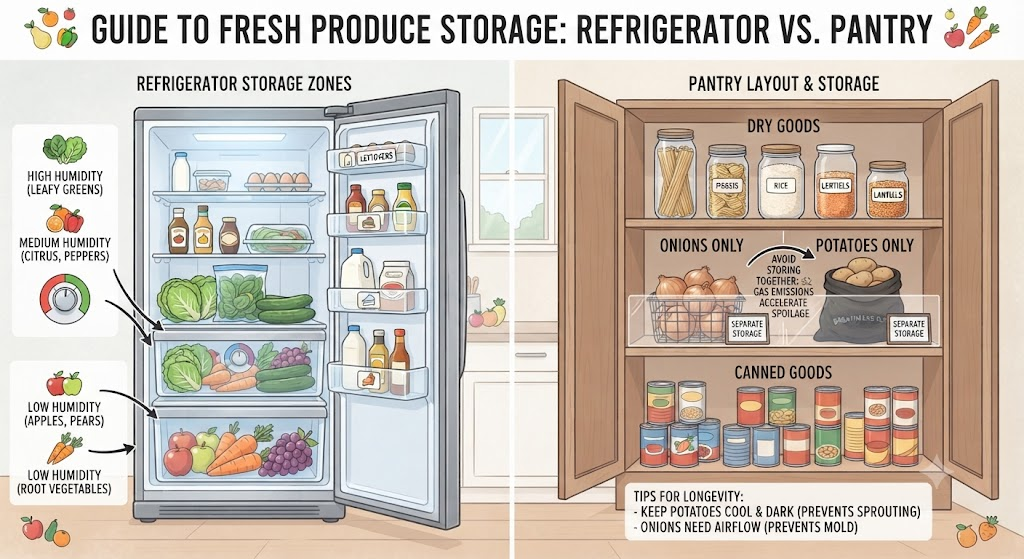
Refrigerator Crisper Drawer Settings Explained
Modern refrigerators feature adjustable humidity sliders on crisper drawers. Yet, in many U.S. homes, these sliders remain completely ignored or set to random positions. Here is how to configure them for maximum freshness.
| Produce Type | Drawer Setting | Why It Works | Common Examples |
| High Humidity | Closed Vents / High | Traps moisture inside to prevent wilting and crispness loss in water-dense items. | Spinach, kale, broccoli, carrots, cucumbers, herbs. |
| Low Humidity | Open Vents / Low | Allows ethylene gas and excess moisture to escape, preventing rot and mushiness. | Apples, avocados, peppers, melons, stone fruits. |
Common Produce Storage Mistakes to Avoid
Even well-intentioned home cooks make routine errors that shorten the life of fresh groceries. Watch out for these pitfalls:
- Overpacking the Crisper: Stacking produce too tightly blocks airflow. Proper air circulation is necessary to regulate temperature and disperse moisture.
- Storing Everything in Plastic Bags: Airtight plastic bags trap moisture from respiration, turning greens into a soggy mess. Use perforated bags or line them with paper towels.
- Refrigerating Everything: Bananas, tomatoes, potatoes, and garlic suffer in cold refrigerator temperatures. Cold damages cell walls, ruining texture and flavor.
- Leaving Produce Wet: Storing damp berries or herbs introduces standing water that acts as a breeding ground for mold and bacteria.
Expert Tips for Maximum Shelf Life
Drawing from culinary kitchen management and food science principles, here are advanced adjustments to level up your storage game:
- The Apple in the Potato Bag Trick: If you want to delay potato sprouting naturally, toss a whole apple into your potato bin. The apple emits ethylene, which inhibits potato cell division and delays sprouting.
- Wrap Celery in Foil: Instead of plastic wrap, wrap whole stalks of celery tightly in aluminum foil before placing them in the crisper drawer. The foil allows ethylene gas to escape while locking in crisp moisture, keeping celery snappy for weeks.
- Reviving Wilted Greens: If your spinach or lettuce has gone limp, do not throw it out. Submerge the leaves in a bowl of ice water for 15 to 30 minutes. The cells will rehydrate through osmosis, bringing the crunch right back.
Produce Storage Checklist
Keep this quick reference list handy when unpacking your weekly groceries:
- [ ] Checked all items for bruising or mold before storing.
- [ ] Separated ethylene producers (apples, bananas) from ethylene-sensitive items (greens, berries).
- [ ] Configured refrigerator crisper humidity sliders based on produce type.
- [ ] Removed greens from root vegetables (carrots, radishes) to preserve moisture.
- [ ] Stored potatoes and onions in separate pantry bins.
- [ ] Kept soft herbs in water jars and basil on the counter.
- [ ] Lined storage containers and drawers with dry paper towels.
Frequently Asked Questions
Should I wash fruits and vegetables before storing them?
Generally, no. Washing adds excess moisture that invites mold and bacterial rot. Only wash produce immediately before you plan to eat or prep it, with the sole exception of specific items you dry completely for meal prep.
Why do my onions make my potatoes sprout?
Onions release ethylene gas and moisture as they age. When stored in close proximity, these gases signal potatoes to break dormancy and begin sprouting, softening the tubers quickly.
How do I store avocados to control ripening?
Keep unripe, hard avocados on the counter at room temperature. Once they yield slightly to gentle pressure, move them directly to the refrigerator. This halts the ripening process and buys you several extra days of perfect texture.
For more ideas on optimizing your cooking space and culinary workflow, check out our guides on Kitchen organization and general Homes management tips.
Final Verdict
Mastering produce storage is one of the highest-return habits you can develop for your household. It requires zero expensive gadgets, just a shift in how you handle climate, moisture, and ethylene separation. By aligning your storage methods with the natural biology of fruits and vegetables, you will dramatically reduce food waste, protect your grocery budget, and enjoy fresher meals all week long.
Key Takeaways
- Manage Moisture: Match your produce to the correct humidity setting in your refrigerator crisper drawers.
- Separate Ethylene Sources: Keep high-gas producers (apples, bananas, avocados) away from sensitive greens and berries.
- Skip Pre-Washing: Keep produce dry until you are ready to eat it to prevent mold growth.
- Pantry vs. Fridge: Never store potatoes, onions, tomatoes, and garlic in the refrigerator.
Conclusion
Fresh produce brings color, nutrition, and joy to our daily cooking, but keeping it fresh requires a little mindfulness. By applying these science-backed storage principles in your kitchen, you transform your routine from reactive waste management to proactive food preservation. Start with one or two small changes—like separating your onions from your potatoes or adjusting your crisper vents—and watch how much longer your grocery haul stays crisp, fresh, and delicious.