

Introduction
Picture this: You pull your favorite wool-blend sweater out of the dryer only to find it has shrunk to doll-size, or you notice that a stray red sock has turned your entire load of crisp white work shirts a tragic shade of pastel pink. Laundry mishaps happen in U.S. homes every single day, often resulting in wasted money, ruined garments, and unnecessary frustration.
Laundry day should not feel like a high-stakes guessing game. Mastering the process requires more than dumping a load into a machine, pressing start, and hoping for the best. True mastery involves understanding fabrics, reading care labels, and optimizing your washer and dryer settings. This comprehensive guide details how to wash clothes the right way, ensuring your wardrobe stays vibrant, fresh, and structurally sound for years to come.
Why Proper Laundry Care Matters
Treating your clothes with respect extends far beyond maintaining a clean appearance. Fabrics endure constant mechanical agitation and thermal stress inside modern appliances. Without proper techniques, clothes thin out, colors fade prematurely, and elastic bands lose their snap.
The Financial and Environmental Impact
According to the U.S. Department of Energy, roughly ninety percent of the energy your washing machine uses goes entirely toward heating the water. Shifting from hot water washing to cold water cycles reduces household energy consumption significantly while protecting delicate textile fibers from thermal breakdown. Furthermore, treating garments correctly minimizes microplastic shedding and reduces textile waste, keeping clothes out of local landfills.
Essential Laundry Preparation and Sorting
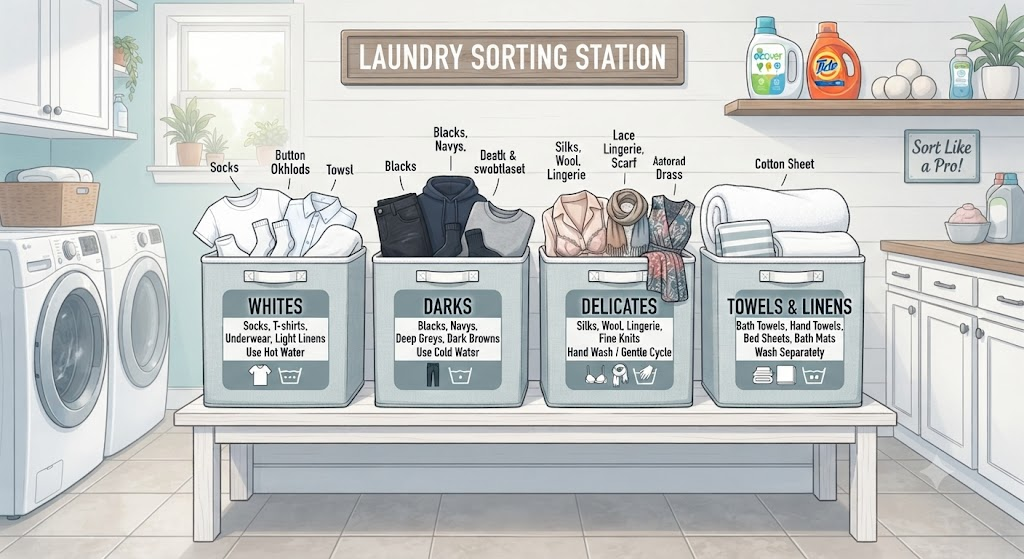
Skipping the sorting phase is the single fastest way to ruin a load of laundry. Effective sorting protects your garments from color bleeding, lint transfer, and fabric damage.
The Four Pillars of Sorting
- Color Separation: Separate loads into whites, lights, brights, and deep darks. Even older garments can bleed residual dye during warm wash cycles.
- Fabric Weight and Texture: Heavy items like denim jeans and thick towels require different agitation levels than lightweight blouses or athletic wear. Washing heavy items with delicates causes friction that wears down fine threads.
- Soil Level: Heavily soiled sports gear or muddy children’s play clothes need longer, more intense wash cycles with extra detergent, whereas lightly worn office wear only requires a quick refresh.
- Lint Givers versus Lint Receivers: Terrycloth towels and flannel sheets shed lint relentlessly. Keep them far away from fleece jackets, corduroy, and dark microfiber cloths.
Decoding Laundry Symbols and Fabric Care Labels
Manufacturers sew care labels into garments for a reason. These small tags serve as the legal instruction manual for textile health. Ignoring them is a gamble few clothes survive.
Breaking Down the Icons
- The Tub Symbol: Indicates washing instructions. Dots inside the tub represent water temperature. One dot means cold (30°C/85°F), two dots mean warm, and three or four dots mean hot. A hand icon inside the tub means hand wash only.
- The Triangle Symbol: Represents bleaching rules. An empty triangle allows any bleach. Diagonal lines inside mean non-chlorine bleach only. A solid triangle with an X means do not bleach.
- The Square Symbol: Guides drying instructions. A circle inside a square denotes tumble drying. Dots indicate heat settings: one dot for low, two for medium, high for three. An X through the square means do not tumble dry.
- The Iron Symbol: Shows maximum ironing temperatures, designated by dots matching iron dial settings.
Pre-Treating and Stain Removal
Tackling stains immediately dramatically increases the likelihood of complete removal. Rubbing a stain aggressively into fabric pushes the pigment deeper into the weave. Instead, blot gently.
Common Stains and Their Solutions
- Protein-Based Stains (Blood, Sweat, Grass): Treat with cold water and enzyme-based detergents. Never use hot water on protein stains, as it cooks the proteins directly into the fibers.
- Oil and Grease Stains (Makeup, Salad Dressing, Butter): Apply a few drops of liquid dish soap directly to the spot, work it in with a soft-bristled brush, and let it sit for fifteen minutes before washing in the warmest water safe for the fabric.
- Tannin Stains (Coffee, Tea, Wine): Flush the back of the stain with cold water, apply a mixture of liquid detergent and white vinegar, and rinse thoroughly.
Expert Tip: In many U.S. homes, people reach for chlorine bleach by default. However, oxygen-based bleach is significantly safer for colored fabrics and far less harsh on cotton and synthetic blends.
Choosing the Right Detergent and Additives
The grocery store detergent aisle offers endless choices, but finding the right product depends entirely on your laundry habits and washing machine type.
Liquid versus Powder versus Pods
- Liquid Detergent: Excellent for pre-treating stains and penetrating grease. Dissolves completely in cold water, leaving no chalky residue on dark clothes.
- Powder Detergent: Highly effective for mud, ground-in dirt, and whitening whites, especially when used in warm or hot water. It can struggle to dissolve completely in freezing municipal water supplies during winter months.
- Single-Use Pods: Convenient and mess-free, but require careful handling around children and pets. They must be placed directly into the drum before adding clothes, never in the dispenser drawer.
The Problem with Fabric Softener
While fabric softener promises fluffy towels and static-free shirts, liquid softeners and dryer sheets coat fibers with a waxy, lubricating film. This buildup reduces the absorbency of bath towels and traps odors in synthetic athletic wear. Instead, add a half-cup of distilled white vinegar to the rinse cycle to naturally soften fabrics and eliminate static.
Navigating Washing Machine Settings
Modern washing machines feature an array of specialized cycles. Choosing the correct combination of temperature, spin speed, and cycle type protects your garments from premature wear.
Understanding Machine Cycles
- Normal Cycle: Features fast agitation and fast spin speeds. Ideal for sturdy everyday cottons, linens, and blended fabrics.
- Permanent Press Cycle: Uses medium agitation followed by a cool-down spray before the final spin to prevent wrinkles from setting into synthetic fabrics.
- Delicates Cycle: Employs gentle, intermittent agitation and a slow spin speed. Perfect for silk, lace, wool, and structured undergarments.
- Heavy Duty Cycle: Features long wash times, intense agitation, and high-speed extraction for workwear, heavy towels, and durable canvas items.
Water Temperature Guidelines
- Cold Water: Best for dark colors, brights that bleed, fragile fabrics, and everyday lightly soiled loads. Saves energy and prevents shrinking.
- Warm Water: Ideal for synthetic blends, moderately soiled everyday clothes, and man-made fibers.
- Hot Water: Reserved for white cottons, heavily soiled work clothes, cloth diapers, and sanitizing bedding after illness.
Step-by-Step Guide on How to Wash Clothes the Right Way
Follow this structured workflow for every laundry day to ensure professional-level results at home.
- Empty Pockets and Prep Garments: Check every pocket for tissues, pens, and coins. Zip all zippers to prevent metal teeth from snagging other fabrics. Button buttons and turn dark items and printed t-shirts inside out to protect surface dyes and graphics.
- Sort the Load: Separate your garments by color, fabric weight, and soil level following the four pillars outlined earlier.
- Select Detergent and Additives: Measure your liquid or powder detergent according to the manufacturer guidelines. Over-dosing detergent leaves a sticky residue that attracts dirt. Pour detergent directly into the drum or dispenser.
- Load the Washer Correctly: Add clothes loosely in a circular motion around the agitator or drum. Never wrap items tightly around the center post or overstuff the machine; clothes need room to tumble and circulate freely in the water.
- Choose the Cycle and Temperature: Set the appropriate cycle type, water temperature, and spin speed based on the fabric care labels.
- Promptly Transfer to the Dryer or Hang Dry: Leaving wet laundry sitting in the machine for hours invites mildew growth and sets deep wrinkles. Move items to the dryer or drying racks immediately after the cycle ends.
Comparison Table: Washing Methods by Fabric Type
| Fabric Type | Water Temperature | Wash Cycle | Drying Method | Best Practices |
| Cotton & Linen | Cold or Warm | Normal | Tumble Dry Medium | Turn inside out; remove slightly damp to minimize wrinkles. |
| Denim | Cold | Normal or Permanent Press | Line Dry or Tumble Dry Low | Wash inside out and infrequently to preserve deep indigo dyes. |
| Wool & Cashmere | Cold | Hand Wash or Wool Cycle | Flat Dry (Never Hang) | Use specialized wool detergent; reshape while damp. |
| Synthetics (Polyester/Nylon) | Cold or Warm | Permanent Press | Tumble Dry Low | Avoid high heat to prevent permanent fiber distortion and static. |
| Activewear (Spandex/Elastane) | Cold | Delicates or Quick Wash | Air Dry / Hang Dry | Skip fabric softener entirely to prevent trapping body odors in fibers. |
Pros and Cons of Air Drying versus Machine Drying
| Method | Pros | Cons |
| Air Drying / Line Drying | • Extends clothing lifespan significantly • Zero electricity cost • Eliminates shrinkage risk • Keeps clothes smelling fresh | • Takes significantly longer • Can leave fabrics feeling stiff • Requires dedicated indoor or outdoor space |
| Tumble Drying | • Fast and convenient • Softens fabrics and fluffs towels • Reduces pet hair effectively • Eliminates wrinkles reliably | • Consumes substantial electricity • Risk of shrinkage and fiber damage • Wear and tear from lint shedding |
Common Laundry Mistakes to Avoid
- Using Too Much Detergent: More soap does not mean cleaner clothes. Excess detergent creates excessive suds that trap soil and leave a crusty residue on fabrics, which can irritate sensitive skin.
- Overloading the Machine: Packing the drum to the brim prevents water and detergent from circulating effectively. Clothes come out looking dingy and smelling stale.
- Ignoring Hardware Maintenance: Leaving zippers unzipped tears delicate items. Leaving metal hooks unfastened hooks other garments during heavy agitation spins.
- Neglecting Appliance Cleanliness: Washing machines accumulate mold, mildew, and detergent scum inside rubber door seals and drum cavities. Run a monthly maintenance cleaning cycle with chlorine bleach or dedicated washer cleaner tablets.
Recommended Laundry Tools and Equipment
Best Overall HE Washer and Dryer Pair: LG WM4000HWA Front Load Washer
- Best For: Homeowners looking to upgrade their laundry room with an energy-efficient, high-capacity appliance.
- Why We Recommend It: This model features built-in intelligence that selects optimal wash motions and temperatures, alongside a steam cycle that tackles deep-set allergens and stains with ease.
Best Eco-Friendly Detergent Sheets: Earth Breeze Eco Sheets
- Best For: Minimalist households and eco-conscious renters wanting to eliminate bulky plastic jugs.
- Why We Recommend It: These dissolvable laundry sheets clean effectively in cold water without taking up storage space or generating single-use plastic waste.
Best Mesh Laundry Bags: Brabantia Delicates Wash Bags
- Best For: Protecting undergarments, hosiery, and delicate lace items from snags.
- Why We Recommend It: Constructed from heavy-duty mesh with hidden zipper garages, these bags keep delicate items completely safe from hardware damage during high-speed spin cycles.
Laundry Day Checklist
- Check all garment pockets for trash, coins, and tissues.
- Zip zippers, button buttons, and turn printed graphics inside out.
- Sort garments by color, fabric weight, soil level, and lint production.
- Select appropriate water temperature (prioritize cold water for everyday loads).
- Measure detergent correctly based on load size (avoid over-pouring).
- Load the washing machine loosely without packing the drum.
- Select the correct cycle (Normal, Delicates, Permanent Press, or Heavy Duty).
- Move wet laundry promptly to the dryer or drying rack.
- Clean the dryer lint trap before every single drying cycle.
Frequently Asked Questions
Can I wash dark clothes and light clothes together in cold water?
While cold water reduces dye bleeding compared to hot water, deep-colored garments like brand-new indigo jeans or vibrant red shirts can still bleed microscopic dye particles onto lighter fabrics. Sorting by color remains best practice to maintain crisp whites and bright pastels.
Why do my clothes still smell musty after washing?
Musty odors usually stem from two sources: mildew buildup inside the washing machine drum or leaving wet laundry sitting in the machine for too long before drying. Run a hot cleaning cycle with white vinegar or a washer tablet, and always leave the washer door open after use to let the interior dry out.
How often should I wash my bath towels?
Bath towels should be washed every three to four uses. Hanging them up properly to dry completely between uses prevents bacteria and mildew growth, while skipping fabric softeners maintains their moisture-absorbent properties.
Is hand washing really necessary for wool and silk?
Yes, the mechanical agitation and high-speed spin cycles of standard washing machines warp, felt, and tear delicate animal protein fibers like wool and silk. Always hand wash in lukewarm water with mild detergent or use a specialized wool machine cycle.
Final Verdict
Mastering laundry care does not require a degree in textile chemistry. By slowing down to sort your loads correctly, respecting fabric care labels, embracing cold water washing, and avoiding common pitfalls like detergent overuse, you will dramatically extend the lifespan of your wardrobe. Treat your clothes with care, and they will reward you with years of reliable wear.
Key Takeaways
- Sorting is non-negotiable: Separate clothes by color, fabric weight, and soil level to prevent dye bleeding and fabric damage.
- Embrace cold water: Washing in cold water protects fabric integrity and lowers home energy bills significantly.
- Avoid detergent overload: Using too much soap leaves a residue that attracts dirt and ruins fabric texture.
- Protect delicates: Use mesh laundry bags and air-drying methods for wool, silk, and activewear.
Conclusion
Laundry care sits at the intersection of home management, personal style, and financial stewardship. Implementing these expert practices transforms a tedious household chore into a reliable routine that protects your investment in your wardrobe. For more ways to optimize your home, explore our guides on Kitchen organization and general Homes maintenance.