Introduction
Picture this: You have just moved into a new apartment or finally decided to clear out a cluttered cabinet stuffed with warped, mismatched pots and pans accumulated from college days and wedding registries. You are standing in your kitchen on a Friday night, ready to cook a comforting meal for friends—say, a braised short rib over creamy polenta with a side of blistered green beans. Halfway through searing the meat, you realize your lone, lightweight aluminum pan is warping under the heat, smoking up the kitchen, and sticking stubbornly to the beef.
Every home cook experiences this culinary bottleneck at some point. Walking down the cookware aisle or browsing online shops can feel overwhelming. You are faced with massive 20-piece matching sets filled with tiny saucepans you will never touch, priced anywhere from fifty dollars to two thousand dollars.
In many U.S. homes, the cabinets are packed with single-use gadgets and inferior pans while missing the foundational workhorses that actually make cooking enjoyable and efficient.
During testing across countless stovetop sears, slow braises, and delicate reduction sauces, one practical lesson homeowners often discover is that quality always trumps quantity. You do not need a sprawling 15-piece set to cook exceptional meals. Instead, building a curated collection of essential cookware changes how you approach daily cooking, saving you money, storage space, and frustration.
For more inspiration on streamlining your cooking space, explore our Kitchen archives or head back to the main Homes hub.
Understanding Cookware Materials and Construction
Before purchasing individual pieces or curated bundles, you must understand how different metals and materials interact with heat. The performance of a pot or pan depends almost entirely on its thermal conductivity and heat retention.
Stainless Steel vs. Cast Iron vs. Hard-Anodized Aluminum
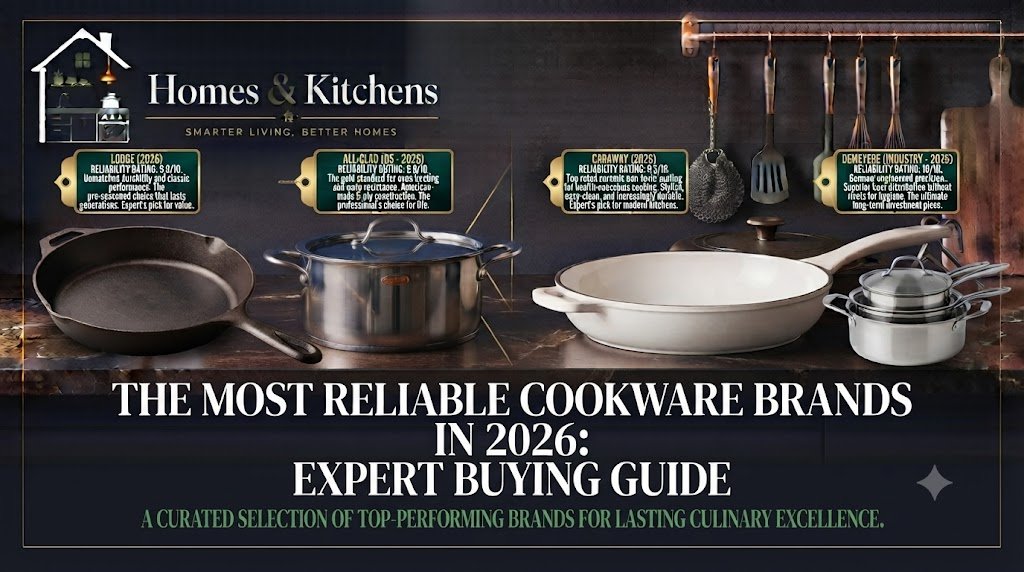
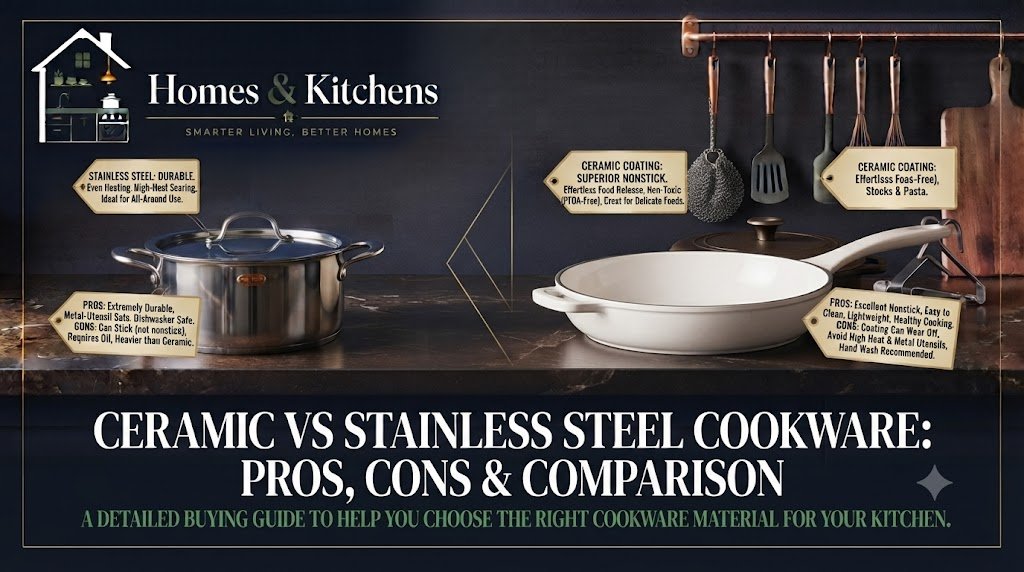
- Multi-Ply Stainless Steel: The gold standard for versatility. Pure stainless steel is a poor heat conductor, but when bonded with an inner core of aluminum or copper (multi-ply construction), it distributes heat evenly and resists corrosion. It is non-reactive, meaning you can simmer acidic tomato sauces for hours without metallic off-flavors.
- Cast Iron: Unbeatable for heat retention. Cast iron takes longer to heat up, but once hot, it holds temperature brilliantly. It is the go-to material for achieving deep, crusty sears on steaks and baking cornbread. With proper seasoning, it develops a natural nonstick patina over time.
- Hard-Anodized Aluminum: Lightweight, highly conductive, and chemically treated to be twice as hard as stainless steel. It heats up instantly and cools down quickly, giving you precise temperature control.
The Core Collection: Essential Cookware Pieces
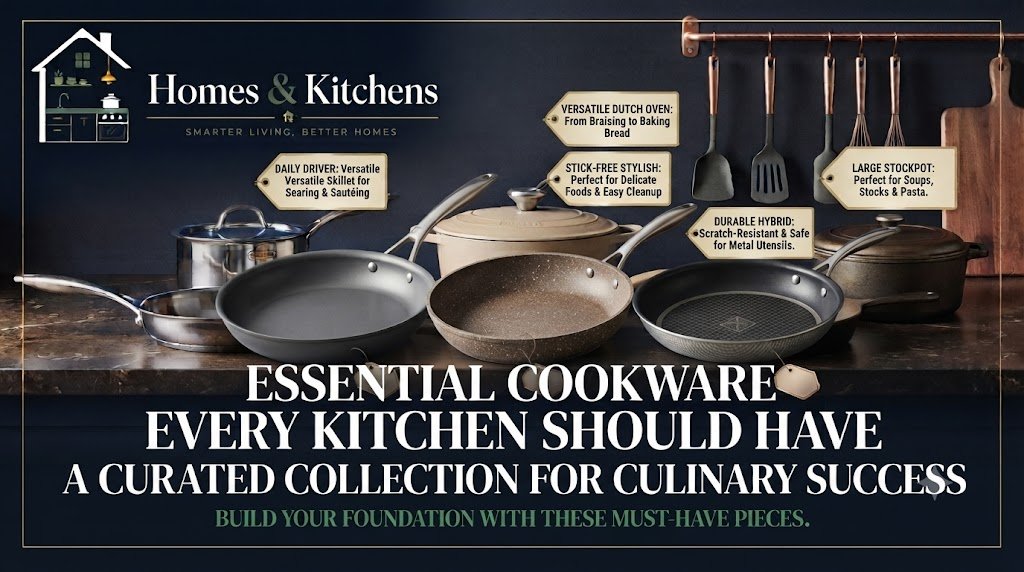
Building a functional kitchen arsenal means focusing on versatile shapes that perform multiple jobs. Here are the non-negotiable pieces every home cook needs.
1. The 10-Inch or 12-Inch Stainless Steel Skillet
- Best For: Searing proteins, pan-frying, sautéing vegetables, and building pan sauces.
- Why you need it: Unlike coated nonstick pans, a stainless steel skillet can handle searing-hot temperatures, goes straight into the broiler, and allows you to build rich, flavorful fond (the browned bits stuck to the bottom of the pan) which forms the base of incredible gravies and sauces.
2. The Cast Iron Skillet (10-Inch or 12-Inch)
- Best For: High-heat searing, frying chicken, baking artisan cornbread, and oven-to-table presentation.
- Why you need it: Cast iron provides unmatched heat retention. It handles high-heat searing better than almost any other material and adds versatility for both stovetop and oven cooking.
3. The 3-Quart Saucier or Saucepan
- Best For: Boiling grains, making morning oatmeal, reducing delicate reductions, and melting butter.
- Why you need it: A saucepan with rounded bottom edges (a saucier) or straight sides is used daily. Look for a heavy bottom that prevents scorching when simmering delicate custards or tomato-based sauces.
4. The 4-Quart Saute Pan (With Straight Sides and Lid)
- Best For: Braising chicken thighs, simmering chili, pan-frying cutlets, and tossing pasta directly in sauce.
- Why you need it: If you could only own one deep pan, make it a straight-sided sauté pan. Its wide flat bottom gives you maximum searing surface area, while the high, vertical walls contain splatters and hold generous liquid volumes.
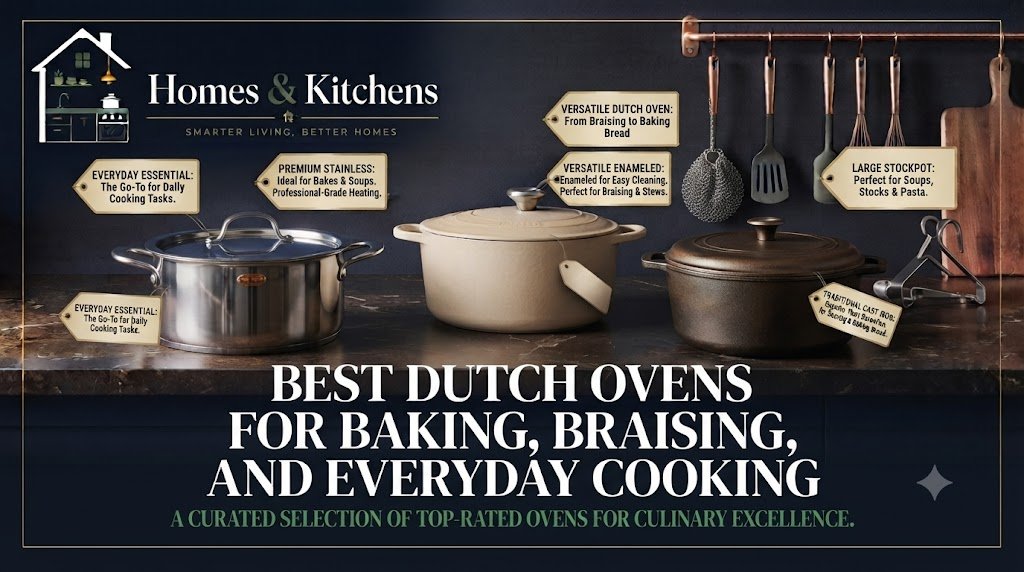
5. The 5-to-7 Quart Enameled Cast Iron Dutch Oven
- Best For: No-knead bread baking, slow braises, simmering Sunday soups, and deep stews.
- Why you need it: The ultimate multi-tasker. The heavy cast-iron body distributes and holds heat evenly, while the enamel coating requires no seasoning and tolerates acidic liquids without reacting. It moves seamlessly from stovetop burner to a 500°F oven.
Cookware Comparison Table
| Cookware Piece | Primary Material | Heat Retention | Best Cooking Task | Maintenance Level |
| Stainless Steel Skillet | Multi-Ply Metal | Moderate | Searing, pan sauces | Low (Dishwasher safe) |
| Cast Iron Skillet | Raw Cast Iron | Exceptional | High-heat searing, baking | High (Hand wash, oil) |
| Saucier / Saucepan | Multi-Ply Stainless | Moderate | Boiling, sauces, grains | Low (Dishwasher safe) |
| Sauté Pan | Hard-Anodized / Steel | High | Braising, frying, one-pot meals | Moderate |
| Enameled Dutch Oven | Enameled Cast Iron | Exceptional | Braising, baking bread, stews | Moderate (Gentle cleaning) |
Step-by-Step Guide: Selecting Your Starter Set
Instead of buying a random assortment of pots, follow this systematic approach to build a collection that serves your specific cooking habits.
[ Audit Current Kitchen ] ---> [ Identify Missing Workhorses ] ---> [ Choose Material Core ] ---> [ Buy Individual Pieces or Curated Bundle ]
Step 1: Audit Your Current Cooking Habits
Look at what you cooked over the last two weeks. Did you boil pasta three times? Did you struggle to fit a whole chicken into a shallow pan? Match your purchases to your actual menu rather than aspirational cooking fantasies.
Step 2: Choose Your Metal Foundation
Decide whether you lean toward stainless steel for effortless maintenance or traditional cast iron for high-heat cooking. For most American kitchens, a hybrid approach—stainless steel for daily cooking, cast iron for searing, and enameled cast iron for braising—offers the best balance.
Step 3: Prioritize Open Stock Over Massive Sets
Large 15-piece box sets often include redundant pan sizes, flimsy lids, and low-quality nylon tools. Purchasing essential pieces “open stock” (individually) ensures you get commercial-grade thickness and utility for every dollar spent.
Practical Advice and Real-World Scenarios
Scenario: The Weeknight Sauté Dilemma
You are trying to sauté a pound of sliced mushrooms in a small 8-inch pan. Because the pan is overcrowded, the mushrooms release their moisture, steam instead of brown, and turn rubbery and gray.
- The Fix: Switch to your 4-quart sauté pan or a large 12-inch skillet. Spreading the mushrooms in a single layer allows moisture to evaporate instantly, enabling proper caramelization and deep, savory flavor development.
Temperature Control on Stainless Steel
Home cooks frequently complain that food sticks to stainless steel skillets. This almost always stems from improper preheating.
- The Rule: Heat your empty stainless steel pan over medium heat for two minutes before adding oil. Once the oil shimmers and moves like water across the surface, add your protein. The metal expands and creates a natural release barrier once a proper sear forms.
Common Mistakes to Avoid
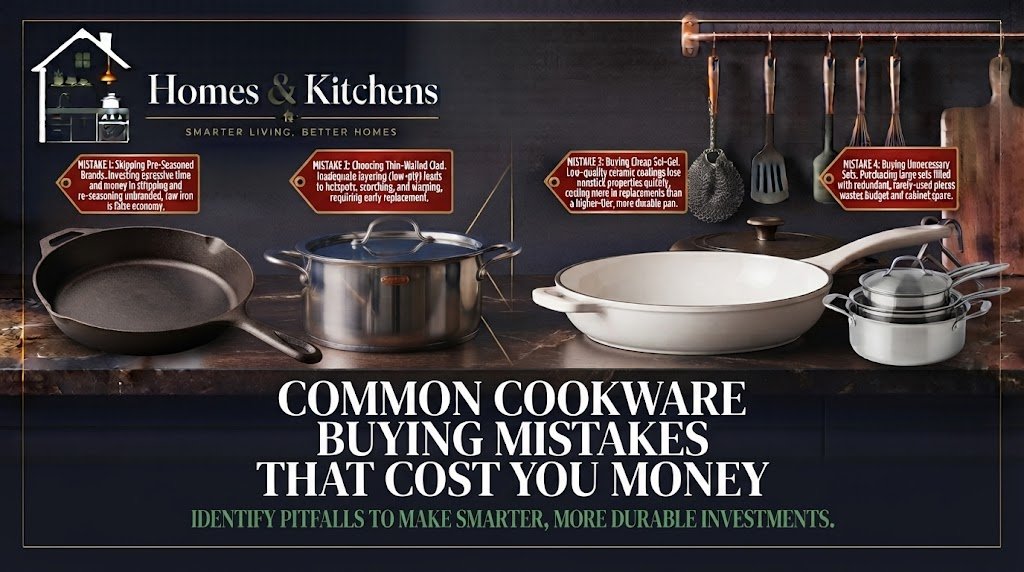
- Buying Mega-Sets: Filling your cabinets with lightweight pots you never use wastes money and spatial real estate.
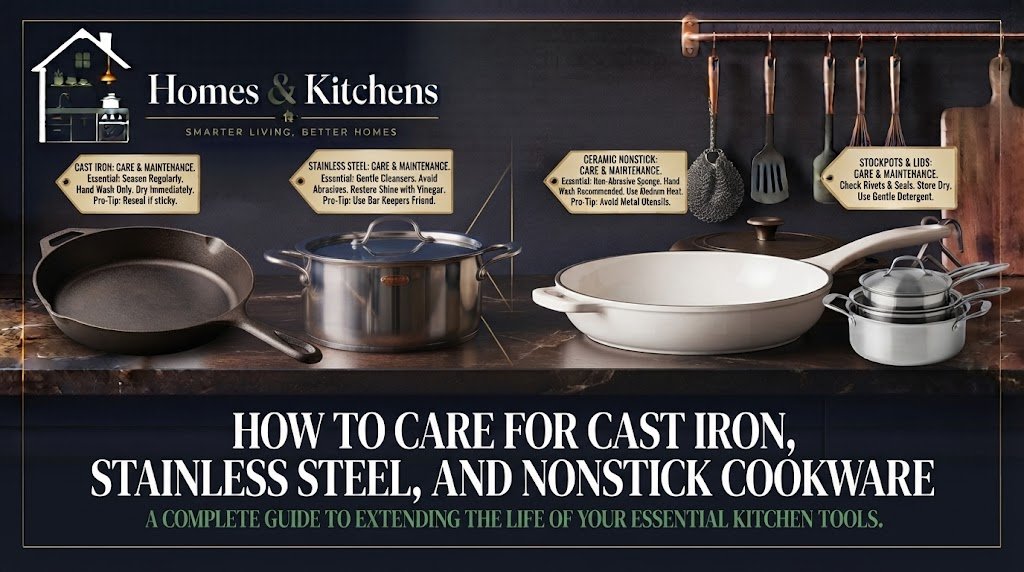
- Thermal Shock: Plunging a scorching-hot stainless steel pan or Dutch oven into freezing sink water. This warps metal bases and cracks enamel coatings instantly.
- Using Metal Utensils on Enameled Surfaces: While bare stainless steel and cast iron tolerate metal tools, scratching enameled Dutch ovens with metal spatulas ruins the glass-like coating permanently. Use wood or silicone.
Expert Tips for Longevity
- Deglaze While Hot: After searing meat in a stainless steel skillet, pour in a splash of wine, broth, or vinegar while the pan is still hot. Use a wooden spatula to scrape up the browned bits. This cleans the pan naturally while creating an instant, flavorful pan sauce.
- Store Properly: Never stack heavy cast iron pans directly onto enameled surfaces without felt dividers or paper towels in between to prevent chipping.
Checklist for Essential Cookware
Before finalizing your kitchen upgrade, review this quick checklist to ensure your collection covers all culinary bases:
- Searing Surface: At least one 10- or 12-inch skillet for browning meats.
- Deep Capacity: A straight-sided sauté pan or Dutch oven for braises and stews.
- Boiling & Simmering: A 3-quart saucepan for grains, sauces, and liquids.
- Oven Safe Handles: Cookware capable of transitioning seamlessly from stovetop to oven.
Frequently Asked Questions
Do I really need copper cookware?
While copper offers lightning-fast heat responsiveness, it requires intensive polishing to maintain its shine and is prohibitively expensive. Multi-ply stainless steel with an aluminum core offers 90% of copper’s performance at a fraction of the cost and maintenance.
How do I clean burned sugar or stuck-on food from stainless steel?
Fill the pan with an inch of water, add two tablespoons of baking soda, and bring it to a simmer on the stove for five minutes. Turn off the heat, let it cool, and wipe away loosened debris with a non-abrasive sponge.
Is heavy cookware always better?
Generally, yes. Heavy-gauge metal prevents hot spots, distributes heat evenly across the burner, and resists warping when exposed to high thermal changes.
Final Verdict
Building a functional kitchen does not require spending thousands of dollars on massive commercial sets. By focusing on essential cookware pieces—a reliable stainless steel skillet, a heavy cast iron pan, a versatile saucier, a deep sauté pan, and a durable enameled Dutch oven—you equip your kitchen to handle everything from quick weeknight dinners to elaborate weekend feasts.
Key Takeaways
- Prioritize open-stock buying over pre-packaged mega-sets to ensure every piece in your cabinet serves a distinct purpose.
- Invest in multi-ply stainless steel and heavy cast iron for superior heat distribution and decades of durability.
- Properly preheat stainless steel pans to prevent food sticking naturally without chemical coatings.
- Always let cookware cool down before washing to prevent thermal shock, warping, and enamel cracking.
Conclusion
Your kitchen is the heart of your home, and your cookware should make the cooking process a joy rather than a chore. By stripping away redundant gadgets and investing in foundational, high-performance pots and pans, you transform your daily routine. Take inventory of your current kitchen setup today, retire those warped pans, and build a streamlined collection that inspires culinary confidence for years to come.