Introduction
Picture this: It is a quiet Tuesday evening in a typical American kitchen. You have just returned home after a long workday, carrying grocery bags filled with fresh produce, garlic, and a gorgeous cut of ribeye steak. You pull out your favorite pan, heat it up on your range, and toss in a pat of butter. Within minutes, disaster strikes. Your delicate fish fillet tears apart, sticking stubbornly to the bottom of the pan, or your gorgeous steak fails to develop that deep, mahogany crust you were dreaming of.
If this scenario feels painfully familiar, you are not alone. One of the most common dilemmas homeowners face when outfitting a kitchen or upgrading culinary tools is choosing the right foundation: stainless steel, nonstick, or cast iron.
Choosing cookware is rarely just about aesthetics or matching your kitchen’s modern color palette. It is about heat dynamics, chemical reactions, daily maintenance habits, and how you actually cook. During testing and evaluation across countless American home kitchens, one practical lesson homeowners often discover the hard way is that no single pan does it all. A bustling family cooking weeknight pancakes needs an entirely different surface than a weekend enthusiast searing heritage-breed pork chops.
In this comprehensive guide, we will break down the chemistry, performance, pros, cons, and real-world maintenance of stainless steel, nonstick, and cast iron cookware so you can build a versatile, long-lasting collection.
Understanding the Contenders
Before jumping into head-to-head comparisons, it helps to understand what each material is made of and how it behaves under heat.
Stainless Steel
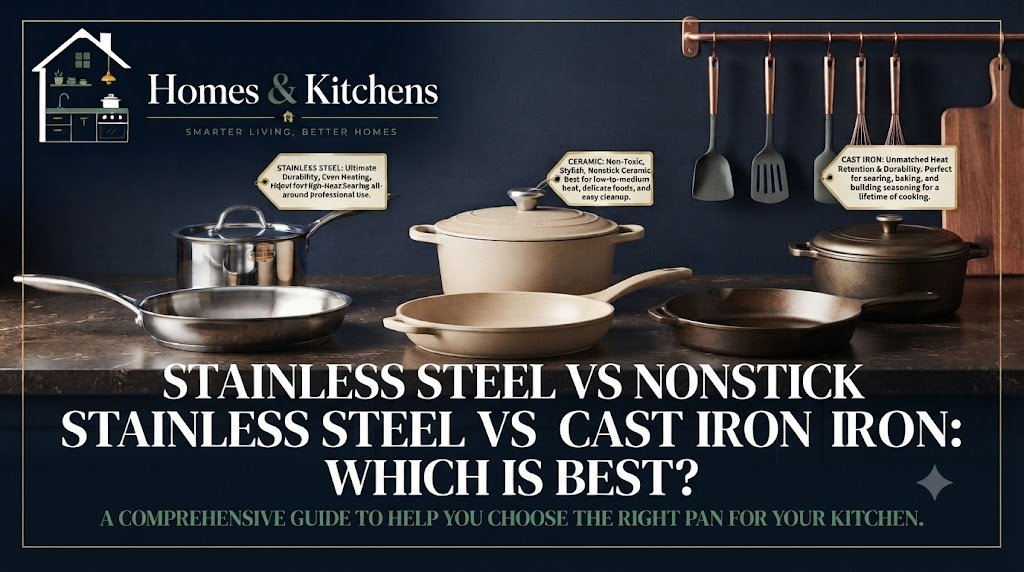
Stainless steel is an alloy typically composed of steel, chromium, and nickel. By itself, stainless steel is actually a poor conductor of heat. To solve this, high-end manufacturers use multi-clad construction—layering responsive metals like aluminum or copper between layers of durable stainless steel.
- Best For: Searing, browning, making pan sauces, deglazing, and withstanding high oven temperatures.
- Why Choose It: It is virtually indestructible, non-reactive with acidic ingredients like tomatoes or wine, and dishwasher safe.
Nonstick Cookware
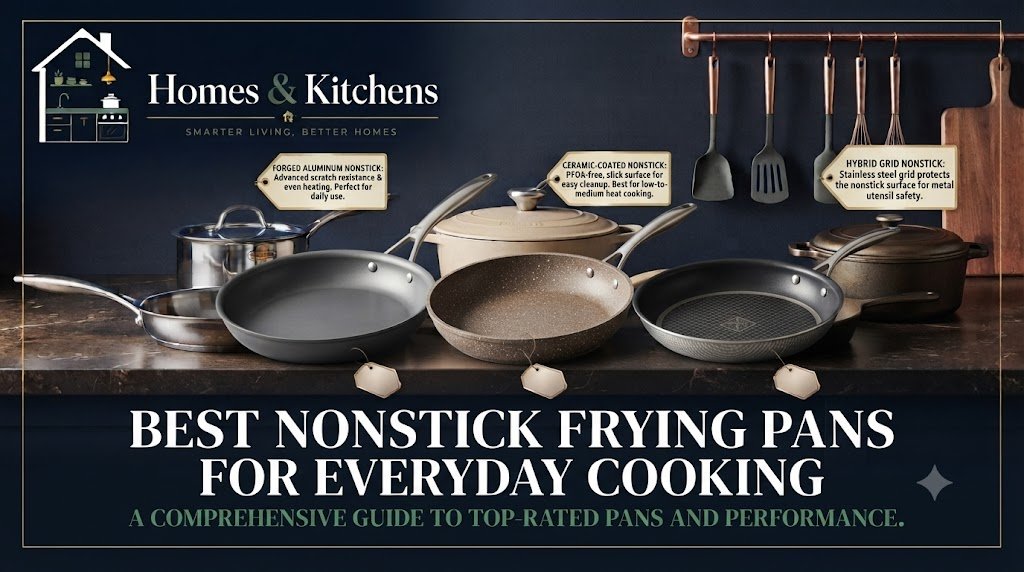
Nonstick pans feature an aluminum or hard-anodized aluminum core coated with a release agent. Traditional nonstick relies on PTFE (commonly known by brand names like Teflon), while newer alternatives utilize ceramic sol-gel coatings derived from silica.
- Best For: Cooking delicate proteins like fish, flipping morning eggs with minimal fat, and quick cleanup.
- Why Choose It: It requires little to no butter or oil, making it popular for lighter cooking styles, and washing takes mere seconds.
Cast Iron
Cast iron is a heavy, single-piece metal alloy poured into a mold. It is famous for its incredible thermal mass and ability to hold heat for extended periods. When seasoned properly with polymerized oils, it develops a natural, slick cooking surface without synthetic chemicals.
- Best For: Deep-searing steaks, baking cornbread, frying chicken, and transferring straight from stovetop to oven or campfire.
- Why Choose It: It lasts for generations, improves with age, and adds trace dietary iron to your food.
Deep Dive: Stainless Steel Cookware
Performance and Heat Dynamics
When you walk into a professional restaurant kitchen, you will notice rows of gleaming multi-clad stainless steel pans hanging on the line. Why? Because stainless steel can take a beating and respond instantly to temperature adjustments.
When cooking with a quality 3-ply or 5-ply stainless steel pan, the aluminum core rapidly distributes heat across the entire bottom and up the sides. This prevents hot spots that burn garlic while leaving onions raw.
Pros and Cons
- Pros:
- Incredible Durability: Will not warp easily, scratch from metal utensils (though cosmetic scratches happen), or degrade over time.
- High Heat Tolerance: Safe for broiler and oven use up to extreme temperatures (often 500°F to 600°F or higher, depending on the handle material).
- Flavors and Sauces: Excellent for building fond—the brown bits stuck to the bottom of the pan—which forms the base of incredible pan sauces when deglazed with wine or stock.
- Cons:
- Learning Curve: Requires preheating techniques (“hot pan, cold oil”) to prevent food from sticking.
- Weight: Multi-clad pans can feel heavy, especially large sauté pans and stockpots.
- Cleanup: Stubborn burnt-on food requires soaking or specialized cleaners like Bar Keepers Friend to maintain its mirror finish.
Common Mistakes to Avoid
Many home cooks make the mistake of dropping cold food into a cold stainless steel pan, which guarantees sticking. Always preheat your pan over medium heat for 2 to 3 minutes, add your cooking oil until it shimmers, and then add your food. Give proteins time to sear; a properly seared steak or chicken breast will naturally release from the surface once the crust forms.
Deep Dive: Nonstick Cookware
Performance and Heat Dynamics
Nonstick pans are the darlings of quick weeknight cooking. The secret behind nonstick performance is surface tension: liquids and proteins cannot grip the microscopic smoothness of the coating.
However, nonstick pans come with strict operational boundaries. Aluminum cores heat up quickly, but traditional PTFE and ceramic coatings cannot handle high-heat searing. Cranking a nonstick burner to high can break down the coating, releasing fumes and ruining the pan’s release properties permanently.
Pros and Cons
- Pros:
- Effortless Release: Flipping delicate crepes, eggs, and flaky white fish becomes virtually foolproof.
- Low-Fat Cooking: You can cook with a fraction of the butter or oil required by traditional pans.
- Easy Cleanup: A quick wipe with a soapy sponge usually restores a pristine look.
- Cons:
- Finite Lifespan: Even the most expensive nonstick pans degrade over 3 to 5 years under regular use.
- Low Heat Limits: Restricted to low-to-medium heat settings.
- Utensil Restrictions: Metal spatulas, whisks, and forks will gouge and ruin the coating, requiring silicone or wood tools.
Expert Tips for Longevity
To maximize the lifespan of your nonstick pans, never use aerosol cooking sprays (like Pam). These sprays contain chemical propellants that bake onto the nonstick surface at low temperatures, creating an invisible, sticky film that destroys the non-stick capability. Instead, use a mister filled with your own olive or avocado oil.
Deep Dive: Cast Iron Cookware
Performance and Heat Dynamics
Cast iron is the heavyweight champion of thermal retention. While it takes longer to heat up than aluminum or stainless steel, once it gets hot, it stays hot. This makes it unmatched for maintaining a steady oil temperature when deep-frying or achieving restaurant-quality crusts on steaks.
Pros and Cons
- Pros:
- Unrivaled Durability: Drop it, bang it, or pass it down to your grandchildren—cast iron is virtually indestructible.
- Natural Nonstick Qualities: With proper seasoning, layers of baked-on oil create a slick surface free of synthetic polymers.
- Nutritional Benefit: Cooking acidic foods in cast iron can leach small, safe amounts of dietary iron into your meals.
- Cons:
- Heavyweight: A 12-inch skillet can weigh 8 pounds or more empty, making it difficult to maneuver with one hand.
- Maintenance Required: Cannot be left to soak in the sink, requires drying immediately after washing, and periodic seasoning.
- Slow Heating: Requires a longer preheat time to ensure even heat distribution.
Common Myths Busted
- Myth: You can never use soap on cast iron.
- Fact: Modern dish soap contains mild surfactants, not lye, and will not strip a well-polymerized seasoning. However, you should still avoid soaking cast iron or putting it in the dishwasher, as prolonged water exposure causes rust.
Side-by-Side Comparison Table
| Feature | Stainless Steel | Traditional Nonstick (PTFE) | Ceramic Nonstick | Cast Iron |
| Primary Material | Multi-clad steel/aluminum | Aluminum + PTFE coating | Aluminum + Silica sol-gel | Cast iron alloy |
| Lifespan | Decades to Lifetime | 3 to 5 years | 1 to 3 years | Generations |
| Max Heat Tolerance | Very High (600°F+) | Medium (400°F – 450°F) | Medium (400°F – 450°F) | Extremely High |
| Dishwasher Safe? | Yes | Hand wash recommended | Hand wash recommended | Never |
| Metal Utensils? | Yes | No | No | Yes |
| Best For | Searing, sauces, braising | Eggs, fish, delicate crepes | Low-fat sautéing | Steaks, baking, frying |
Visual Content Recommendations
To help visualize these concepts in your kitchen layout or blog post, consider incorporating the following visual assets:
- Infographic: A heat distribution thermal map comparing a 3-ply stainless steel pan versus a single-ply aluminum nonstick pan.
- Diagram: A cross-section diagram of multi-clad stainless steel showing aluminum and steel layers.
- Illustration: A care-and-maintenance flowchart for transitioning between cast iron seasoning steps and nonstick cleaning dos and don’ts.
Step-by-Step Guide: Building Your Core Cookware Arsenal
Buying a matching 15-piece cookware set is rarely the best investment. Many pieces in those sets go unused, while essential daily drivers are missing. Follow this step-by-step strategy to curate a functional kitchen suite:
- Assess Your Cooking Habits: Take inventory of what you cook 80% of the time. Do you cook eggs every morning? Do you braise meats on weekends?
- Invest in a 10-inch or 12-inch Stainless Steel Skillet: This will serve as your workhorse for searing meats, sautéing vegetables, and making pan sauces.
- Add a Dedicated Nonstick Skillet (8-inch or 10-inch): Reserve this strictly for eggs, pancakes, and delicate fish. Keep it separate so it lasts longer.
- Purchase a 10.5-inch Cast Iron Skillet: Perfect for cornbread, pizza, and high-heat searing without worrying about scratching or warping.
- Include a 3-Quart Stainless Steel Saucier or Saucepan: Essential for boiling pasta, reducing marinades, and making morning oatmeal.
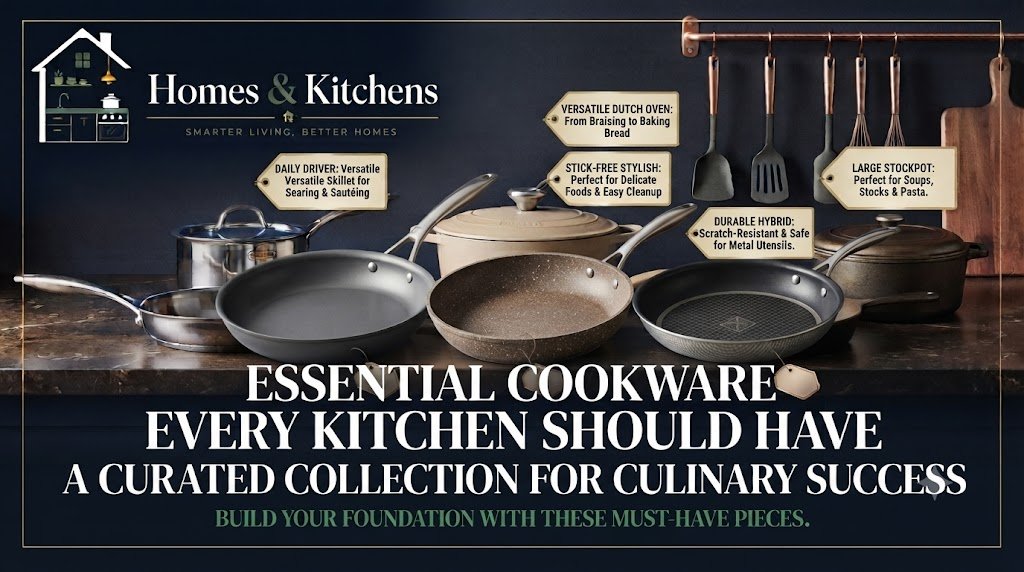
- Cap It Off with a 6-Quart Multi-Ply Stockpot or Dutch Oven: Ideal for Sunday chili, stocks, soups, and large-batch boiling.
For more inspiration on organizing your culinary space, explore our guide on Kitchen essentials or visit our main portal at Homes.
Frequently Asked Questions
Is ceramic cookware safer than traditional nonstick?
Ceramic nonstick coatings do not contain PTFE or PFOA, making them popular eco-friendly alternatives. However, both types require gentle handling and have similar lifespans compared to bare metal options.
Why does food stick to my stainless steel pan?
Food typically sticks because the pan was not preheated properly, or the food was dropped into cold oil. Always heat the empty pan first, add oil until it shimmers, and allow a protein to form a natural sear before attempting to flip it.
Can I use metal utensils on cast iron?
Yes. Cast iron is exceptionally tough, and metal spatulas and turners actually help smooth down microscopic bumps on the seasoning layer over time.
Final Verdict
There is no single “best” cookware material—only the right tool for the specific job.
- Choose Stainless Steel if you want a lifetime investment that excels at searing, browning, and making complex sauces.
- Choose Nonstick if you prioritize quick breakfasts, easy cleanup, and cooking with minimal fats.
- Choose Cast Iron if you value unmatched heat retention, durability, and a chemical-free cooking surface.
Key Takeaways
- Multi-clad stainless steel offers unbeatable durability and thermal response for general cooking and searing.
- Nonstick pans simplify cooking delicate items like eggs and fish, but require gentle care and replacement every few years.
- Cast iron provides incredible heat retention and lasts for generations when properly seasoned and maintained.
- A balanced kitchen relies on a mix of these materials rather than a single all-in-one pan.
Conclusion
Outfitting your kitchen with the right cookware transforms cooking from a frustrating chore into an enjoyable, creative outlet. By understanding the unique strengths of stainless steel, nonstick, and cast iron, you can mix and match to suit your favorite recipes. Treat your pans with the respect their materials demand, and they will serve you delicious, perfectly cooked meals for years to come.