Introduction
Picture this: It is a crisp Tuesday morning in a suburban Chicago kitchen. The house is quiet except for the low hum of the refrigerator. You reach for your favorite ceramic mug, measure out a spoonful of loose-leaf Earl Grey, and wait for water. In the past, this meant watching a whistling aluminum pot on a gas burner while answering early-morning emails, occasionally forgetting it until it boiled dry. Today, you press a single button on a sleek base station, and within two minutes, water hits a precise 195 degrees Fahrenheit—the exact temperature needed to extract the bergamot notes without scorching the delicate black leaves.
For American homeowners and renters upgrading their daily routines, the kitchen counter is changing. The appliance space once reserved exclusively for drip coffee makers and two-slice toasters now makes room for precision water heating. Whether you are managing a busy household in Seattle, working remotely from a downtown apartment in Austin, or simply trying to streamline your evening chamomile ritual, choosing between a dedicated tea maker and a modern electric kettle comes down to how you interact with your hot water.
In many U.S. homes, counter space is precious real estate. Investing in the right appliance means balancing brewing capacity, temperature control, speed, and clean-up ease. This guide breaks down everything you need to know about modern water heating appliances, drawing from real-world testing environments, thermodynamic principles, and everyday kitchen ergonomics to help you make an informed choice.
The Evolution of Boiling Water: Tea Makers vs. Electric Kettles
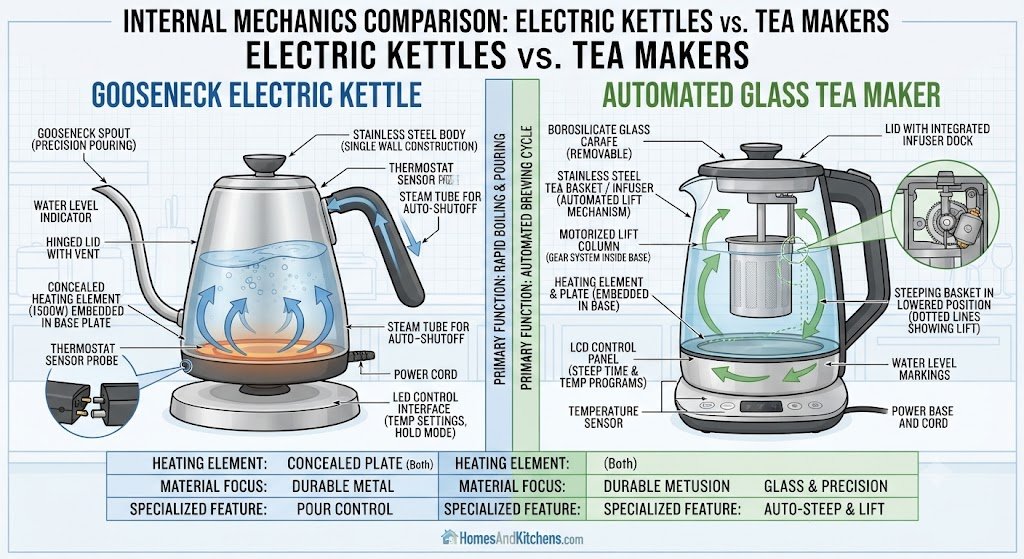
To understand which appliance belongs on your countertop, it helps to distinguish between a standard variable-temperature electric kettle and an all-in-one programmable tea maker. While both heat water efficiently, their engineering approaches differ significantly.
Modern Electric Kettles
An electric kettle is a standalone pitcher paired with a heated base. Its primary job is rapid water heating. Over the last decade, electric kettles have transitioned from simple metal jugs with auto-shutoff switches to sophisticated countertop appliances featuring digital LED displays, holding-temperature modes, and gooseneck spouts designed for precision pouring.
Programmable Tea Makers
A tea maker integrates the heating element directly with an internal brewing basket or infuser system. Instead of heating water in a separate vessel and pouring it over leaves in a mug or pot, a tea maker automates the entire extraction cycle. The basket lowers automatically when the water reaches target temperature, steeps for a programmed duration, and lifts to halt extraction before bitterness sets in.
Key Factors to Consider Before Buying
Before exploring specific categories, evaluate how an appliance fits your physical kitchen space and daily habits.
Heating Speed and Wattage
Most North American kitchen outlets operate on 120 volts and supply a maximum of 15 amps, capping circuits at 1,800 watts. High-performance electric kettles typically draw between 1,500 and 1,500+ watts, bringing a full 1.5-liter capacity to a rolling boil in under four minutes. Lower-wattage travel models or budget units may take twice as long.
Materials and Build Quality
- Borosilicate Glass: Allows you to watch the boil and check for mineral scale buildup. It is chemically inert and leaves no metallic taste, though it requires careful handling around cast-iron cookware.
- Food-Grade Stainless Steel: Extremely durable and rugged. Look for seamless interior construction to prevent rust spots around weld lines.
- BPA-Free Plastics: Often used for outer shells or handles to keep the exterior cool to the touch. Ensure any plastic component touching boiling water is certified food-safe.
Capacity and Countertop Footprint
A standard family of four living in a suburban home with a spacious Kitchen layout can easily accommodate a 1.7-liter glass kettle or a large-capacity brewing system. Conversely, studio apartment dwellers or tiny home enthusiasts often prefer a compact 0.8-liter or 1-liter model that stores easily in a cabinet.
Comparison of Water Heating Appliances
| Feature / Metric | Standard Electric Kettle | Gooseneck Pour-Over Kettle | Programmable Tea Maker | Stovetop Whistling Kettle |
| Average Boil Time (1.5L) | 3.5 to 4.5 minutes | 4 to 5 minutes | 4 to 6 minutes | 8 to 12 minutes |
| Temperature Control | Varies (Basic to Precise) | Varies (Often Precise) | Fully Automated | None (Relies on eye/thermometer) |
| Built-in Infuser | Rare (Optional accessory) | No | Yes (Automated lift/lower) | No |
| Counter Footprint | Moderate circular base | Moderate circular base | Larger rectangular base | Minimal (Stovetop burner) |
| Best For | General multi-use boiling | Pour-over coffee & loose leaf | Dedicated loose-leaf tea drinkers | Traditionalists & minimalists |
In-Depth Appliance Categories
The Precision Variable-Temperature Electric Kettle
For households that consume a diverse rotation of green teas, oolongs, French press coffee, and instant oats, a variable-temperature kettle is unmatched. Green tea enthusiasts know that pouring boiling water over delicate Sencha leaves burns them, resulting in a bitter, astringent cup. Variable temperature settings allow you to dial in exact thresholds:
- 160°F – 175°F: Delicate white and green teas.
- 185°F – 190°F: Oolong teas and delicate floral blends.
- 200°F – 208°F: Black teas, herbal infusions, and robust processing.
- 212°F (Full Boil): Black tea blends requiring maximum extraction and French press coffee.
The Automated Glass Tea Maker
If you love loose-leaf tea but dislike managing separate timers, infusers, and cleanup messes, an automated tea maker is a game changer. During testing of high-end countertop brewing systems, one practical lesson homeowners often discover is the value of automated timing. When steeping high-end pu-erh or green teas, missing the window by even sixty seconds transforms a smooth cup into a bitter disappointment. Automated systems remove human error by lifting the infuser basket mechanically once the timer expires.
Step-by-Step Guide: How to Brew the Perfect Cup
Mastering your equipment ensures optimal flavor extraction every single time. Follow this structured workflow:
- Purge and Refill: Empty any leftover water from previous heating cycles. Fill the kettle with fresh, cold, filtered water. Stale water that has been boiled multiple times loses dissolved oxygen, resulting in a flat-tasting cup.
- Select Temperature: Set your digital base to the manufacturer’s recommended temperature for your specific tea variety.
- Pre-Warm the Vessel: While the water heats, pour a small amount of hot tap water into your teapot or mug to warm the ceramic, preventing a sudden temperature drop when the boiling water is added.
- Measure Tea: Weigh out your loose-leaf tea using a digital kitchen scale (typically 2 grams of tea per 8 ounces of water) or measure accurately with a dry scoop.
- Steep and Monitor: Pour the heated water over the leaves (or let the automated system lower the basket). Start a backup timer if your unit lacks an integrated countdown.
- Remove Leaves Promptly: Once the steeping time elapses, remove the infuser basket immediately. Never leave leaves sitting in residual water unless you enjoy over-extracted bitterness.
Common Mistakes to Avoid
Even seasoned home cooks occasionally fall into traps that shorten appliance life or ruin beverage quality.
- Leaving Water Standing in the Kettle: Leaving mineral-rich tap water sitting inside the stainless steel or glass chamber accelerates scale buildup and mineral pitting. Always empty the kettle after your final use of the day.
- Ignoring Descaling Schedules: Depending on your municipal water hardness, calcium and magnesium carbonate will precipitate onto the heating element. Neglecting monthly descaling reduces heating efficiency and can trigger auto-shutoff safety sensors prematurely.
- Submerging the Power Base: Electric kettle bases contain delicate electronic contacts. Never submerge the base in water or put it in the dishwasher. Wipe it down with a damp microfiber cloth instead.
- Overfilling Past Maximum Lines: Pouring water past the maximum fill line causes dangerous boiling-water sputtering out of the spout, risking burns and damaging the steam switch mechanism in the handle.
Expert Tips for Maintenance and Longevity
To keep your investment performing like new for years to come, incorporate these maintenance habits into your weekly routine:
- Natural Descaling Solution: Instead of harsh chemical cleaners, fill the kettle with a 50/50 mixture of white vinegar and water. Bring it to a boil, let it sit for 30 minutes, and rinse thoroughly. For stubborn mineral rings, add two tablespoons of baking soda and let it fizz.
- Filter Maintenance: If your kettle features an integrated mesh scale filter at the spout, pop it out every two weeks and scrub it gently with a soft toothbrush to prevent particulate restriction.
- Dry Storage: If you are leaving your Homes for an extended vacation, empty the kettle entirely and leave the lid open to allow complete interior air-drying.
Comprehensive Checklist for Your Purchase
Before pulling the trigger on a new appliance, run through this quick checklist to confirm it meets your household needs:
- Does the kettle have an automatic shut-off and boil-dry protection feature?
- Is the interior free of exposed copper, lead solder, or low-grade plastics?
- Is the handle ergonomically balanced for safe pouring when filled to maximum capacity?
- Does the lid open wide enough (ideally 70 to 90 degrees) to allow a human hand inside for easy cleaning?
- Is the base 360-degree rotational for comfortable left- or right-handed pickup?
Frequently Asked Questions
Are electric kettles more energy efficient than stovetop kettles?
Yes. According to energy efficiency studies referenced by the U.S. Department of Energy, electric kettles heat water directly via an immersed element with efficiencies approaching 80% to 90%. Stovetop kettles—especially on electric coil or gas ranges—lose significant thermal energy to the surrounding air and burner grates, operating closer to 40% to 50% efficiency.
Can I boil milk or soup in an electric kettle?
Never boil milk, broth, or soups in a standard electric kettle. Milk solids will scorch instantly onto the exposed heating element at the bottom, creating a burnt residue that is nearly impossible to remove and will ruin all future batches of water. Use a traditional saucepan for dairy products.
How do I get rid of white flakes floating in my boiled water?
Those white flakes are harmless calcium carbonate or magnesium deposits, commonly known as limescale, shed from hard water minerals. They pose no health risk, but they indicate your kettle needs a routine vinegar descaling cycle.
Final Verdict
Choosing the right appliance depends entirely on your daily ritual. If you appreciate the ceremony of loose-leaf tea, value precision temperature control, and want to eliminate countertop clutter, investing in a high-end variable-temperature electric kettle or an automated glass tea maker transforms your kitchen experience. For minimalists who simply want fast boiling water for oatmeal, French press, and tea alike, a durable stainless steel electric kettle remains the ultimate kitchen workhorse.
Key Takeaways
- Match Appliances to Habits: Opt for variable-temperature kettles if you brew delicate green and white teas that require precise heat control.
- Energy Efficiency: Electric kettles heat water faster and use significantly less energy than traditional stovetop pots.
- Routine Maintenance: Monthly descaling with a simple vinegar solution prevents mineral buildup and extends appliance lifespan.
- Safety First: Always check for auto-shutoff features, boil-dry protection, and cool-touch exterior handles.
Conclusion
Upgrading your morning routine starts with eliminating small frustrations—whether it is waiting ten minutes for a stovetop whistle or guessing water temperatures for delicate green teas. By selecting an electric kettle or tea maker tailored to your lifestyle, you bring professional-grade precision right into your home. Explore our other guides on kitchen organization and appliance optimization to continue refining your cooking space.