Introduction
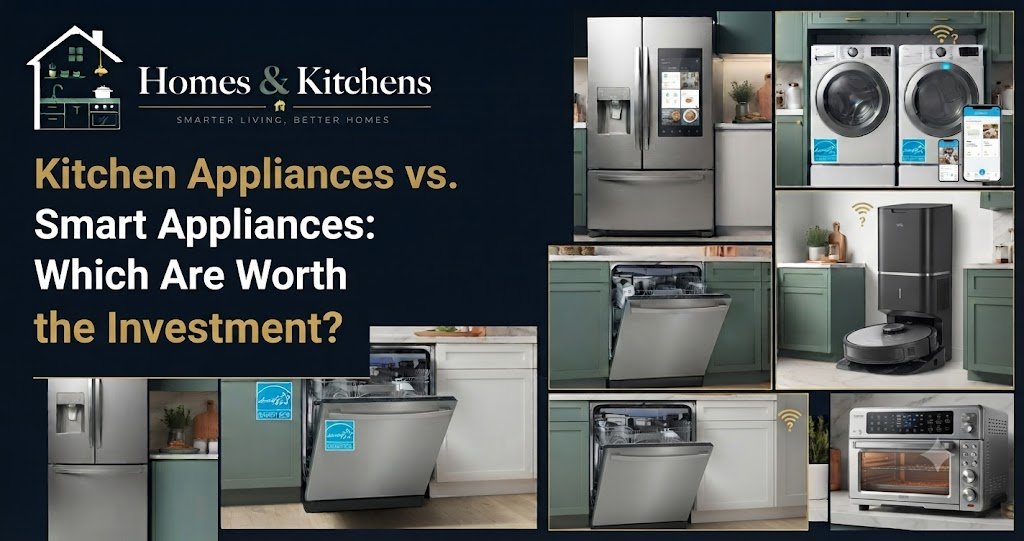
Walking onto a modern appliance showroom floor can feel like stepping into a sci-fi film. Alongside sleek stainless steel finishes and traditional rotary dials, you will find refrigerators with internal cameras tracking your milk supply, ovens that stream cooking tutorials, and coffee makers you can prompt from your bed via a smartphone app.
As a homeowner or renter upgrading your culinary workspace, you face a critical modern dilemma: Do you invest your hard-earned money in rock-solid, mechanically reliable traditional kitchen appliances, or do you pay a 30% to 50% premium for smart, connected, Wi-Fi-enabled ecosystem appliances?
The marketing departments for major manufacturers want you to believe that a connected kitchen is safer, more efficient, and fundamentally superior. Meanwhile, veteran homeowners and repair technicians often warn of software bugs, rapid technological obsolescence, and expensive circuit board replacements.
This guide cuts through the marketing hype. We will analyze the real-world utility of smart appliance features versus traditional reliability, examine cost-to-benefit ratios, and help you decide which upgrades are genuinely worth the investment for your household.
Defining the Contenders: Traditional vs. Smart
To make an informed purchasing decision, it helps to establish clear definitions for both categories in the modern home marketplace.
Traditional Kitchen Appliances
Traditional appliances focus entirely on core mechanical and thermal performance. Their primary mission is simple: keep food cold, cook food evenly, wash dishes thoroughly, and brew coffee hot.
- Control Interface: Mechanical knobs, tactile buttons, or simple digital LED timers.
- Connectivity: Completely offline. They operate independently without requiring a home Wi-Fi network, cloud accounts, or mobile apps.
- Design Philosophy: Longevity, repairability, and straightforward mechanical engineering.
Smart Kitchen Appliances
Smart appliances integrate Internet of Things (IoT) technology. They feature internal microcomputers, Wi-Fi or Bluetooth connectivity, and companion smartphone apps designed to monitor, control, and automate kitchen tasks.
- Control Interface: Touchscreens, voice assistant integration (Alexa or Google Assistant), and smartphone remote controls.
- Connectivity: Connected to home wireless networks, cloud servers, and manufacturer diagnostic platforms.
- Design Philosophy: Convenience, automation, remote diagnostics, and ecosystem integration.
Core Comparison Framework
When evaluating whether a smart feature justifies a higher price tag, weigh the upfront cost against your daily routines and long-term durability expectations.
| Evaluation Metric | Traditional Kitchen Appliances | Smart Kitchen Appliances |
| Upfront Cost | Moderate to affordable | High to luxury pricing |
| Average Lifespan | 10 to 15+ years (mechanically stable) | 7 to 10 years (limited by software support) |
| Repair Complexity | High repairability; parts are widely available | Low field repairability; entire control boards often replaced |
| Daily Utility | High core performance (boils, cools, cleans reliably) | Variable (some features save time; others are novelties) |
| Security & Privacy | None required (offline operation) | Requires network security, firmware updates, and data sharing |
Deep Dive: Where Smart Appliances Deliver Real Value
Not all smart features are marketing fluff. Several technological integrations offer genuine safety, maintenance, and efficiency advantages for modern homeowners.
1. Leak Detection and Automatic Shut-Off
Water damage is one of the most expensive and catastrophic disasters a homeowner can face. Smart dishwashers and connected under-sink water filtration systems often include integrated moisture sensors and automatic water-supply shut-off valves.
- Why it’s worth it: If a supply hose cracks or a basin overflows while you are at work, the appliance cuts the water supply instantly and pushes an alert to your phone, potentially saving thousands of dollars in structural remediation.
2. Remote Diagnostics and Error Codes
When a traditional refrigerator stops cooling or an oven displays an cryptic error code like “E-15,” you usually have to pay a technician a diagnostic fee just to figure out what is broken.
- Why it’s worth it: Smart appliances can beam real-time diagnostic logs directly to customer support or your phone. Technicians can identify whether a specific thermostat or heating element has failed before they even drive to your house, reducing labor hours and second-trip parts delays.
3. Precision Cooking and Guided Recipes
Smart ovens and induction cooktops integrated with wireless meat probes take the guesswork out of roasting meats or baking complex pastries.
- Why it’s worth it: You set a target internal temperature for a prime rib or chicken via an app, and the oven automatically adjusts ambient temperature or shuts down when perfection is reached. For beginner cooks, this eliminates ruined meals and food waste.
Deep Dive: Where Smart Appliances Fall Short
Conversely, many smart features add unnecessary complexity and cost without improving the fundamental job the appliance is built to do.
1. Touchscreens on Refrigerators
Putting a 10-inch Android tablet onto the door of a refrigerator sounds futuristic. In practice, these screens often introduce severe vulnerabilities.
- The Reality: Kitchen environments are harsh, featuring grease, moisture, and flour dust. Refrigerator touchscreens can become sluggish, software updates eventually cease after 3 to 5 years, and replacing a cracked or failing smart panel can cost as much as buying an entirely new basic refrigerator.
2. Novelty Automation and Gimmicks
Features like internal grocery inventory cameras or remote-starting your dishwasher (when you still have to manually load and add detergent) offer marginal utility.
- The Reality: If you have to walk to the kitchen to load the dishes or place the roast inside the oven anyway, remote-starting via an app rarely saves meaningful time. It often introduces user error, such as accidental triggers by pets or children.
For broader kitchen planning strategies, review our foundational Kitchen Appliances Buying Guide to align your equipment choices with your household workflow.
Financial and Environmental Impact: Cost of Ownership
When calculating the investment value, look beyond the initial receipt.
- Energy Monitoring: Some smart appliances and smart plugs track kilowatt-hour usage, helping you shift heavy dishwashing or laundry cycles to off-peak hours when utility rates drop.
- Planned Obsolescence: Traditional appliances fail mechanically over time (e.g., a worn-out compressor or water pump), which can usually be fixed by swapping a $40 mechanical part. Smart appliances frequently fail digitally when a manufacturer drops app support or server connectivity, turning an otherwise functional appliance into an “offline” basic machine with obsolete software.
Common Mistakes to Avoid When Choosing Between Smart and Standard
- Paying for Ecosystem Lock-In: Buying appliances tied to a single proprietary brand app that doesn’t communicate with your other smart home devices.
- Ignoring Wi-Fi Infrastructure: Installing smart appliances in a basement laundry room or thick-walled kitchen without verifying stable wireless router coverage, leading to constant disconnects.
- Assuming Smart Means Higher Quality: Believing that because an appliance costs $2,500 and features a touchscreen, its core mechanical compressor or motor is built better than a $1,200 traditional model.
- Neglecting Data Privacy: Failing to review what household usage data the appliance manufacturer collects and transmits to cloud servers.
Maintenance Advice: Keeping Both Worlds Running
Whether your kitchen is analog or digital, proper upkeep extends your return on investment:
- Keep Firmware Updated: If you invest in smart appliances, check your companion app quarterly to ensure security patches and bug fixes are applied.
- Protect Sensitive Electronics: Plug high-end smart ranges and refrigerators into dedicated surge protectors rather than standard wall outlets to shield delicate microprocessors from electrical storms and power spikes.
- Maintain Core Mechanicals: Software updates cannot clean a condenser coil or descale a dishwasher filter. Stick to physical maintenance schedules regardless of how smart the appliance claims to be.
Frequently Asked Questions
1. Do smart appliances last as long as traditional appliances?
Generally, no. Traditional appliances average 10 to 15+ years of reliable service because they have fewer electronic components prone to heat degradation. Smart appliances typically average 7 to 10 years because microprocessors, touchscreens, and Wi-Fi modules fail faster than mechanical motors.
2. Can smart appliances operate offline if my Wi-Fi goes down?
Yes. Essential functions—such as cooling, heating, washing, and baking—will still operate using manual physical controls on the appliance. However, app-based remote controls, push notifications, and guided recipes will be unavailable until your internet connection is restored.
3. Are smart appliances more expensive to repair?
Significantly more expensive. When a traditional appliance breaks, a technician replaces a mechanical switch or valve. When a smart appliance experiences an electronic failure, technicians frequently must replace entire master control boards, which can cost hundreds of dollars in parts alone.
4. Which smart appliance upgrade provides the best return on investment?
Smart leak detectors, automatic water shut-off valves, and smart thermostats or multi-probe meat thermometers offer the highest practical value because they directly prevent property damage or cooking errors.
5. Do smart appliances actually lower my utility bills?
The energy savings provided by smart scheduling features are usually modest—often saving only a few dollars a month. They rarely offset the higher initial purchase price of smart appliances on energy savings alone.
Final Verdict
When choosing between traditional and smart appliances, prioritize core mechanical performance and durability over digital novelty.
Invest your budget in high-grade stainless steel tubs, powerful induction elements, heavy-duty compressors, and proven reliability. Only add smart features where they solve a specific household pain point—such as leak detection, precise meat probing, or remote diagnostics. Avoid paying a luxury premium for touchscreens and gimmicky features that will become technologically obsolete long before your appliance wears out.
Conclusion
Building a functional, resilient kitchen requires balancing modern convenience with practical durability. By critically evaluating what features genuinely serve your daily life and protecting your investment with routine physical maintenance, you ensure your kitchen tools remain reliable assets for years to come.
For further insights on upgrading your home infrastructure, explore our guides on Kitchen Remodel Cost Guide, Kitchen Cabinets Guide, and Countertop Materials.
Call to Action
Have you experimented with smart kitchen tech, or do you prefer the dependable simplicity of traditional appliances? Share your thoughts and experiences in the comments below, and our team of home experts will join the conversation!