Introduction
If you feel like your kitchen shrinks a little bit every time you bring home groceries, you are not alone. Small kitchens present a unique design challenge. They force you to balance culinary ambition with unforgiving square footage, where every square inch of counter and cabinet space matters.
After years of touring compact urban apartments, historic homes with quirky layouts, and suburban starter houses, we have learned a fundamental truth: small kitchens do not suffer from a lack of space. They suffer from a lack of strategic organization. When items lack a dedicated home, counters turn into clutter magnets, cabinets become chaotic funnels of falling bakeware, and cooking transforms into a stressful game of Jenga.
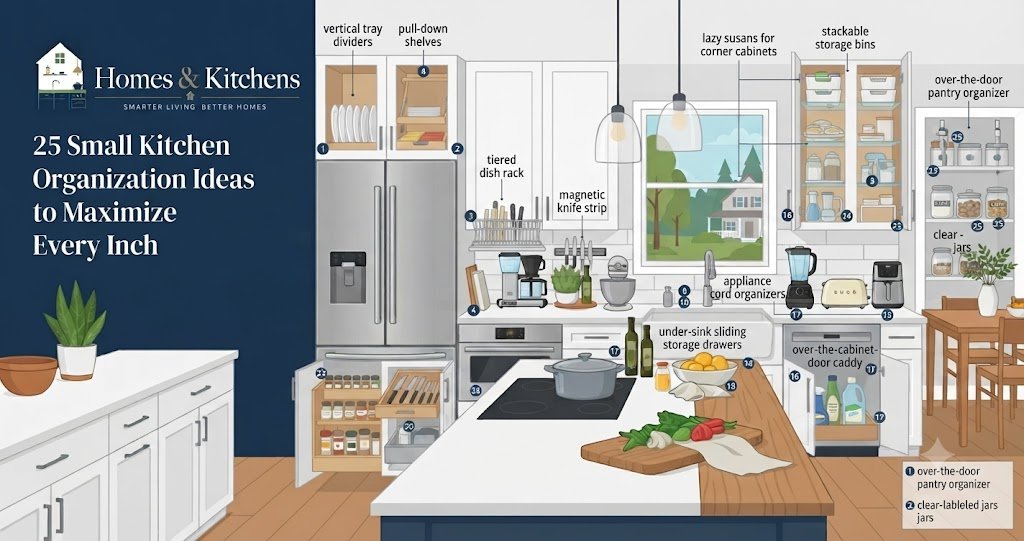
This guide moves beyond generic cleaning tips. We have assembled 25 actionable, expert-tested small kitchen organization ideas designed to unlock hidden storage, streamline your workflow, and maximize every square inch of your cooking space. Whether you are working with a single-wall kitchenette, a galley layout, or a cozy apartment setup, these strategies will help your kitchen work harder for you.
Understanding Small Kitchen Layouts and Storage Bottlenecks
Before buying bins, baskets, or drawer dividers, take a step back and analyze how your kitchen functions. Every kitchen has distinct storage bottlenecks. Identifying yours ensures you apply the right fix to the right problem.
- The Dead Corner Trap: Corner base and upper cabinets often swallow items permanently because the back corners are impossible to reach.
- The Vertical Waste Zone: Most people stack items directly on top of each other inside cabinets, leaving the upper half of every shelf completely empty.
- The Countertop Clutter Vortex: When drawers and cabinets are overstuffed, small appliances, cutting boards, and spice jars spill onto the counters, choking your workspace.
- The Deep Drawer Abyss: Wide, deep drawers quickly turn into jumbled junk drawers without compartmentalization.
Understanding these pain points allows you to approach organization systematically. Let us look at 25 ways to solve them.
1. Install Cabinet Door Mounted Racks for Spices and Lids
Your cabinet doors represent prime real estate that is almost always left empty. By mounting wire racks, slim baskets, or specialized clips onto the inside of your cabinet doors, you instantly create shallow storage that keeps small items visible and accessible.
- What to store: Spice jars, pot lids, plastic wrap boxes, baking soda, and measuring cups.
- Why it works: It shifts lightweight, frequently used items out of deep cabinet shelves, freeing up prime interior space for bulkier cookware.
- Expert Tip: Check the clearance depth of your shelves before screwing anything into a cabinet door. Make sure the mounted items will not collide with the items sitting on the interior shelves when the door closes.
2. Utilize Tension Rods Under the Sink for Cleaning Supplies
The cabinet beneath the kitchen sink is notoriously difficult to organize because of the plumbing trap, garbage disposal, and flexible water lines.
- How to do it: Place a spring-loaded tension rod horizontally near the top of the cabinet opening. Slide the trigger sprayer nozzles of your spray bottles over the rod to hang them neatly.
- Why it works: This keeps bottles suspended, leaving the floor of the cabinet wide open for bins, trash cans, or extra sponges.
- Cost: Very budget-friendly (under $10 for a standard tension rod).
3. Implement Pull-Out Cabinet Organizers
If you are tired of getting on your hands and knees to fish out a baking sheet from the back of a base cabinet, retrofitting your cabinets with pull-out wire drawers is a game-changer.
- Best for: Deep base cabinets and pantry cupboards.
- Benefits: Brings the entire contents of the cabinet out into the light with a single pull. No more forgotten canned goods expiring in the dark depths.
- Alternative: If permanent installation is not an option (such as in rental homes), look for standalone wire sliding basket units that sit directly on existing shelves.
4. Double Your Shelf Space with Cabinet Risers
When you stack dinner plates seven high, getting to the bottom plate becomes a risky and heavy chore.
- The Solution: Wire or wooden cabinet risers (shelf inserts) create a second tier inside your upper cabinets.
- How to use them: Place a riser over your everyday dinner plates and set bowls or smaller saucers on top. You instantly double your vertical storage capacity without risking broken ceramics.
- Pro Tip: Pair these with a thoughtful evaluation of your dinnerware count. Do you really need service for 12 in a two-person household? Consider scaling down everyday dishware to free up even more room. For deeper planning, read our guide on Kitchen Cabinets Guide.
5. Hang a Magnetic Knife Strip to Clear Counter Space
Block-style knife holders take up valuable counter space and trap crumbs and moisture in their slots.
- The Fix: Install a high-powered magnetic knife strip directly onto your backsplash or the side of a upper cabinet.
- Bonus Uses: Beyond kitchen knives, you can use magnetic strips to hold metal measuring spoons, small pairs of kitchen shears, and spice tins with magnetic bottoms.
- Safety Consideration: Mount the strip high enough to keep sharp blades safely out of reach of young children, but low enough for comfortable daily grabbing.
6. Exploit Toe-Kick Drawers for Flat Items
Many modern base cabinets feature an empty space between the floor and the bottom shelf, traditionally hidden by a decorative toe-kick plate.
- The Concept: Custom or retrofitted toe-kick drawers transform this dead space into a shallow pull-out drawer.
- What fits inside: Flat baking sheets, cooling racks, serving platters, and placemats.
- Note: This is a more advanced DIY project or professional installation, but it unlocks storage in a space that would otherwise collect dust bunnies.
7. Hang Pots and Pans on a Ceiling or Wall-Mounted Rack
Bulky pots, saucepans, and cast-iron skillets are notoriously awkward to stack inside standard cabinets.
- The Strategy: Install a sturdy wall-mounted rail with S-hooks or a hanging ceiling rack near your stove.
- Aesthetic and Function: This industrial look keeps your heaviest cookware within arm’s reach while freeing up entire base cabinets for small appliances or food storage.
- Important Check: Always anchor wall and ceiling racks directly into wooden wall studs or ceiling joists using heavy-duty hardware. Cast iron is deceptively heavy.
8. Adopt Clear, Uniform Food Storage Containers
Nothing makes a small pantry or cabinet feel smaller than a jumble of mismatched cardboard boxes, torn bags of flour, and half-empty pasta packages.
- The Strategy: Decant dry goods into clear, airtight rectangular or square containers.
- Why square containers win: Round containers leave wasted gaps between them. Square and rectangular bins sit flush against each other, maximizing every millimeter of shelf space.
- Labeling: Use a label maker or chalk pen to note cooking times or expiration dates on the bottom or back of each container.
9. Create a Pegboard Wall for Customizable Versatility
If you have an empty stretch of wall, a side of a pantry cabinet, or the side of an island, mount a heavy-duty wooden or metal pegboard.
- Why it is versatile: You can configure hooks, small shelves, and baskets to hold mugs, utensils, pots, or even fresh herbs in small planters.
- Easy Adjustability: As your kitchen needs change, simply unhook and rearrange your layout without drilling new holes.
- Style Note: Paint the pegboard to match your wall color for a seamless, built-in look, or paint it a contrasting accent color for a bold pop.
10. Use Multi-Tiered Lazy Susans in Corner Cabinets
Corner cabinets are legendary black holes. A multi-tiered Lazy Susan transforms a difficult reach into a spinning display.
- Best Application: Deep lower corner cabinets and upper corner wall cabinets.
- What to store: Oils, vinegars, sauces, canned goods, or everyday drinking glasses.
- Shopping Tip: Look for Lazy Susans with raised edges or lips so items do not slide off and jam the mechanism when you spin them quickly.
11. Maximize the Sides of Your Refrigerator
The sides of your refrigerator are large vertical steel panels that are magnetic and usually completely ignored.
- The Solution: Invest in magnetic spice racks, paper towel holders, wrap dispensers, or wire utility baskets that cling directly to the fridge side.
- Placement: Keep frequently accessed items (like olive oil, salt, or paper towels) on the side facing your prep zone to create an efficient cooking triangle.
12. Install Pull-Out Trash and Recycling Bins
Free-standing trash cans take up valuable floor space in small kitchens and often get in the way of open cabinet doors.
- The Fix: Install a sliding, dual-bin pull-out system inside a base cabinet under your counter or prep area.
- Benefits: Keeps unsightly trash hidden, controls kitchen odors, and frees up precious floor space for movement.
- Tip: Pair this with a countertop compost bin that you empty into the main bin nightly.
13. Hang Over-the-Cabinet Baskets for Quick Access Storage
If you rent your home and cannot drill into walls or cabinets, over-the-cabinet wire baskets are renter-friendly lifesavers.
- Where to place them: Hang them over the inside of cabinet doors under the sink for sponges and dish soap, or on the outside of pantry doors for lunchbox snacks.
- No Tools Required: They simply slip over the top edge of the door, allowing the door to close cleanly while creating instant extra pockets of storage.
14. Store Baking Sheets and Cutting Boards Vertically
Stacking baking sheets horizontally means you have to lift five heavy pans to reach the one at the bottom.
- The Hack: Use vertical file sorters, dish racks, or custom vertical dividers inside a cabinet or deep drawer to store baking sheets, cutting boards, and serving trays upright like books on a shelf.
- Why it works: You can pull out a single sheet instantly without disturbing the others. For more ideas on workspace efficiency, review our guide on Countertop Materials.
15. Zone Your Small Kitchen by Task
In a small kitchen, inefficiency causes physical crowding. If two people are bumping elbows, organization can fix the flow.
- The Concept: Establish distinct zones—Prep, Cooking, Cleaning, and Coffee.
- How to execute: Store cutting boards, knives, and mixing bowls near your main prep counter. Keep potholders, oils, and spices right next to the range. Keep coffee beans, mugs, and filters clustered around your coffee maker. Read more on streamlining appliances in our guide on Best Coffee Makers.
- Result: You stop walking back and forth across the kitchen, which makes a small space feel twice as large.
16. Install Floating Shelves in Place of Bulky Upper Cabinets
If you are renovating a very small kitchen, removing one or two heavy upper cabinets and replacing them with open floating shelves can open up the room visually.
- Visual Impact: Open shelving bounces light around the room and makes cramped walls feel airy and expansive.
- The Catch: Everything on open shelves is visible. Keep this space reserved for attractive, everyday items like matching dishware, glassware, or cookbooks.
- Maintenance Note: Dust collects faster on open kitchen shelves, so items stored here should be used and washed frequently.
17. Use Drawer Dividers to Eliminate the Junk Drawer Phenomenon
Deep, unorganized drawers invite clutter. When pens, rubber bands, peelers, and thermometers float around freely, you waste time searching.
- The Solution: Custom-cut bamboo or expandable plastic drawer organizers.
- Pro Tip: Stack shallow organizers in deep drawers if you have tall utensils you do not use daily, keeping everyday tools in the top tray and seasonal tools below.
18. Store Small Appliances on a Rolling Utility Cart
Counter space is sacred in a small kitchen. If your air fryer, stand mixer, and toaster oven live on the counter, you have no room to chop vegetables.
- The Fix: Purchase a compact, multi-tier rolling kitchen cart (or island cart) to act as a mobile appliance garage and extra prep station.
- Flexibility: Roll it out when you need to bake or cook, and tuck it against a blank wall or into a corner when you are finished. For equipment comparisons, check out our guide on Air Fryer vs Toaster Oven.
19. Utilize Risers and Bins Inside Your Refrigerator
Refrigerator shelves suffer from the same chaos as pantry shelves—items get pushed to the back and forgotten until they spoil.
- How to organize: Group condiment bottles in clear, shallow bins so you can pull out the entire bin to reach what is in the back. Use fridge shelf risers to create a second level for yogurt cups or cheese slices.
- Energy efficiency benefit: A well-organized fridge lets you find what you need faster, meaning the door stays open less, saving energy.
20. Hang Utensils on a Rail System
Instead of cramming a heavy ceramic crock full of spatulas, ladles, and whisks on your counter, mount a slim stainless steel rail with hooks beneath your upper cabinets.
- Space Saved: Eliminates counter clutter entirely.
- Accessibility: Keeps your most-used stirring and flipping tools hovering right where you need them over the stove or prep counter.
21. Maximize the Space Above Your Upper Cabinets
If there is a gap between the top of your upper cabinets and the ceiling, you have vertical real estate that is currently collecting grease and dust.
- How to use it: Place attractive wicker baskets or matching fabric storage boxes up top.
- What to store: Holiday-themed serveware, canning jars, fine china, or bulky bulk-buy paper towel rolls.
- Maintenance Reminder: Because this area collects airborne kitchen grease over time, store items in lidded containers so they stay clean.
22. Mount a Fold-Down Table or Breakfast Bar
When floor space is so tight that a traditional kitchen table or island is impossible, a wall-mounted drop-leaf table provides a brilliant space-saving solution.
- How it works: Fold it flat against the wall when you are prepping meals to maintain a wide walking path. Fold it up and lock the support brace into place when you need a dining spot or extra counter surface.
- Weight Capacity: Ensure the folding brackets are rated for heavy loads if you plan to use it for heavy baking or seating.
23. Clear Out Expired and Unused Items Ruthlessly
No organizational product can fix a kitchen that is simply overstowed with items you never use.
- The Rule of Thumb: If you have not used a specialized kitchen gadget in the past 12 months, donate it or sell it.
- Common Culprits: Duplicate spatulas, cracked storage containers missing their lids, novelty mugs, and expired spices that lost their flavor years ago.
- Reset Frequency: Do a quick declutter audit twice a year—once in the spring and once before the winter holidays.
24. Label Everything in the Pantry and Deep Cabinets
Labeling sounds obsessive, but it is one of the most effective psychological and practical tools for maintaining long-term kitchen organization.
- Why it helps: When every bin, basket, and shelf has a clear label (e.g., “Baking Supplies,” “Snacks,” “Pasta”), household members put items back in their correct home instead of dumping them randomly.
- Tools: A simple handheld label maker, chalkboard stickers, or minimalist vinyl decals.
25. Store Baking Pans and Platters in Deep Drawer Dividers
Instead of stacking heavy ceramic baking dishes horizontally where they can chip and scratch each other, store them vertically using heavy-duty pegboard drawer inserts or adjustable vertical dividers.
- The Benefit: You can grab a 9×13 casserole dish without lifting a heavy stack of glass pie plates and roasting pans.
- Protection: This prevents chipping on delicate ceramic edges and extends the life of your bakeware.
Summary Comparison: Small Kitchen Storage Solutions
| Storage Idea | Best For | Cost Level | Difficulty | Impact on Counter Space |
| Cabinet Door Racks | Spices, foil, lids | Low ($10–$25) | Easy (DIY) | Frees interior shelf space |
| Tension Rods | Under sink spray bottles | Very Low (under $10) | Very Easy | Organizes cabinet floor |
| Pull-Out Shelves | Deep base cabinets | Medium ($40–$100) | Moderate | Eliminates bending and digging |
| Cabinet Risers | Dinnerware and plates | Low ($15–$30) | Easy (No install) | Doubles vertical shelf space |
| Magnetic Knife Strip | Knives and metal tools | Low ($15–$30) | Easy (Mounting) | Completely clears counter blocks |
| Rolling Utility Cart | Appliances and prep | Medium ($50–$150) | Easy (Assembly) | Adds movable prep space |
Common Mistakes to Avoid in Small Kitchen Organization
When organizing a compact kitchen, well-meaning DIYers often fall into common traps. Avoid these pitfalls to ensure your system lasts:
- Buying organizers before decluttering: Always purge first, measure second, and shop last. Buying bins for items you should have thrown away only compounds the clutter.
- Ignoring vertical height: Stacking items only on the floor of your cabinets leaves 50% of your cabinet space empty. Always look upward.
- Choosing style over function: A gorgeous wicker basket is useless if it does not fit the exact dimensions of your pantry shelf or if it is too heavy to pull down safely.
- Forgetting weight limits: Overloading cheap adhesive hooks or tension rods can lead to sudden crashes in the middle of the night. Always check weight ratings.
Frequently Asked Questions
1. How can I organize a small kitchen with zero cabinet space?
Focus on vertical surfaces. Install hanging rails for utensils and pots, mount a magnetic knife strip, use a rolling utility cart for appliances, and put up floating shelves for everyday dishware.
2. What is the best way to store pots and pans in a tiny kitchen?
If cabinet space is tight, use a wall-mounted or ceiling-mounted pot rack. If using cabinets, install pull-out wire drawers and store lids vertically on cabinet doors.
3. How do I stop my kitchen counters from collecting clutter?
Assign every loose item on your counter a specific “home” inside a drawer or cabinet. If an item does not have a designated home, it becomes counter clutter. Clear off counters weekly as a reset habit.
4. Are pull-out cabinet organizers difficult to install?
Most retrofit pull-out organizers require basic screwdriver skills and take about 15 to 30 minutes per cabinet. Measure your cabinet opening and interior width carefully before ordering.
5. How can renters organize kitchens without damaging walls?
Use tension rods under sinks, over-the-cabinet hanging baskets, freestanding rolling carts, adhesive command hooks (where permitted), and freestanding shelf risers that require no hardware.
6. How often should I reorganize my small kitchen?
Plan a quick reset every season (about every three to four months) to clear out expired pantry items and adjust storage bins as your cooking habits change.
7. What are the best containers for pantry organization?
Clear, square, or rectangular airtight plastic or glass containers. Square containers maximize shelf space by eliminating the gaps left by round containers.
8. How do I organize deep base cabinets where things get lost?
Retrofit them with sliding pull-out wire baskets or multi-tiered Lazy Susans so you can bring the back items forward effortlessly.
9. Should I store appliances on the counter or in cabinets?
Keep only the appliances you use daily (like a coffee maker) on the counter. Store single-use appliances (like waffle makers or slow cookers) in lower cabinets or on a pantry shelf.
10. How can I make a dark small kitchen feel larger?
Keep counters clear, use clear storage bins to reduce visual noise, install under-cabinet LED strip lighting, and opt for lighter color organizers.
Final Recommendation & Key Takeaways
Organizing a small kitchen is not about achieving perfection on Instagram; it is about creating an intuitive, stress-free cooking environment where you can find what you need in seconds.
- Start Small: Pick one troublesome cabinet or drawer to tackle today rather than trying to overhaul the entire kitchen at once.
- Think Upward: Use risers, door racks, and vertical dividers to harness empty vertical air space.
- Keep Only What You Love: Regular decluttering is the single most effective storage strategy in existence.
By implementing even a few of these 25 ideas, you will reclaim your counters, protect your cookware, and transform your small kitchen into a joy to cook in.