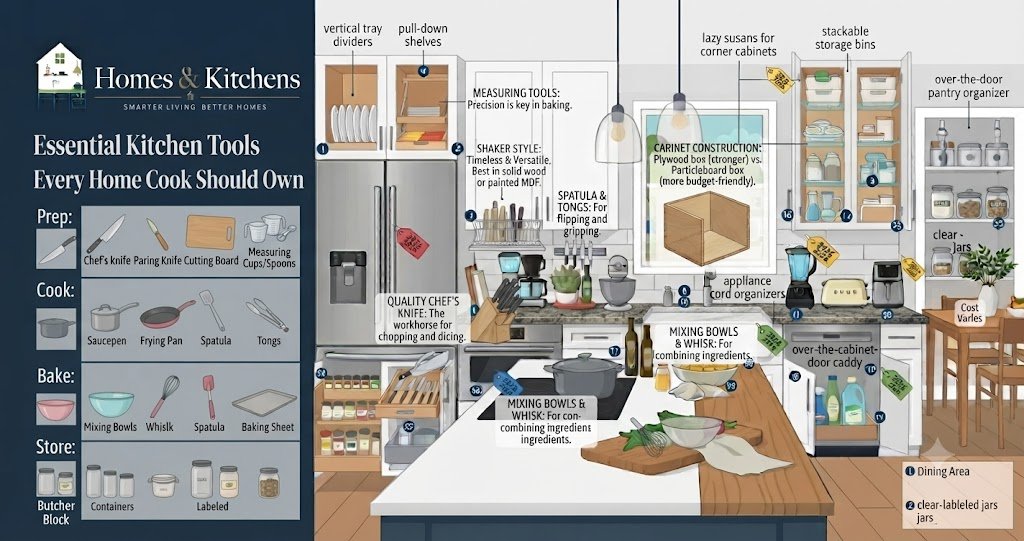
Walking down the kitchen supply aisle can feel overwhelming. Sleek single-use gadgets promise to dice onions in seconds, electronic immersion circulators flash digital readouts, and copper pots gleam under showroom lights. For a home cook trying to build a functional workspace, separating marketing gimmicks from genuinely useful gear is half the battle.
Building a great kitchen is not about accumulating gear. It is about investing in versatile, high-performing tools that make cooking easier, safer, and more enjoyable. Whether you are moving into your first apartment, resetting your culinary routine, or helping a young adult set up their first kitchen, a minimalist approach built on quality foundational items always wins.
The Philosophy of Kitchen Minimalism: Quality Over Quantity
Every piece of equipment in your kitchen should earn its keep. If a tool only serves one purpose—like an avocado slicer or a specialized banana hanger—it takes up valuable drawer space and drains your budget.
Focus instead on tools with high task versatility. A heavy-duty chef’s knife can chop vegetables, slice meat, mince herbs, and crush garlic. A large stainless steel mixing bowl doubles as a prep station, a tossing vessel for salads, a double boiler base, and a storage container.
Why Material Matters
When choosing kitchen tools, prioritize durability and food safety.
- Stainless Steel: Non-reactive, rust-resistant, and virtually indestructible. Ideal for pots, pans, bowls, and mixing tools.
- Cast Iron & Carbon Steel: Retains heat exceptionally well and develops a natural non-stick surface over time when properly seasoned.
- Hardwood (Maple, Walnut, Cherry): Gentle on knife edges for cutting boards and wooden spoons, naturally antimicrobial when maintained with food-grade mineral oil.
- Silicone: Heat-resistant up to high temperatures, flexible for scraping bowls, and safe for non-stick cookware coatings.
Phase 1: Cutlery and Prep Essentials
Your knife is the extension of your hand. Working with a dull, poorly balanced knife is frustrating and dangerous. You do not need a block set containing 16 blades you will never touch. You only need three exceptional knives.
1. The 8-Inch Chef’s Knife
The workhorse of any kitchen. An 8-inch chef’s knife handles 90% of all cutting tasks, from dicing onions and chopping root vegetables to breaking down whole chickens.
- What to Look For: Forged construction (rather than stamped), a full tang (where the steel runs completely through the handle), and a comfortable handle grip.
- Top Pick (Best Overall): Wüsthof Classic 8-Inch Chef’s Knife—balanced, durable German steel that holds a sharp edge.
- Budget Alternative: Victorinox Fibrox Pro 8-Inch Chef’s Knife—stamped steel with a slip-resistant handle; widely used in restaurant kitchens despite its modest price point.
2. The 3.5-Inch to 4-Inch Paring Knife
For intricate tasks where an 8-inch blade is too clumsy—such as coring strawberries, peeling apples, deveining shrimp, or trimming green beans.
- Top Pick: Mercer Culinary Millennia Paring Knife.
3. The 9-Inch Serrated Bread Knife
Serrated blades act like microscopic saws. A good bread knife glides through crusty artisan sourdough without crushing the soft interior, and it doubles as the best tool for slicing ripe tomatoes or delicate layer cakes.
- Top Pick: Tojiro Bread Slicer.
4. Cutting Boards (Wood and Plastic)
Never cut directly on countertops or ceramic plates, which dull knives instantly. You should own at least two boards: a large wooden board for dry prep (bread, vegetables, cheese) and a dishwasher-safe plastic board for raw meat, poultry, and fish to prevent cross-contamination.
- Top Pick (Wood): John Boos Block Maple Wood Cutting Board (requires monthly mineral oil conditioning).
- Top Pick (Plastic): OXO Good Grips Everyday Plastic Cutting Board Set.
Phase 2: Cookware Foundation
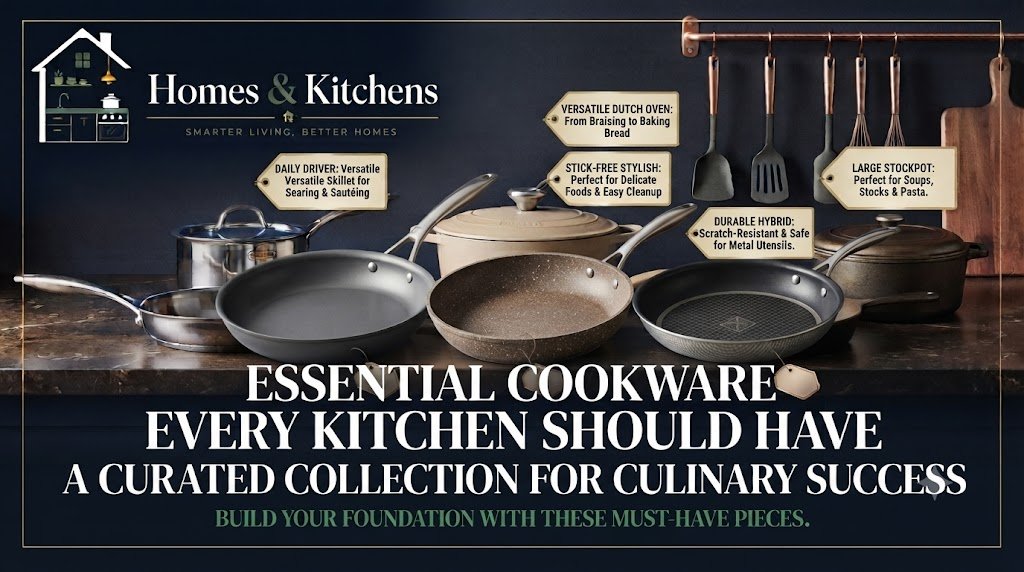
You do not need a 10-piece matching cookware set. Many pre-packaged sets include pans you will rarely use while skimping on quality where it matters most. Build a modular collection instead.
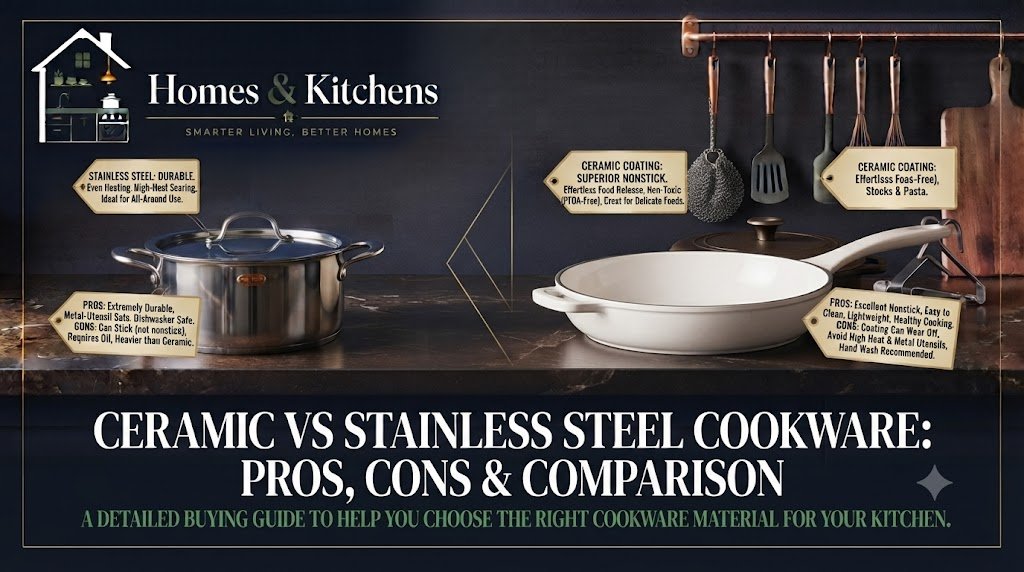
1. The 10-Inch or 12-Inch Stainless Steel Skillet
Stainless steel is unmatched for searing meats, sautéing vegetables, and building pan sauces using fond (the browned bits left at the bottom of the pan).
- Top Pick: All-Clad D3 Tri-Ply Stainless Steel Fry Pan. Its aluminum core sandwiched between layers of stainless steel ensures rapid, even heat distribution without hot spots.
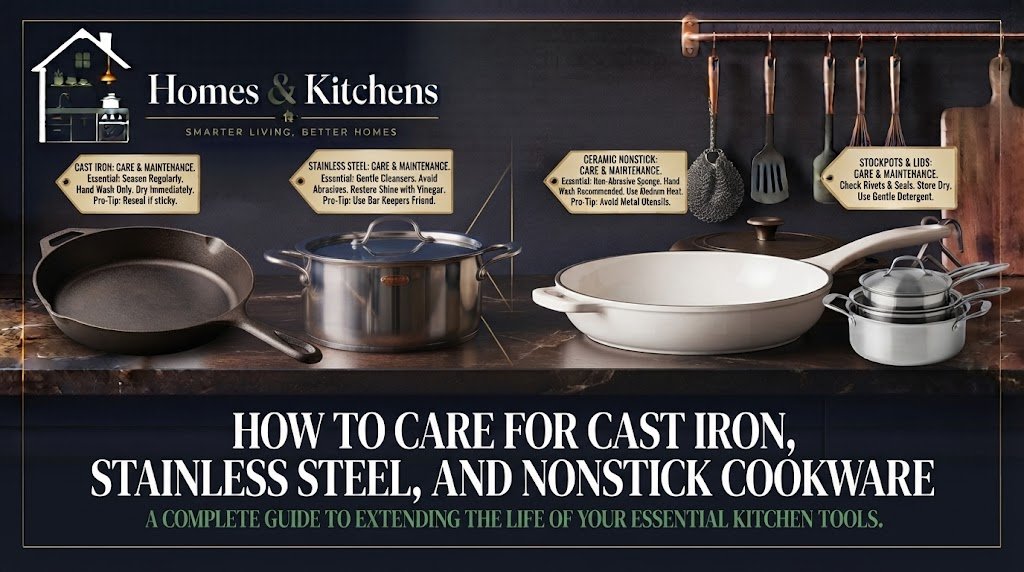
2. The Seasoned Cast Iron Skillet (10.5-Inch or 12-Inch)
Inexpensive, incredibly durable, and naturally non-stick once seasoned. Cast iron excels at retaining heat, making it the gold standard for searing steaks, baking cornbread, and frying chicken.
- Top Pick: Lodge Cast Iron Skillet.
3. The 5-to-7-Quart Enameled Dutch Oven
A heavy-bottomed Dutch oven is arguably the most versatile piece of cookware in existence. Use it to bake artisanal bread, braise short ribs, simmer Sunday tomato sauce, or fry batches of homemade French fries.
- Top Pick (Best Overall): Le Creuset Signature Enameled Cast Iron Dutch Oven (a lifetime investment).
- Top Pick (Best Value): Lodge Enameled Cast Iron Dutch Oven (delivers 90% of the performance at a fraction of the cost).
4. The 3-Quart Saucepan with Lid
Perfect for boiling grains, steaming vegetables, melting butter, making oatmeal, or whipping up quick sauces.
- Top Pick: All-Clad D3 Stainless 3-Quart Saucepan.
Comprehensive Cookware Comparison Table
| Category | Best For | Material | Maintenance | Approximate Price |
| Stainless Steel Skillet | Searing, pan sauces, general sautéing | Tri-ply aluminum/steel | Dishwasher safe, barkeeper’s friend for stains | $100 – $160 |
| Cast Iron Skillet | High-heat searing, baking, camping | Raw cast iron | Hand wash, dry immediately, oil seasoning | $20 – $50 |
| Enameled Dutch Oven | Braising, stews, soup, baking bread | Enameled cast iron | Hand wash recommended, avoid thermal shock | $70 – $400 |
| Stainless Saucepan | Liquids, grains, reductions | Tri-ply stainless steel | Low maintenance, dishwasher safe | $80 – $130 |
Phase 3: Measuring, Weighing, and Precision Tools
Baking is a science; cooking is an art. Even so, precision yields consistency. Relying on volume measurements (cups) for dry ingredients like flour often leads to dense, dry baked goods due to packing.
1. Digital Kitchen Scale
A digital scale measures in grams, ounces, milliliters, and pounds. It eliminates the need for multiple measuring cups, speeds up cleanup, and guarantees repeatable results in baking and portion control.
2. Dry Measuring Cups and Heavy Spoons
For instances when you follow traditional volume recipes. Look for heavy-duty stainless steel or thick BPA-free plastic with stamped markings that will not wash off over time.
3. Liquid Measuring Glass
Unlike dry cups, liquid measuring cups feature a pour spout and clear gradation lines below the rim so you can view measurements at eye level without spilling.
- Top Pick: Pyrex 2-Cup Glass Measuring Cup.
Phase 4: Mixing, Straining, and Prep Vessels
1. Stainless Steel Mixing Bowls (Set of 3)
Lightweight, nestable, unbreakable, and temperature-safe. You can place them over a pot of simmering water to melt chocolate or toss them in the dishwasher without hesitation.
2. Fine-Mesh Stainless Steel Strainers (Set of 3)
Far superior to plastic colanders for rinsing delicate berries, sifting flour, straining homemade stocks, or dusting powdered sugar.
- Top Pick: Cuisinart Fine Mesh Strainers.
Phase 5: Utensils and Hand Tools
1. 12-Inch Stainless Steel Locking Tongs
Tongs act as an extension of your fingers, keeping your hands safe from hot oil and steam. Choose a pair with a locking mechanism and scalloped edges for secure grip.
2. Silicone Spatulas / Scrapers
Essential for scraping every last drop of batter from a bowl or stirring thick sauces without scratching your stainless steel or non-stick pans. Look for seamless, one-piece molded silicone to prevent food from trapping in crevices.
3. Microplane Zester / Grater
An absolute game-changer for grating hard cheeses like Parmesan, zesting citrus fruits, grating fresh garlic and ginger, or dusting whole nutmeg over a latte.
- Top Pick: Microplane Classic Zester/Grater.
4. Instant-Read Digital Meat Thermometer
Stop guessing whether chicken is cooked or steak is medium-rare. An instant-read thermometer ensures food safety while preventing overcooked, dry meat.
Expert Maintenance Advice: Keeping Your Tools Alive
Investing in quality tools means nothing if you do not maintain them. Proper care extends the life of your equipment for decades.
- Knife Care: Never put chef’s knives in the dishwasher. The harsh detergents, high heat, and clanging against other dishes ruin the edge instantly. Wash by hand immediately after use, dry with a towel, and store on a magnetic strip or in a block. Hone your blade regularly using a steel rod.
- Cast Iron Maintenance: Wash cast iron with mild soap and warm water when necessary—modern dish soap no longer contains harsh lye. Dry thoroughly on a warm burner for two minutes to evaporate moisture, then rub a microscopic layer of neutral oil (like canola or grapeseed) across the surface.
- Wooden Board Maintenance: Never submerge wooden cutting boards in water or run them through the dishwasher. Wipe clean with damp cloth, sanitize with mild bleach-water if handling raw meat, and condition monthly with food-safe mineral oil or beeswax to prevent splitting.
Common Mistakes to Avoid When Buying Kitchen Tools
- Buying Single-Use Gadgets: Avoid units designed for one specific task unless you cook that exact dish multiple times a week.
- Ignoring Ergonomics: Always test the weight and grip of a knife or tool in your hand before purchasing. If it feels awkward in the store showroom, it will feel agonizing during a 45-minute meal prep session.
- Buying Cheap Bakeware and Pans: Warped baking sheets and thin aluminum pans create uneven heat distribution, burning your food on the outside while leaving the center raw.
- Skipping the Meat Thermometer: Relying on cooking times rather than internal temperature is the number one reason home cooks dry out meat or risk foodborne illness.
Frequently Asked Questions
1. What are the absolute minimum kitchen tools I need to start cooking?
If you are starting with zero gear, prioritize an 8-inch chef’s knife, a wooden cutting board, a 10-inch stainless steel skillet, a large mixing bowl, a pair of locking tongs, and a digital meat thermometer. With these six items, you can prepare hundreds of meals.
2. Are non-stick pans essential?
Not essential, but helpful for delicate items like eggs and fish. However, stainless steel and cast iron outlast non-stick coatings by decades. If you buy non-stick, treat it gently with silicone utensils and replace it every 3 to 5 years when the coating degrades.
3. How often should I sharpen my kitchen knives?
Hone your knife with a steel rod every 3 to 5 uses to realign the microscopic teeth of the blade. Have your knives professionally sharpened, or use a manual whetstone, once or twice a year depending on frequency of use.
4. Can I put cast iron in the dishwasher?
Never. Dishwasher cycles strip away the polymerized oil seasoning, exposing the raw iron to rust and ruining the surface.
5. Why do professional chefs prefer stainless steel over non-stick?
Stainless steel allows for high-heat searing and builds fond, which is essential for creating rich pan sauces with wine, stock, and butter. Non-stick pans cannot handle high heat and do not develop fond.
6. Do I need a full knife block set?
No. Most knife blocks include redundant steak knives and blades you will rarely use. Buying an 8-inch chef’s knife, a paring knife, and a serrated bread knife individually saves money and gives you higher quality steel.
7. What is the difference between a Dutch oven and a stockpot?
A stockpot is tall and thin with thin walls, designed for boiling large volumes of water quickly (like pasta). A Dutch oven has thick, heavy walls and a tight-fitting lid designed to retain and distribute heat evenly for braising, baking, and stewing.
8. How do I clean burned food off a stainless steel pan?
Pour a generous amount of Bar Keepers Friend powder into the pan, add a few drops of water to form a paste, let it sit for 5 minutes, and scrub gently with a non-scratch sponge.
9. Is wood or plastic better for cutting boards?
Both have distinct purposes. Wood is naturally gentler on knife edges and has natural antimicrobial properties. Plastic is lightweight, affordable, and safe to sanitize in the dishwasher after handling raw meat.
10. Why is a digital kitchen scale recommended over measuring cups?
Volume measurements for dry goods like flour vary wildly depending on how densely packed the ingredient is in the cup. Weight measurements in grams are 100% precise, leading to superior baking results.
Final Verdict
Building a functional kitchen requires patience, discernment, and a focus on durability. By skipping single-use gimmicks and investing in high-quality foundational pieces like a forged chef’s knife, a heavy tri-ply skillet, a reliable Dutch oven, and a digital thermometer, you set yourself up for culinary success for decades to come.
- Key Takeaway 1: Prioritize task versatility over single-purpose novelty gadgets.
- Key Takeaway 2: Invest in high-end stainless steel, cast iron, and wooden tools that last a lifetime rather than cheap alternatives that warp or break.
- Key Takeaway 3: Proper maintenance—such as hand-washing knives and seasoning cast iron—protects your investment.
Call to Action
Ready to take the next step in organizing and equipping your culinary space? Explore our related guides on [Kitchen Organization Ideas] and our deep dive into [Countertop Materials] to design a kitchen that works seamlessly for your lifestyle.