Introduction
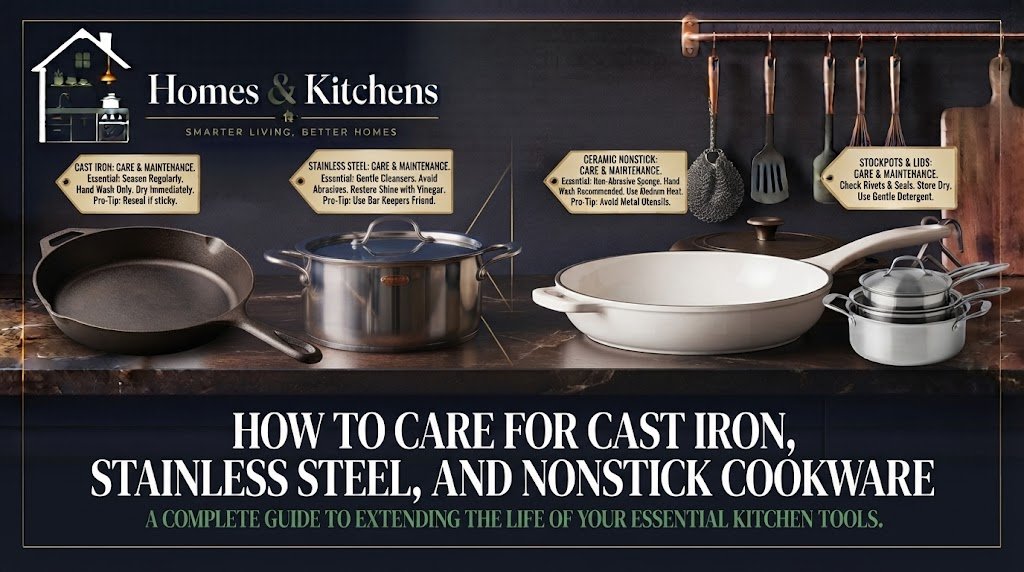
Picture this: It is a rainy Saturday afternoon in your suburban kitchen, and you are standing in front of your stove with a sink full of mismatched pans. On the left sits your grandmother’s heavy cast iron skillet, bearing the dark, glossy patina of decades of cornbread and searing. In the center rests your favorite multi-clad stainless steel skillet, clouded with a faint, rainbow-hued heat tint from last night’s stir-fry. And on the right? A relatively new nonstick aluminum pan with a tiny, frustrating scratch across the center where someone used a metal spatula.
Every home cook eventually acquires a mixed arsenal of pots and pans. The real challenge is not collecting them, but figuring out how to care for them properly. Treating every pan in your kitchen the exact same way is a recipe for warped metal, ruined nonstick surfaces, and rusted cast iron.
During testing across countless American home kitchens, we have found that cookware longevity comes down to respecting the unique material science of each pan. One practical lesson homeowners often discover the hard way is that a little targeted maintenance upfront saves you hundreds of dollars in premature replacements down the road.
This comprehensive guide breaks down exact, actionable care routines for cast iron, stainless steel, and nonstick cookware so your kitchen investments last a lifetime.
Decoding Your Cookware Arsenal
Before diving into cleaning protocols, it helps to understand why different materials require completely different treatment. Cookware is not one-size-fits-all.
- Cast Iron: A reactive, porous ferrous metal that relies on a polymerized layer of oil (seasoning) to create a natural nonstick surface and prevent rust.
- Stainless Steel: A non-reactive, durable metal alloy that handles high heat and aggressive cleaning, but requires proper thermal technique to prevent food from welding to the surface.
- Nonstick (PTFE or Ceramic): A delicate coated surface designed for effortless food release with minimal fats, which is highly vulnerable to high heat, abrasives, and metal utensils.
Mastering Cast Iron Care
Cast iron is the ultimate heirloom cookware. In many U.S. homes, a well-cared-for skillet gets passed down through generations. However, myths abound—ranging from the belief that soap will instantly destroy a pan to the fear of ever using water.
Daily Cleaning Protocol
- Let it cool slightly: Never plunge a scorching hot cast iron skillet into ice-cold water, or the thermal shock can crack the iron.
- Wash with warm water and a brush: Use a stiff nylon brush or sponge. A small amount of mild dish soap is entirely safe to use; modern dish soaps do not contain lye, meaning they will not strip a well-seasoned pan.
- Dry immediately: Towel-dry the skillet thoroughly, then place it on a burner over low heat for 1 to 2 minutes to evaporate any remaining microscopic moisture.
- Apply a maintenance coat: While the pan is still warm, add half a teaspoon of high-smoke-point oil (such as grapeseed, canola, or Crisco) and buff it all over the interior and exterior with a paper towel until the pan looks dry.
Seasoning from Scratch
If your cast iron starts looking dull, gray, or food begins sticking aggressively, it is time for a fresh seasoning session:
- Clean and dry the skillet completely.
- Apply a very thin layer of neutral oil over the entire surface, wiping away any excess so the pan does not feel slick or greasy.
- Place the skillet upside down on the middle rack of your oven, with a baking sheet on the rack below to catch any drips.
- Bake at 450°F to 500°F for one hour, then turn off the oven and let the pan cool inside completely.
Mastering Stainless Steel Care
Stainless steel is the workhorse of serious culinary work. It can take a beating, but it is prone to stubborn burnt-on food residue and mineral discoloration if neglected.
Daily Cleaning Protocol
- Deglaze while warm: While the pan is still warm (not hot), splash a little warm water or broth into it to loosen food bits.
- Wash with standard soap and sponge: Warm water, dish soap, and a standard non-scratch scrub sponge will handle 90% of daily cleanups.
- Tackle rainbow discoloration: Those iridescent bluish-purple streaks on the bottom of your stainless steel are harmless heat tints caused by minerals in food or overheating. Buff them away using a damp sponge and a specialized cleaner like Bar Keepers Friend.
Dealing with Stubborn Burned-On Food
If you scorched sugar or protein onto your stainless steel pan:
- Cover the burnt area with water and add a tablespoon of baking soda.
- Bring the mixture to a gentle boil on the stove, using a wooden spatula to scrape up loosening bits.
- Let it sit off the heat for 15 minutes, then scour gently with a non-scratch scrub pad.
Mastering Nonstick Cookware Care
Nonstick pans make cooking eggs and delicate fish effortless, but they have the shortest lifespan in the kitchen. Proper care can stretch a 2-year pan into a 5-year pan.
Daily Cleaning Protocol
- Let it cool completely: Exposing hot nonstick coatings to cold water warps the underlying aluminum core.
- Hand-wash exclusively: Even if a manufacturer claims their nonstick pans are dishwasher safe, the harsh alkaline detergents and high heat jets inside commercial dishwashers etch and degrade the coating over time.
- Use soft sponges: Never use steel wool, green abrasive Scotch-Brite pads, or metal scouring tools. Stick to soft cellulose sponges or microfiber cloths.
Cookware Care Comparison Table
| Feature | Cast Iron | Stainless Steel | Nonstick (PTFE / Ceramic) |
| Dishwasher Safe? | Never; water and harsh cycles cause rapid rusting. | Yes; highly resilient in standard dishwashers. | Never; harsh detergents degrade coatings prematurely. |
| Cleaning Tools | Nylon brush, scraper, mild soap, coarse salt. | Sponges, baking soda, Bar Keepers Friend, steel wool. | Soft sponges and gentle dish soap only. |
| Required Maintenance | Regular seasoning with oil after washing. | Occasional polishing to remove heat tints. | Careful storage with felt pan protectors. |
| Utensil Restrictions | Metal utensils are completely fine. | Metal utensils are completely fine. | Silicone, wood, or plastic utensils only. |
Pros and Cons of Each Material’s Maintenance Routine
Understanding the maintenance trade-offs helps you align your cookware choices with your lifestyle.
Cast Iron
- Pros: Highly repairable; you can strip and re-season a ruined pan back to brand-new condition.
- Cons: Demands manual washing, immediate drying, and oiling after every single use; cannot be soaked in water.
Stainless Steel
- Pros: Forgiving and robust; tolerates abrasive scrubbing, metal utensils, and dishwashers without structural damage.
- Cons: Requires learning proper preheating and fat management techniques to avoid sticky messes.
Nonstick
- Pros: Quickest and easiest cleanup of any material; requires minimal soap and effort.
- Cons: High maintenance regarding storage (no stacking without protectors) and guaranteed expiration date.
Common Mistakes to Avoid
Avoiding these frequent errors will protect your cookware investment:
- Soaking cast iron: Leaving cast iron sitting in the sink filled with water leads to deep, pitting rust that requires heavy scouring and re-seasoning to fix.
- Using aerosol cooking sprays on nonstick pans: Commercial spray cans contain propellants like lecithin that bake into a sticky invisible film on nonstick coatings, destroying their release properties permanently. Use bottled oil with a pastry brush instead.
- Thermal shock across all materials: Plunging any hot pan straight into cold water causes metal warping, which results in uneven heating on flat glass-top stoves.
- Skipping the preheat on stainless steel: Dropping cold food into a cold stainless steel pan guarantees it will stick like cement. Always preheat the empty pan first.
Expert Tips for Longevity
- Strategic Storage: If you stack your pans, invest in inexpensive felt pan separators or place thick dish towels between nonstick and ceramic skillets to protect their coatings from abrasive pot bottoms.
- Smoke Point Matters: When seasoning cast iron, always use oils with high smoke points and high polyunsaturated fat content, such as grapeseed, canola, or refined avocado oil. Avoid flaxseed oil for daily maintenance as it tends to flake off over time.
- Burner Matching: Ensure your pan base matches your burner size. Flames licking up the sides of nonstick or enameled pans will discolor the exterior and ruin plastic handles.
Step-by-Step Guide: Restoring Rusted Cast Iron
If you inherited a rusty cast iron skillet or found one at a garage sale, you can bring it back to life in a few simple steps.
- Scour away rust: Scrub the entire pan thoroughly using a steel wool scouring pad and warm soapy water to remove all loose rust flakes down to bare metal.
- Rinse and dry completely: Rinse the pan thoroughly and dry it immediately with a towel, then place it on a burner over medium heat for 3 minutes to banish all moisture.
- Apply base oil: Pour half a teaspoon of neutral oil into the warm skillet and rub it all over the inside, outside, and handle using a paper towel.
- Buff dry: Take a clean paper towel and vigorously wipe away all excess oil. The pan should look matte, not dripping wet.
- Bake the first coat: Bake upside down in a 450°F oven for one hour. Repeat the oiling and baking cycle 2 to 3 times for a rich, dark protective finish.
Practical Checklist: Cookware Health Audit
Run through this quick checklist to see if your current kitchenware needs attention:
- Are your nonstick pans showing visible scratches or flaking along the edges? (Time to replace)
- Does water soak into your cast iron instead of beading up on the surface? (Time to re-season)
- Are there stubborn rainbow stains on your stainless steel frying pans? (Time for Bar Keepers Friend)
- Do your pans wobble when placed on a flat countertop? (Sign of thermal warping from rapid cooling)
Frequently Asked Questions
Can I really use soap on cast iron?
Yes. Modern dish soaps are mild and do not contain lye (sodium hydroxide), which was the harsh chemical historically used in soap-making that stripped seasoning. A drop of gentle dish soap and a soft brush will not hurt a well-seasoned cast iron skillet.
Why is food sticking to my stainless steel pan even when I use oil?
Food sticks when the pan is not preheated long enough before adding the oil. The microscopic pores in stainless steel expand when heated; preheating the empty pan for 2 to 3 minutes allows the metal to expand and create a smooth cooking surface before the oil and food are introduced.
How often should I re-season cast iron?
You do not need to do a full oven seasoning after every use. Simply applying a thin maintenance wipe of oil after cleaning and drying is enough for daily care. Full oven seasoning is only necessary if food starts sticking or the seasoning layer looks faded.
Is scratched nonstick cookware dangerous?
According to consumer safety organizations, minor scratches on modern PTFE-coated pans are generally non-toxic if accidentally ingested in tiny amounts, but the pan will lose its nonstick performance and should be replaced to prevent further flaking.
Final Verdict
Proper cookware care is less about rigid rules and more about understanding the personality of each material. Cast iron rewards patience and regular oiling with near-indestructible performance. Stainless steel rewards correct heat technique with lifetime durability. Nonstick rewards gentle handling and careful storage with effortless morning routines. Tailoring your cleaning and maintenance habits to each specific material ensures your kitchen stays efficient, safe, and cost-effective for years to come.
Key Takeaways
- Cast iron requires hand-washing, thorough drying, and a light post-wash oil wipe to maintain its protective seasoning layer.
- Stainless steel is forgiving and handles abrasive cleaning tools, but requires proper preheating to prevent food from sticking.
- Nonstick pans must always be hand-washed with soft sponges, kept away from high heat, and stored with protective separators to maximize their lifespan.
- Avoiding thermal shock across all cookware materials prevents warping and preserves a flat, even cooking surface.
Conclusion
Taking the time to master proper cookware maintenance protects your financial investment and elevates your daily cooking experience. By treating each material according to its unique needs, you ensure your kitchen tools perform reliably meal after meal. For more guidance on setting up your culinary space, explore our resources on Kitchen essentials and design tips across Homes.