
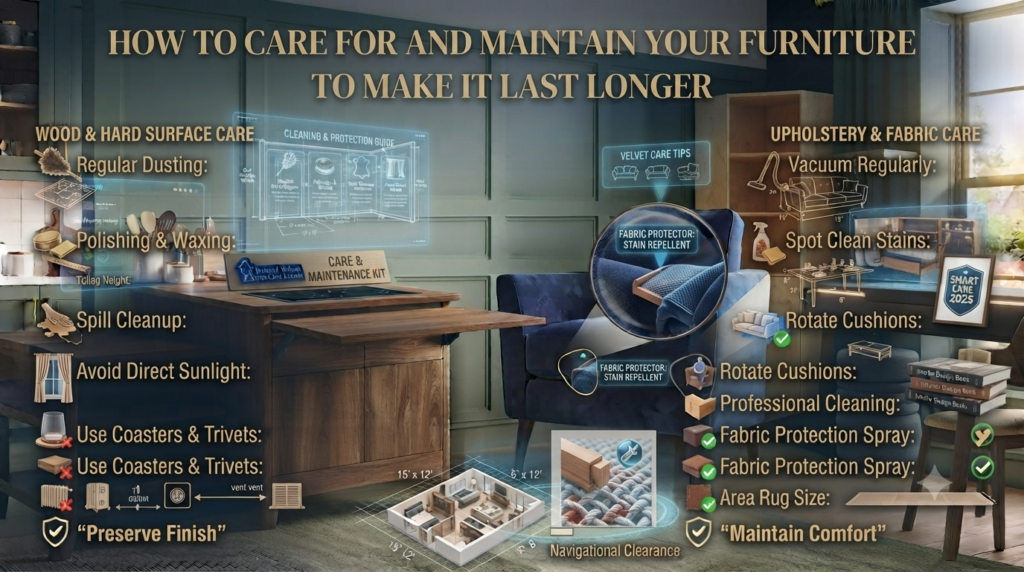
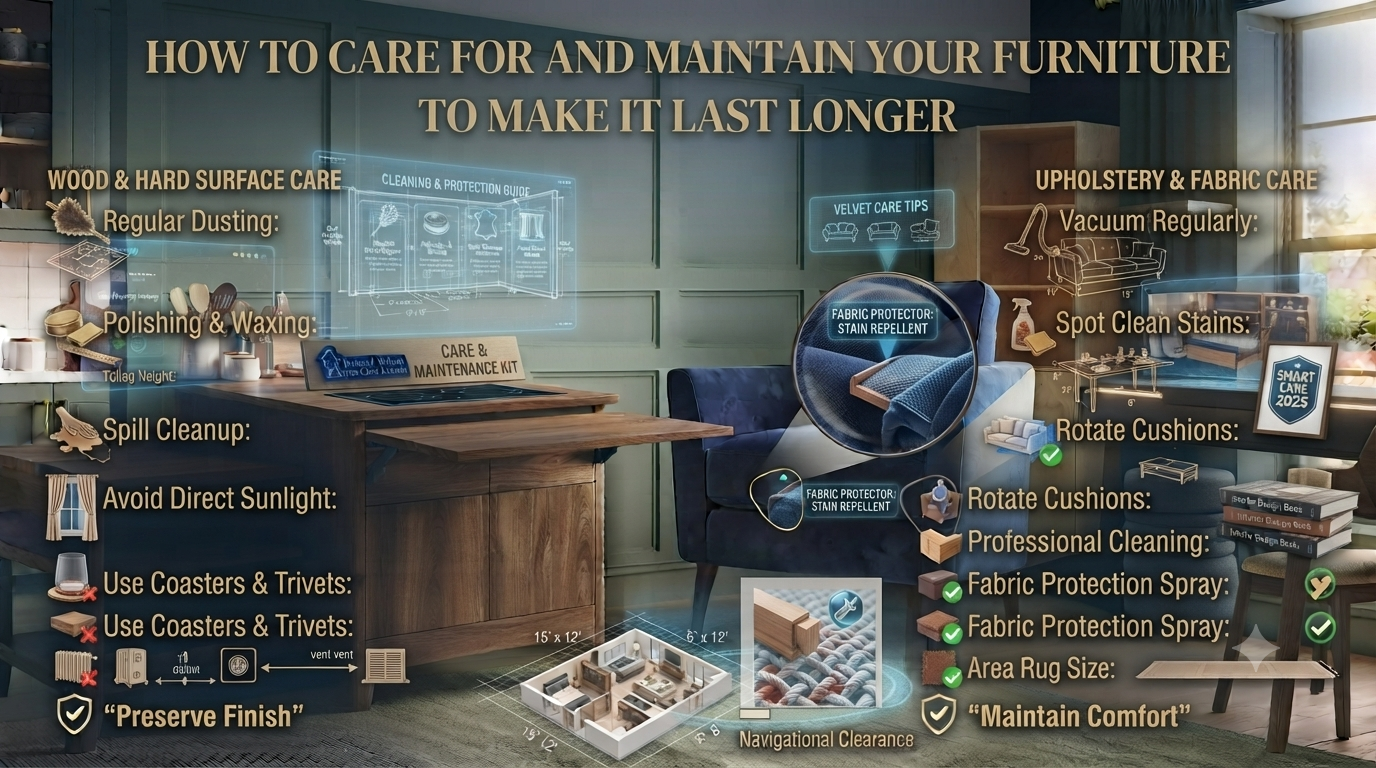
Furniture is one of the largest financial investments you make in your home outside of structural remodeling. Yet, while most homeowners diligently service their cars and HVAC systems, furniture is frequently treated as a set-it-and-forget-it commodity until a leg wobbles, a fabric tears, or wood finishes crack.
At Homes & Kitchens, our philosophy is built on Knowledge Before Products, Trust Before Commission, and Research Before Opinion. We believe that proactive, routine care preserves the structural integrity, aesthetic beauty, and daily comfort of your furnishings for decades, saving you from premature replacement costs.
Whether you are maintaining antique hardwood inherited from family, modern upholstered sofas shared with pets and children, or sleek dining tables, this comprehensive guide explores material-specific care routines, preventative maintenance schedules, and expert preservation techniques.
The Core Philosophy of Preventive Furniture Maintenance
Waiting for furniture to show visible signs of wear before cleaning or servicing it is a guaranteed way to shorten its lifespan. Dust, friction, fluctuating indoor humidity, and UV exposure work silently behind the scenes every day.
[Regular Dusting] ──> [Moisture & Climate Control] ──> [Hardware & Joint Inspection] ──> [Deep Conditioning]
By establishing simple weekly, monthly, and seasonal maintenance habits, you can intercept minor wear before it turns into structural failure. Let’s break down the specific care requirements for every major material found in a modern home.
1. Wood Furniture Care: Preserving Grain and Finish
Wood is a hygroscopic material, meaning it constantly absorbs and releases moisture from the surrounding air in response to seasonal humidity shifts.
- Dusting Mechanics: Dust acts as a fine abrasive. When dry dust accumulates on wood surfaces, wiping it with a rough cloth creates microscopic scratches across the clear protective finish.
- The Right Way: Use a clean, damp microfiber cloth to lift dust rather than dry-sweeping it across the grain. Follow up immediately with a dry microfiber cloth to remove residual moisture.
- Climate and Humidity Control: Rapid humidity swings cause wood to expand and contract, leading to warped tabletops, stuck drawers, and cracked joinery.
- The Right Way: Maintain indoor relative humidity levels between 35% and 45% using air conditioners in summer and humidifiers in winter. Keep solid wood tables away from direct heating vents and radiators. For related spatial layout strategies, review our Furniture Arrangement Ideas.
- Conditioning and Polishing: Avoid silicone-based aerosol polishes, which leave a sticky residue that attracts dust and penetrates compromised finishes.
- The Right Way: Use high-quality natural beeswax or carnauba-based furniture waxes once or twice a year to nourish unfinished or oil-finished woods and protect against liquid spills.
2. Upholstered Furniture Care: Protecting Fabrics and Foam
Upholstery absorbs body oils, pet dander, airborne dust, and accidental spills daily, which break down textile fibers over time.
- Vacuuming Routines: Vacuum your sofas and armchairs bi-weekly using a soft brush attachment. This removes abrasive dirt particles before they work their way deep into cushion foam cores.
- Rotation and Fluffing: Rotate loose seat and back cushions monthly. If your cushions are reversible, flip them over to distribute body weight evenly across the foam and prevent permanent sagging.
- Stain Management Protocol: Never rub a fresh spill on upholstery, as rubbing forces liquid deeper into the yarn fibers.
- The Right Way: Blot gently from the outside edge of the spill inward using a clean white cloth or paper towel. Check the manufacturer’s cleaning code (W, S, WS, or X) on the tag before applying any cleaning solutions. For more buying and material background, review our Common Furniture Buying Mistakes and How to Avoid Them.
3. Leather Furniture Care: Hydration and Protection
Unlike fabric, genuine leather is a natural skin that requires targeted moisture replenishment to prevent drying, stiffening, and cracking.
- Gentle Cleaning: Wipe leather surfaces weekly with a soft, dry cloth. For routine cleaning, dampen a cloth with distilled water and mild, pH-balanced soap, wiping gently without soaking the hide.
- Conditioning Schedules: Apply a specialized leather conditioner or balm every six to twelve months. Conditioning restores natural natural oils lost through heating, air conditioning, and sun exposure.
- Avoiding Direct Sunlight: Position leather armchairs and sofas away from direct southern-facing windows. Ultraviolet radiation bleaches leather pigments and bakes natural moisture out of the hides, leading to irreversible cracking.
Comprehensive Furniture Maintenance Matrix
| Material Type | Primary Threat | Cleaning Frequency | Recommended Maintenance Agent | What to Avoid |
| Solid Hardwood | Humidity swings & dust scratches | Weekly dusting / Annual waxing | Microfiber cloth & natural beeswax | Silicone polishes & direct heat vents |
| Performance Fabric | Embedded grit & liquid spills | Bi-weekly vacuuming / Immediate blotting | Mild dish soap solution (Code W) | Vigorous rubbing & harsh bleach |
| Top-Grain Leather | Drying out & UV sun bleaching | Bi-annual conditioning | pH-balanced leather balm & distilled water | Ammonia-based cleaners & direct sunlight |
| Metal & Glass | Fingerprints, rust, & water spots | Monthly wipe-down | Glass cleaner & micro-fiber cloth | Abrasive scouring pads & steel wool |
4. Hardware and Structural Joint Maintenance
A piece of furniture is only as strong as its joints and fastening hardware. Over months of use, vibrations and physical weight cause screws, cam-locks, and bolts to loosen.
- Annual Hardware Audit: Once a year, inspect the underside of dining chairs, bed frames, and wooden tables. Tighten loose screws, bolts, and metal brackets using a hex wrench or screwdriver.
- Fixing Loose Wooden Joints: If a chair leg or spindle wobbles, do not force extra screws into stripped wood. Disassemble the joint cleanly, clean out old dried glue residue with sandpaper, apply fresh PVA wood glue, clamp the joint tightly, and let it cure for 24 hours. For spatial measurement and planning guidelines, see our guide on How to Measure Your Home Before Buying Furniture.
Common Maintenance Mistakes to Avoid
Even well-intentioned homeowners can accidentally damage their furniture through improper cleaning habits. Avoid these frequent missteps:
- Mistake 1: Using all-purpose chemical cleaners on natural wood or leather.
- Correction: Harsh household disinfectants strip protective polyurethane and lacquer finishes instantly. Stick to damp microfiber cloths or material-specific soaps.
- Mistake 2: Dragging heavy furniture across floors during cleaning.
- Correction: Dragging places extreme lateral stress on wooden legs and joints, causing them to snap or weaken. Always lift furniture completely with a partner or use furniture sliders.
- Mistake 3: Leaving water rings untreated on wood surfaces.
- Correction: Wipe up condensation rings immediately. If moisture has already turned the finish white, apply a paste of equal parts baking soda and white toothpaste, buffing gently with a soft cloth along the grain.
Frequently Asked Questions
How often should you condition wood furniture?
Natural wood furniture should be treated with a high-quality beeswax or furniture oil once or twice a year to nourish the grain and repel moisture.
What is the best way to clean upholstered furniture?
Vacuum bi-weekly using a soft brush attachment, and spot-clean spills immediately by blotting (never rubbing) with a clean white cloth and the manufacturer-approved cleaning solution.
How do you prevent leather furniture from cracking?
Keep leather away from direct sunlight and heat vents, dust it weekly, and apply a specialized leather conditioner or balm every six to twelve months.
How do you fix loose joints on wooden chairs?
Disassemble the wobbling joint, remove old glue residue, apply fresh PVA wood glue, clamp the components securely together, and allow 24 hours for full curing.
Can I use all-purpose window cleaner on wood furniture?
No. Window cleaners often contain ammonia and alcohol that break down lacquer and varnish finishes, leaving dull patches and discoloration.
How do I remove water rings from a wooden coffee table?
Buff the affected area gently along the wood grain using a mixture of equal parts non-gel toothpaste and baking soda, then wipe clean and apply a protective wax coat.
How do I stop sofa cushions from sagging?
Rotate and flip cushions monthly to distribute wear. If foam cores have permanently bottomed out, replace the interior foam insert with high-resiliency replacement foam.
Why is indoor humidity important for wooden furniture?
Extreme humidity changes cause wood to expand and contract rapidly, leading to cracked surfaces, warped panels, and loose structural joints.
What is the safest way to move heavy furniture?
Lift furniture completely off the floor with a partner to protect legs and joinery, or place heavy-duty furniture gliders underneath feet before sliding.
How do I clean glass tabletops without streaks?
Spray a 50/50 mixture of distilled white vinegar and water onto a microfiber cloth (not directly onto the glass) and wipe in circular motions, followed by a dry buffing cloth.
How do I protect dining room tables from hot dishes?
Always use thick cork mats, felt-backed placemats, or wooden trivets to shield wood finishes from thermal shock and heat discoloration.
Are silicone-based furniture polishes safe to use?
Generally no. Silicone polishes penetrate wood finishes and leave a stubborn residue that prevents future refinishing and attracts floating dust particles.
How do I clean pet hair off upholstered couches?
Use a rubber pet hair detail brush, a damp rubber cleaning glove, or a vacuum cleaner with a motorized pet turbo brush attachment.
How often should hardware be tightened on furniture?
Perform a structural hardware audit once a year, tightening loose bolts, cam-locks, and screws on chairs, beds, and tables.
What does a furniture cleaning code ‘W’ mean?
Code ‘W’ indicates that the upholstery fabric can be safely cleaned using water-based cleaning agents or foam from a water-based cleaner.
Conclusion and Final Verdict
Caring for and maintaining your furniture requires consistency rather than strenuous labor. By understanding material sensitivities, establishing routine cleaning schedules, controlling indoor climate conditions, and performing annual hardware audits, you protect your home furnishings from premature decline. Proactive maintenance preserves the aesthetic warmth and structural reliability of every piece in your home, ensuring your investment pays dividends for years to come.
Key Takeaways
- Understand material needs: Tailor your cleaning protocols to suit solid wood, performance fabrics, or natural leather.
- Control indoor climate: Maintain relative humidity between 35% and 45% to prevent wood warping and cracking.
- Rotate and vacuum: Vacuum upholstery bi-weekly and rotate cushions monthly to distribute weight and prevent foam fatigue.
- Audit hardware annually: Tighten loose joints and screws yearly to prevent structural wobbling and frame failure.
Ready to give your home furnishings the care they deserve? Grab a microfiber cloth this weekend, inspect your wooden joints and hardware, and start your routine maintenance journey for a longer-lasting home.