Stepping into a new home—whether it is your first house, a suburban townhome, or a cozy apartment—brings an exciting sense of ownership. It also brings the reality of endless maintenance. Walking down the cleaning aisle of a big-box store can feel overwhelming, with hundreds of single-use gadgets, heavily scented sprays, and flashy gizmos promising effortless housekeeping.
At Homes & Kitchens, our philosophy is rooted in Knowledge Before Products, Trust Before Commission, and Research Before Opinion. We do not believe in cluttering your utility closet with gimmicks. True residential maintenance relies on a curated collection of high-performance, durable, and scientifically sound tools that make your work efficient and protect your home surfaces.
Whether you are a first-time homeowner setting up your first utility caddy, a busy parent managing high-traffic family zones, or a DIY enthusiast looking to streamline your routine, this comprehensive guide covers the essential cleaning tools every home needs. We will explore the mechanics behind each tool, review top-performing product recommendations across multiple categories, and provide expert maintenance advice.
The Philosophy of a Well-Equipped Cleaning Caddy
Before acquiring equipment, it helps to understand what separates professional-grade utility tools from disposable consumer novelties. Effective cleaning tools share three common traits: mechanical efficiency, material compatibility, and ergonomic durability.
[Quality Tool Selection] → [Mechanical Soil & Bacteria Removal] → [Surface Protection & Longevity]
When you rely on engineered cleaning tools—such as split-fiber microfibers or sealed HEPA vacuums—you reduce your dependence on harsh chemical sprays. Instead of dissolving grime entirely through chemical force, the right tool physically lifts, traps, and extracts particulate matter from your home environment.
The Core Cleaning Tool Checklist
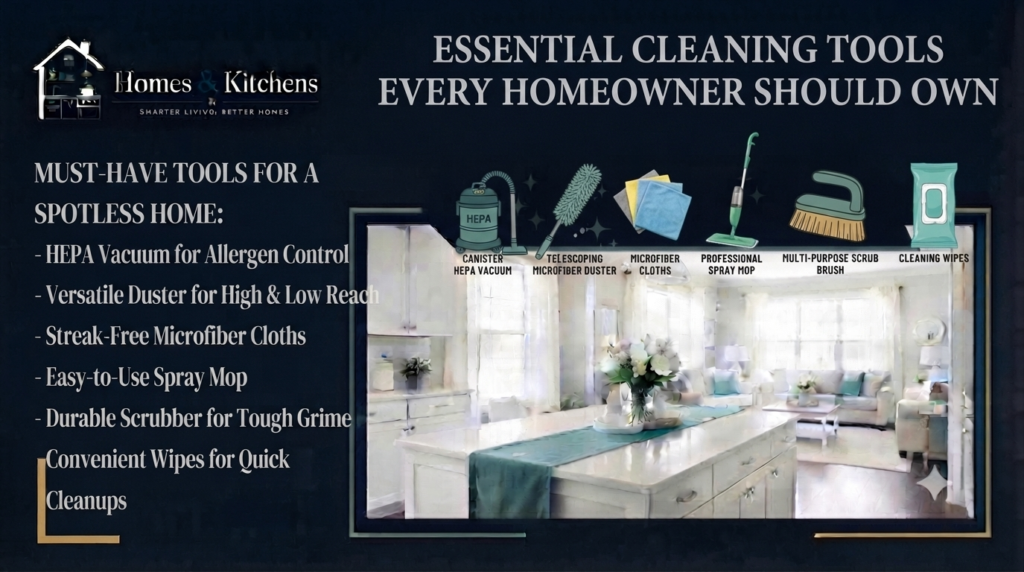
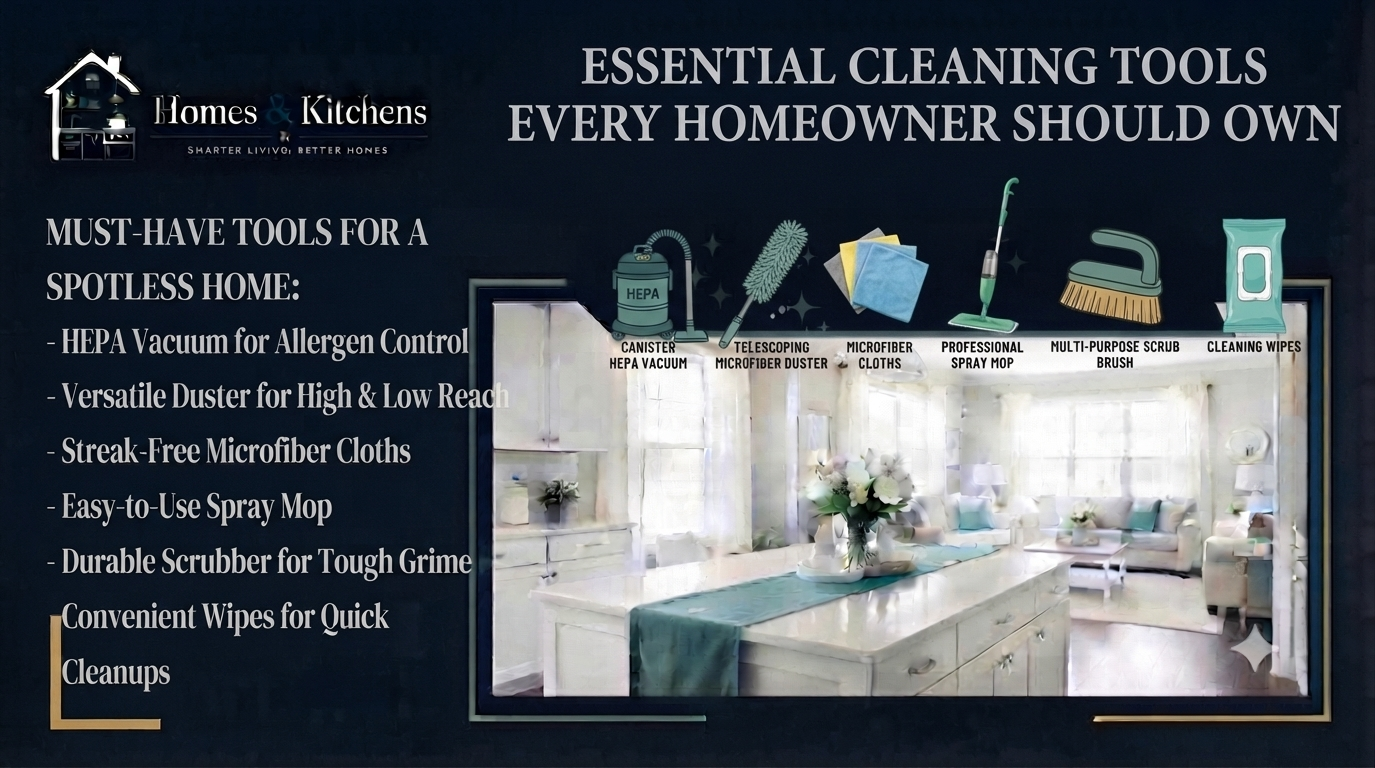
Every well-maintained home requires a foundational kit divided into four operational categories: Surface Care, Floor Maintenance, Detailed Scrubbing, and Air Protection.
1. High-Performance Microfiber Cloths
- What They Are: Synthetic textiles woven from polyester and polyamide split fibers, creating millions of microscopic hooks that trap dust, grease, and bacteria mechanically.
- Why You Need Them: Traditional cotton rags push dust around and leave lint behind. Microfiber traps particulate matter securely within its fiber matrix, allowing you to clean most surfaces with water alone.
- Expert Tip: Adopt a color-coded system (e.g., blue for glass, green for kitchens, red for bathrooms) to eliminate cross-contamination. Never wash microfiber with fabric softener, which coats and clogs the split fibers.
2. Sealed HEPA Upright or Stick Vacuum
- What They Are: Vacuum cleaners equipped with High-Efficiency Particulate Air (HEPA) filters and sealed system chambers that capture 99.97% of fine particles down to 0.3 microns.
- Why You Need Them: Standard vacuums vent fine dust, mold spores, and pet allergens directly back into your indoor air. A sealed HEPA system traps these pollutants permanently. For floor maintenance guidance, explore our deep dive into Kitchen Remodel Cost Guide or general flooring upkeep.
3. Professional Spray Bottle and Solution Caddy
- What They Are: Heavy-duty, adjustable-nozzle spray bottles made from high-density polyethylene (HDPE), paired with a portable caddy.
- Why You Need Them: Buying single-use cleaner bottles creates unnecessary plastic waste and limits your ability to mix custom, cost-effective solutions like mild dish soap and water or vinegar-based rinses.
4. Heavy-Duty Scrub Brushes & Detail Picks
- What They Are: Ergonomic brushes featuring stiff nylon or natural tampico bristles, alongside pointed detail picks for tight crevices.
- Why You Need Them: Fingers and sponges cannot reach into tile grout lines, faucet bases, or appliance tracks. Stiff bristles provide the mechanical friction needed to break up stubborn buildup.
Curating Your Arsenal: Top Product Recommendations
To help you build a reliable cleaning kit, we have evaluated market offerings based on build quality, durability, and real-world performance.
1. Best Overall Cleaning Arsenal: The E-Cloth Home Cleaning Pack
- Why We Chose It: E-Cloth products feature exceptionally high split-fiber counts that clean grease and bacteria using only water, eliminating chemical residue buildup on countertops and glass.
- Best For: Everyday dusting, streak-free window cleaning, and chemical-free kitchen upkeep.
- Approx. Cost: $30.00 – $40.00
2. Best Budget Staple: Rubbermaid Commercial Products Spray Bottle & Caddy
- Why We Chose It: Built for commercial janitorial work, these heavy-duty HDPE bottles resist chemical degradation and feature adjustable spray heads that won’t clog or leak.
- Best For: Budget-conscious homeowners and DIY solution mixing.
- Approx. Cost: $15.00 – $25.00
3. Best Premium Vacuum: Dyson V15 Detect Cordless Vacuum
- Why We Chose It: Combines powerful suction with a fully sealed HEPA filtration system, an acoustic piezo sensor that measures dust particle sizes in real-time, and a laser illumination head that reveals hidden floor dust.
- Best For: Homeowners wanting uncompromising floor care, pet hair extraction, and whole-home versatility.
- Approx. Cost: $650.00 – $750.00
4. Best for Families: Shark Navigator Lift-Away Professional Upright
- Why We Chose It: Offers commercial-grade suction power, anti-allergen complete seal technology, and a detachable canister that makes cleaning stairs and high-reach crown molding effortless for busy families.
- Best For: Multi-level family homes with mixed carpeting and hard flooring.
- Approx. Cost: $180.00 – $230.00
5. Best for Apartments & Small Spaces: Black+Decker Dustbuster Cordless Hand Vacuum
- Why We Chose It: Compact, lightweight, and equipped with a rotating slim nozzle and pull-out crevice tool, making it the ideal grab-and-go tool for small kitchens and tight apartment corners.
- Best For: Quick crumb cleanups, upholstery touch-ups, and apartment living.
- Approx. Cost: $50.00 – $65.00
6. Best Value Floor Care: Rubbermaid Commercial Microfiber Spray Mop
- Why We Chose It: Allows you to refill the onboard fluid bottle with your own preferred cleaning solution, uses washable microfiber pads rather than wasteful disposable sheets, and features a non-battery mechanical spray trigger.
- Best For: Hardwood, tile, and laminate floor maintenance.
- Approx. Cost: $40.00 – $55.00
7. Best Smart Option: Roborock Q Revo Robot Vacuum & Mop
- Why We Chose It: Features dual spinning mop pads that auto-lift over carpets, intelligent LiDAR navigation, and a self-emptying, self-washing dock that automates routine floor maintenance.
- Best For: Remote workers, busy professionals, and tech-savvy homeowners.
- Approx. Cost: $700.00 – $900.00
Comprehensive Cleaning Tool Comparison Matrix
| Tool Category | Primary Function | Key Material / Build | Maintenance Requirement | Who It Is Best For |
| Microfiber Cloths | Dusting & wiping | Polyester/Polyamide split fiber | Wash in warm water; no softeners | Every homeowner |
| Sealed HEPA Vacuum | Floor & air extraction | ABS plastic / HEPA filtration | Wash foam filters monthly | Allergy sufferers & families |
| Spray Bottle Caddy | Solution application | Heavy-duty HDPE plastic | Rinse after storing custom mixes | DIY enthusiasts |
| Nylon Scrub Brush | Grout & stain scrubbing | Stiff polymer bristles | Rinse and air-dry after use | Kitchen & bath deep cleaners |
| Spray Floor Mop | Hard floor upkeep | Aluminum pole / microfiber pad | Launder pads after every use | Hardwood & tile owners |
Common Mistakes to Avoid When Buying and Maintaining Tools
Acquiring the right tools is only half the battle; how you maintain them dictates their lifespan and effectiveness.
- Mistake 1: Buying cheap, flimsy microfiber cloths with low GSM (grams per square meter).
- Correction: Low-grade cloths lack sufficient split fibers, smearing grease rather than trapping it. Invest in professional-grade 300+ GSM microfiber.
- Mistake 2: Storing wet cleaning tools in dark, enclosed cabinets.
- Correction: Storing damp mop pads or wet scrub brushes in unventilated closets promotes mold growth and mildew odors. Always let tools air-dry completely before storage.
- Mistake 3: Neglecting vacuum filter maintenance.
- Correction: Running a vacuum with a clogged filter chokes motor suction and blows fine dust back into your room. Wash foam filters monthly and replace HEPA cartridges annually.
- Mistake 4: Using abrasive scrub brushes on delicate surfaces.
- Correction: Using stiff industrial nylon brushes on acrylic tubs or glass cooktops will scratch and ruin the finish. Match bristle stiffness to surface durability.
Frequently Asked Questions
What are the absolute must-have cleaning tools for a new home?
The essential baseline includes high-performance microfiber cloths, a sealed HEPA vacuum cleaner, a reliable spray bottle caddy, a multi-surface floor mop, and a durable utility scrub brush.
What is the difference between cheap rags and professional microfiber cloths?
Cheap cotton rags have smooth fibers that push dirt around and leave lint behind. Professional microfiber cloths feature split synthetic fibers that create a positive electrostatic charge, trapping dust, grease, and bacteria securely within the fabric.
How do I maintain my cleaning equipment so it lasts?
Wash microfiber cloths in warm water without fabric softeners, rinse and air-dry mop heads and scrub brushes after every use, wash vacuum foam filters monthly, and store all tools in a clean, dry utility closet.
What kind of vacuum cleaner is best for everyday home maintenance?
The best vacuum depends on your flooring mix. Upright vacuums with sealed HEPA systems excel in homes with heavy carpeting, while cordless stick vacuums provide agile, grab-and-go convenience for mixed hard floors and rugs.
How often should I replace my microfiber cleaning cloths?
High-quality microfiber cloths can last for hundreds of washes. Replace them when you notice fraying edges, a loss of electrostatic attraction, or if they begin pushing water across surfaces instead of absorbing it.
Can I use vinegar in my spray floor mop tank?
Yes, diluted white vinegar mixed with water is safe for most ceramic tile and sealed hardwood floors. However, avoid acidic solutions if you have unsealed stone flooring or waxed wood finishes.
Why does my vacuum cleaner smell musty when I turn it on?
Musty vacuum odors usually stem from trapped organic dust, pet dander, or a damp filter. Empty the dust cup after every use, wash foam filters thoroughly, and let them dry for 24 hours before reinsertion.
Are robot vacuums a replacement for manual vacuuming?
Robot vacuums excel at daily maintenance and light surface dust, but they cannot replace a manual upright or stick vacuum for deep-cleaning rugs, stairs, and tight baseboard corners.
What is GSM in microfiber cloths and why does it matter?
GSM stands for grams per square meter, measuring fabric density. Higher GSM ratings (typically 300 to 450) indicate a thicker, more absorbent cloth capable of holding more soil and moisture.
How do I prevent cross-contamination between rooms with my tools?
Implement a color-coded microfiber system, designate specific scrub brushes for bathrooms versus kitchens, and sanitize your cleaning caddy regularly with a disinfectant spray.
Is it necessary to spend a lot of money on a vacuum cleaner?
Not necessarily. While premium cordless models offer advanced features and lightweight design, many mid-range corded upright vacuums provide exceptional suction and filtration power for a fraction of the cost.
How do I clean and sanitize my toilet brush after use?
After scrubbing the toilet bowl, spray the brush head with disinfectant, rinse it under the clean water flush stream while holding it between the toilet seat and bowl, and let it air-dry completely in its caddy before storing.
Can I wash microfiber cloths in a hot water laundry cycle?
Yes. Washing microfiber in warm or hot water opens the fibers to release trapped oils and bacteria. Avoid washing them with cotton items, as microfiber will attract and trap lint from the cotton.
What is the best tool for cleaning glass shower doors?
A stainless steel or silicone shower squeegee used immediately after every shower is the single best tool for preventing hard water mineral scale and soap scum buildup on glass.
How do I store my cleaning tools safely away from children and pets?
Store all chemical solutions, concentrated detergents, and sharp cleaning tools in a locked upper cabinet or a secure utility closet out of reach of young children and household pets.
Final Verdict & Key Takeaways
Equipping your home with the right cleaning tools is an investment in your living environment, your health, and your peace of mind. By focusing on durability, mechanical efficiency, and proper maintenance, you eliminate frustration and protect your home surfaces.
Key Takeaways
- Invest in quality microfiber: High-GSM split-fiber cloths reduce chemical dependency and trap dust effectively.
- Prioritize air filtration: Choose sealed HEPA vacuums to protect your indoor air quality from fine allergens.
- Maintain your gear: Wash filters, launder cloths without softeners, and air-dry tools to ensure long-term durability.
- Curate with purpose: Avoid single-use gimmicks and stick to versatile, foundational tools that handle everyday maintenance with ease.
By assembling a thoughtfully curated cleaning toolkit, you will transform housekeeping from a burdensome chore into an efficient, rewarding routine that keeps your home pristine for years to come.
The Best Cleaning Tools Tested and Reviewed | The Spruce
Watch this professional gear review for expert demonstrations on how top-rated cleaning tools perform in real-world residential environments.