Introduction
Picture this: You are standing in front of your stove on a Tuesday evening, frantically trying to sear a salmon filet. Half the fish sticks stubbornly to the bottom of a scratched, lightweight pan, tearing apart before you can flip it. Meanwhile, the sauce in your saucepan is scorching on one side because the metal is too thin to distribute heat evenly. You end up with a smoky kitchen, a frustrating cleanup, and dinner that looks nothing like the recipe photo.
If this scene feels painfully familiar, your cookware set is likely working against you rather than for you.
Many U.S. homes feature a mismatched collection of pots and pans accumulated from college dorm days, wedding registries, or clearance aisles. While piecing together your kitchen gear saves money upfront, it often leads to cooking frustration. Heat spots, warped bottoms, and peeling nonstick coatings turn everyday meal prep into a chore.
Choosing the right cookware does not mean you need to drop a small fortune on a massive, 20-piece copper set you will rarely use. Instead, building a versatile, high-performing kitchen arsenal comes down to understanding materials, matching your cooking style, and investing in pieces that last. This comprehensive cookware buying guide breaks down everything you need to know to make confident, long-lasting choices for your kitchen.
Understanding Cookware Materials
To buy the right pots and pans, you must first understand what they are made of. No single material does everything well. Every metal and coating has distinct thermal properties, maintenance requirements, and ideal cooking applications.
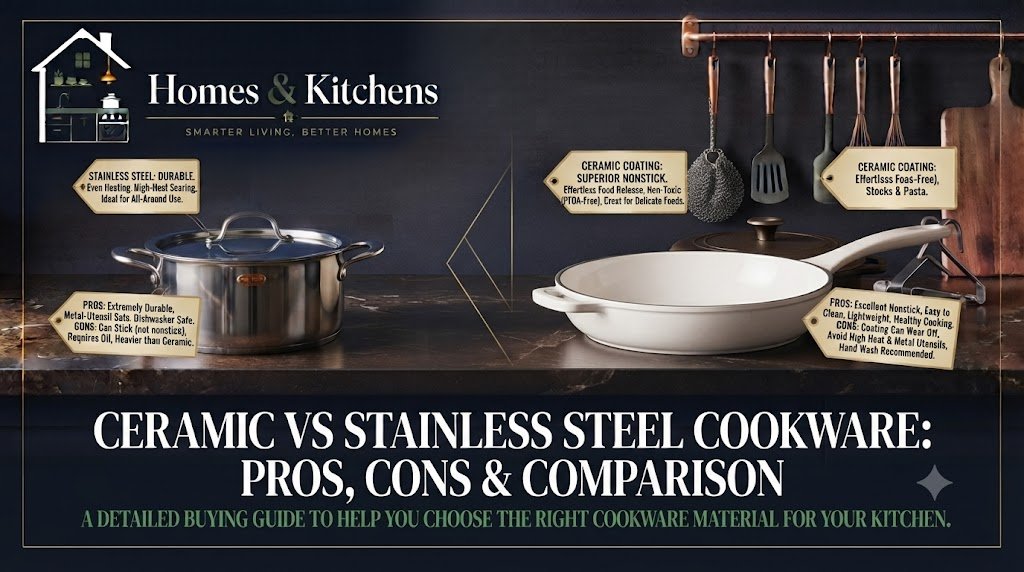
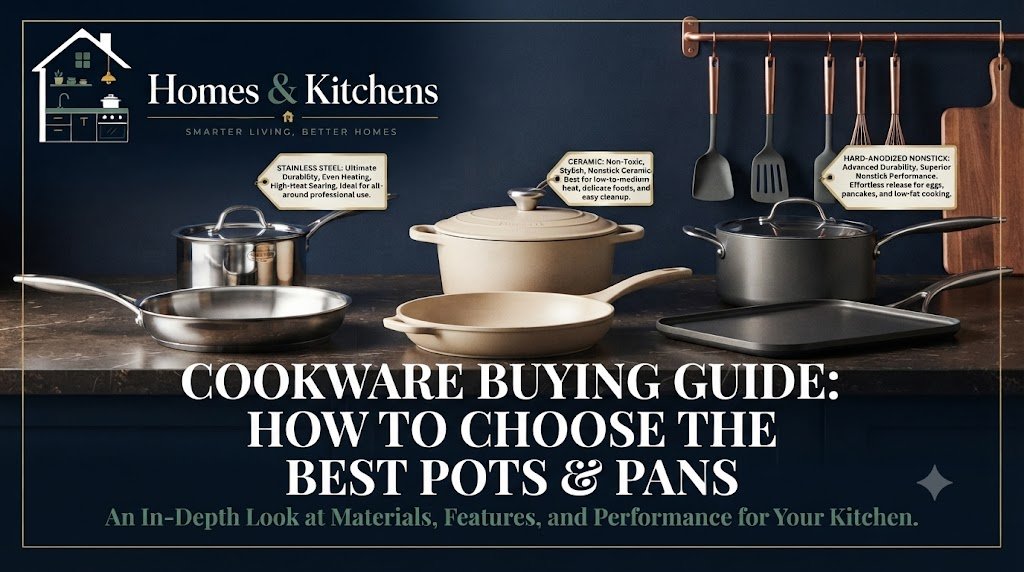
Stainless Steel
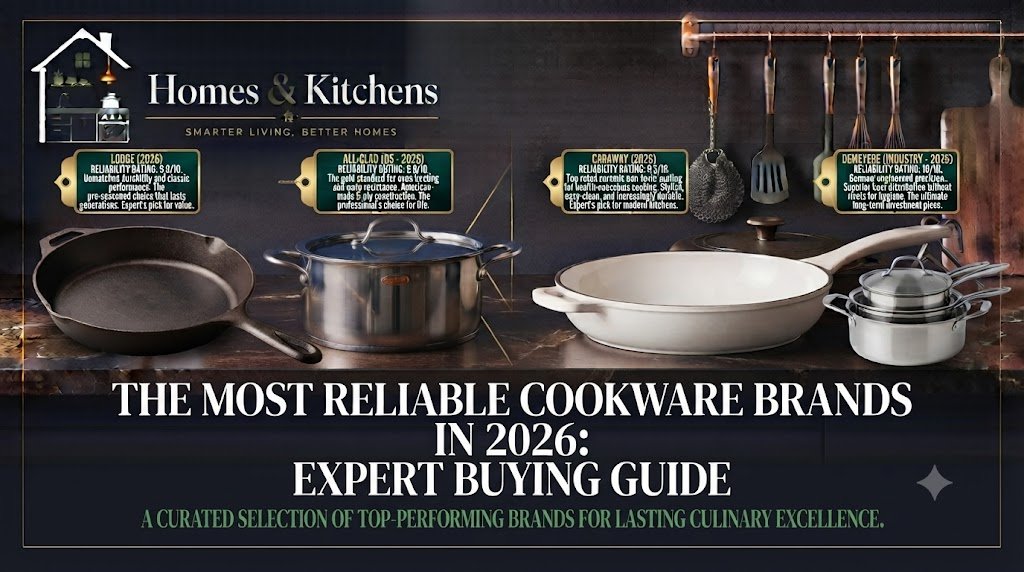
Stainless steel is the workhorse of professional kitchens and serious home cooks alike. It is durable, non-reactive, and virtually indestructible.
- How it works: Pure stainless steel is a poor heat conductor on its own, which is why quality stainless steel pans are constructed with an aluminum or copper core (known as multi-clad or ply construction).
- Best for: Searing meats, making pan sauces, boiling pasta, and braising.
- Maintenance: Dishwasher safe, though hand washing preserves the shine. Can handle metal utensils and high oven temperatures.
Expert Tip: Look for at least 3-ply (tri-ply) construction where the aluminum core runs completely up the sides of the pan, not just across the flat bottom, ensuring even heating across the entire cooking surface.
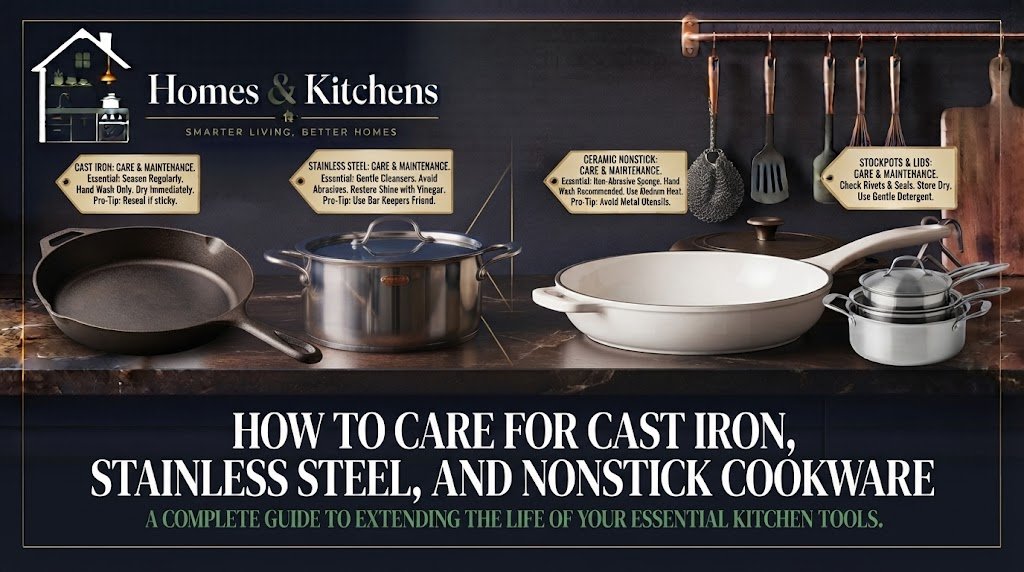
Cast Iron
Heavy, rugged, and retaining heat better than almost any other material, traditional cast iron is a generational investment.
- How it works: It heats up slowly, but once hot, it stays hot. As you cook with oils, cast iron builds a natural, nonstick polymerized layer called seasoning.
- Best for: Achieving a deep, restaurant-quality sear on steaks, baking cornbread, deep frying, and transitioning directly from stovetop to oven.
- Maintenance: Requires hand washing without harsh soap, thorough drying, and periodic seasoning with oil. Never put traditional cast iron in the dishwasher.
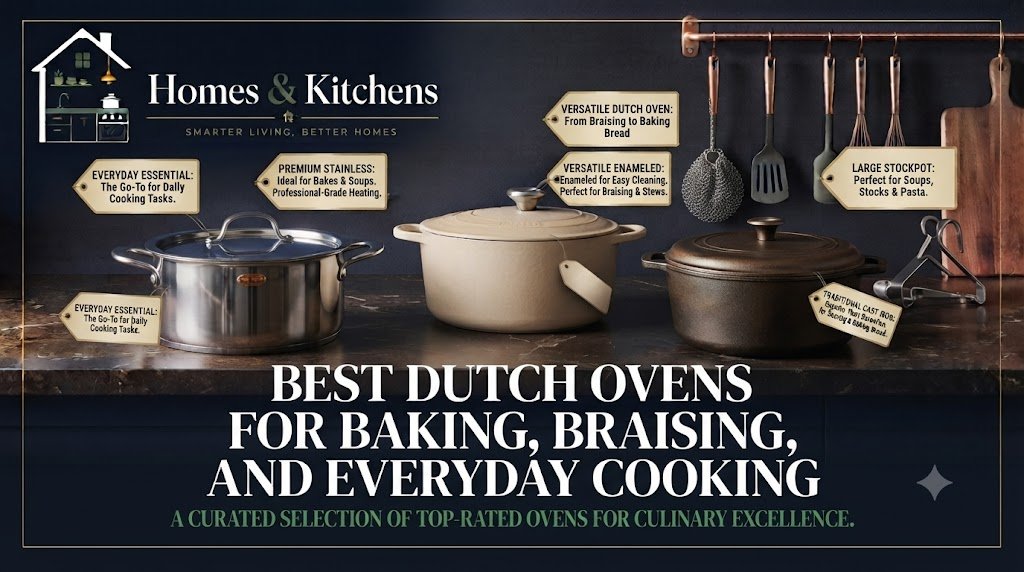
Enamelled Cast Iron
Combining the heat retention of cast iron with a smooth, glass-like enamel exterior and interior, this material bridges the gap between performance and ease of use.
- How it works: The porcelain enamel coating prevents the iron from reacting with acidic foods like tomatoes or wine, eliminating the need for traditional seasoning.
- Best for: Low-and-slow braises, simmering stews, baking artisanal bread, and making soups.
- Maintenance: Hand washing is recommended to prevent chipping, though many brands are technically dishwasher safe. Avoid metal utensils to protect the enamel finish.
Hard-Anodized Aluminum
Aluminum is an exceptional heat conductor, but raw aluminum is soft and reacts with acidic ingredients. Hard-anodized aluminum undergoes an electrochemical bath that hardens the metal, making it twice as tough as stainless steel.
- How it works: It heats quickly and evenly, reducing hot spots. Most hard-anodized pans are paired with a nonstick interior coating.
- Best for: Everyday sautéing, flipping pancakes, and cooking delicate items like eggs and fish.
- Maintenance: Generally requires hand washing to preserve the exterior finish and nonstick coating. Avoid aerosol cooking sprays, which leave a gummy residue that degrades nonstick surfaces.
Copper
Prized for its breathtaking beauty and unmatched thermal responsiveness, copper is the darling of culinary purists.
- How it works: Copper reacts instantly to temperature adjustments. When you turn down the burner, the pan cools down immediately.
- Best for: Delicate tasks requiring precise temperature control, such as melting chocolate, making caramel, and simmering delicate sauces.
- Maintenance: High maintenance. Traditional copper requires regular polishing to maintain its luster, though modern lined copper with a stainless steel interior reduces upkeep.
Comparing Your Options: Cookware Materials at a Glance
| Material | Heat Conduction | Durability | Best Uses | Maintenance Level |
| Tri-Ply Stainless Steel | Moderate to High | Lifetime | Searing, pan sauces, boiling | Low |
| Traditional Cast Iron | Low (High retention) | Multi-Generational | Steaks, frying, baking | High (Requires seasoning) |
| Enameled Cast Iron | Low (High retention) | Lifetime | Braising, stews, baking bread | Medium |
| Hard-Anodized Nonstick | High | 3 to 5 years | Eggs, fish, low-fat cooking | Medium (Hand wash only) |
| Copper | Exceptional | Lifetime | Delicate sauces, candy making | High (Regular polishing) |
Visual Content Suggestion: Include an infographic chart illustrating cross-sections of 3-ply vs. 5-ply stainless steel construction to show consumers how the core layers distribute heat.
Essential vs. Non-Essential Pieces: Building Your Collection
One of the most common mistakes homeowners make is buying a massive 15-piece cookware set. These sets often pack the box with redundant sizes, tiny utility pans, and cheap steamer inserts that end up collecting dust in the back of the pantry.
Instead, culinary experts recommend buying open-stock pieces or curating a focused collection tailored to how you actually cook.
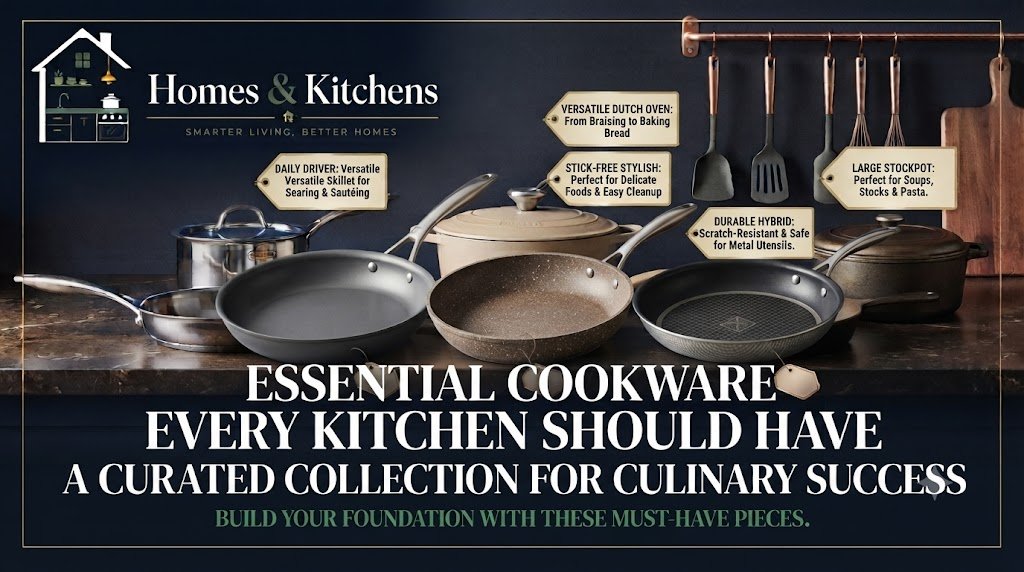
The Core Essentials
- 10-inch or 12-inch Skillet (Fry Pan): Your most frequently used pan. Opt for stainless steel for searing or nonstick for delicate items.
- 3-Quart Saucepan with Lid: Ideal for boiling grains, making oatmeal, reducing sauces, and heating soups.
- 6-to-8-Quart Dutch Oven: A heavy-bottomed, versatile vessel for soups, stews, deep frying, braising, and baking artisan bread.
- Sauté Pan (Straight-sided, 3-to-4 Quart): Unlike a sloping skillet, a sauté pan features vertical walls, making it perfect for pan-searing chicken cutlets, braising chops, and building one-pan dinners without spilling ingredients over the sides.
- 8-to-10-Quart Stockpot: Essential for boiling large batches of pasta, making homemade bone broth, and steaming seafood.
Nice-to-Have Specialty Pieces
- Cast Iron Skillet: A budget-friendly powerhouse for high-heat searing.
- Griddle / Grill Pan: Great for weekend pancakes or indoor grilling, though harder to clean than a standard flat skillet.
- Saucière: A saucepan with rounded interior walls that make whisking sauces effortless without burning corners.
How to Choose Cookware Based on Your Stovetop
Your kitchen’s heat source plays a massive role in which pots and pans will perform best. Matching your cookware to your range prevents damaged equipment and uneven cooking.
Gas Cookstoves
Gas ranges provide instant visual feedback and open flame heat. Virtually all cookware materials—copper, cast iron, stainless steel, and aluminum—work seamlessly on gas cooktops. Because flames lick up the sides of smaller pans, look for sturdy handles that stay cool to the touch or are ergonomically designed to protect your hands from ambient heat.
Electric Coil Cookstoves
Traditional electric coil burners require flat-bottomed cookware to maintain proper contact with the heating element. Warped pans will rock back and forth, resulting in frustrating hot spots. Multi-ply stainless steel and cast iron excel here because their thick bases resist warping under direct electric heat.
Smooth Glass and Ceramic Cooktops
Glass-top stoves are sleek and easy to clean, but they demand specific care.
- Avoid cast iron with rough bottoms: Unpolished cast iron can scratch glass surfaces if dragged across them. If you love cast iron on a glass cooktop, look for enamelled versions with smooth bottoms or lift the pan entirely when moving it.
- Check for flatness: If a pan bottom warps even slightly, it will lose contact with the glass, drastically slowing down cooking times.
Induction Cookstoves
Induction cooking uses electromagnetic fields to heat the pan directly rather than heating the cooktop surface. For induction to work, your cookware must contain ferrous (magnetic) metal.
- The Magnet Test: Take a standard refrigerator magnet and hold it to the bottom of your pot. If it sticks firmly, the cookware is induction-compatible.
- Materials to choose: Stainless steel (with a magnetic outer layer), cast iron, and enameled cast iron work wonderfully. Pure copper, standard glass, and pure aluminum pans will not work on induction unless they feature an embedded magnetic stainless steel plate on the base.
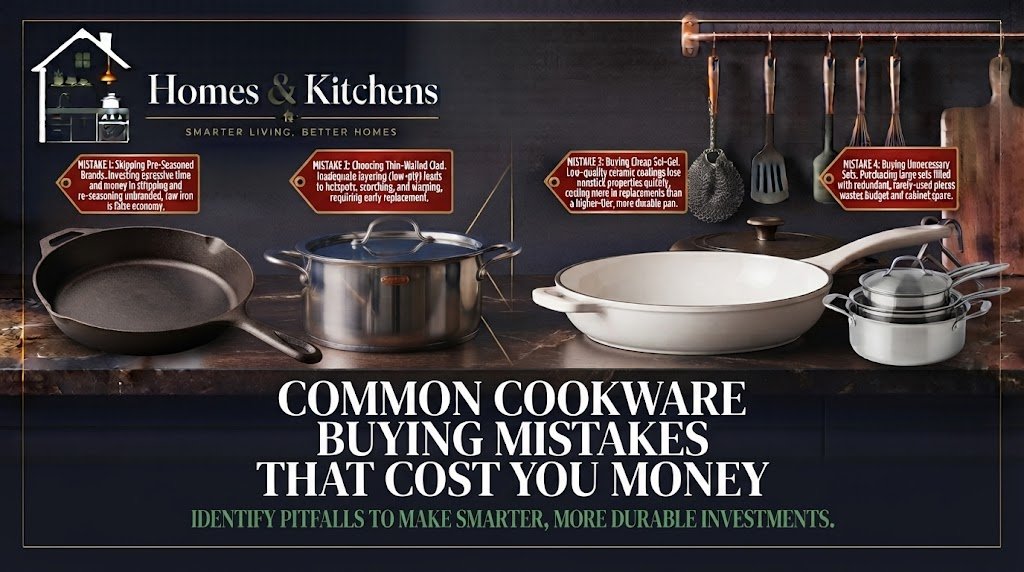
Common Mistakes to Avoid When Buying Cookware
Navigating retail aisles or online storefronts can be overwhelming. Keeping these common pitfalls in mind will save you money and buyer’s remorse.
- Buying based on piece count: A 12-piece set that includes five plastic lids and three tiny utility pans is often lower quality than buying three or four high-performing, heavy-duty core pieces.
- Ignoring weight: Lightweight pans feel nimble in the hand, but thin metal conducts heat unevenly and warps easily. A quality pan should feel reassuringly heavy and balanced.
- Using nonstick cookware on high heat: High heat destroys standard nonstick coatings, releasing fumes and ruining the nonstick property. Save your nonstick pans for eggs and fish over low-to-medium heat; use stainless steel or cast iron for high-heat searing.
- Overlooking oven-safe ratings: Many home cooks buy pans with plastic handles that melt or degrade if slid into the oven to finish a dish. Always check the maximum oven-safe temperature rating before purchasing.
Step-by-Step Guide to Selecting Your Cookware Setup
If you are starting from scratch or doing a complete kitchen overhaul, follow this structured process to build a collection you will love using for years.
Assess Your Cooking Habits
Take an honest look at what you eat on a weekly basis. If you primarily cook stir-fries, boil pasta, and fry eggs, you do not need a copper saucière. If you bake bread and braise meats weekly, prioritize a heavy Dutch Oven.
Determine Your Budget
Decide whether you want a “buy-it-for-life” investment or a mid-tier setup that you can comfortably replace in five years. High-end multi-ply stainless steel or enameled cast iron requires an upfront investment, but it eliminates the cycle of constantly replacing cheap pans.
Select Your Anchor Material
Choose your primary material based on your stovetop and maintenance preferences. Most home cooks benefit from a hybrid approach: a core set of stainless steel for savory cooking, one nonstick skillet for delicate items, and a cast iron or enameled piece for heavy-duty tasks.
Check Compatibility and Comfort
Before finalizing any purchase, pick up the pan if possible. Check the handle angle, weight distribution, and lid fit. Ensure the handles are securely riveted or welded, as loose handles become dangerous hazards in a busy kitchen.
Cookware Buying Checklist
Use this handy checklist on your phone or print it out before heading to the store or browsing online:
- [ ] Does the cookware match my stovetop type (especially if using induction or glass-top)?
- [ ] Is the pan heavy enough to resist warping and distribute heat evenly?
- [ ] Do stainless steel pans feature multi-ply (tri-ply) construction running up the sides?
- [ ] Are the handles securely attached (riveted or welded) and comfortable to grip?
- [ ] Are the handles and lids oven-safe up to at least 400°F?
- [ ] Does the set focus on versatile core pieces rather than inflated piece counts?
- [ ] Am I willing to commit to the maintenance requirements (e.g., hand washing, seasoning)?
Frequently Asked Questions
How long should cookware last?
High-end stainless steel, copper, and cast iron cookware can easily last a lifetime and be passed down to future generations. Standard nonstick pans, regardless of price point, have a finite lifespan of roughly 3 to 5 years because the coating eventually wears down with regular use.
Is stainless steel difficult to clean?
While food can stick to stainless steel if preheated incorrectly, cleaning it is straightforward. Deglazing hot pans with broth or wine lifts food bits easily, and stubborn stains can be removed effortlessly with a specialized cleaner like Bar Keepers Friend.
Can I put my nonstick pans in the dishwasher?
Even if a manufacturer claims their nonstick cookware is dishwasher safe, automated dishwashers use harsh detergents and high-pressure water jets that dull exterior finishes and degrade nonstick coatings over time. Hand washing with mild soap and a soft sponge is always recommended to maximize longevity.
What is the difference between hard-anodized and regular aluminum?
Regular aluminum is soft, lightweight, and reactive to acidic foods, meaning it can discolor and leach metallic flavors into your food. Hard-anodized aluminum undergoes an electrochemical treatment that seals the metal, creating a hard, non-reactive, scratch-resistant surface that performs exceptionally well in the kitchen.
Final Verdict
Choosing the right cookware does not require a culinary degree. The secret lies in balancing performance, durability, and your personal cooking style. For most American kitchens, the winning formula is a hybrid approach: invest in a durable multi-ply stainless steel skillet and saucier for everyday cooking, pick up an enameled Dutch oven for comforting braises and stews, and keep a single, affordable nonstick pan strictly for delicate eggs and fish. By prioritizing quality over quantity, you will cook better, clean up faster, and enjoy your time in the kitchen immeasurably more.
Key Takeaways
- Material matters: Match your cookware material to your cooking style and stovetop type (paying special attention to induction and glass-top requirements).
- Skip the huge sets: Avoid bloated 15-piece sets filled with redundant pieces; instead, curate core essentials like a skillet, saucepan, and Dutch oven.
- Multi-ply construction is key: For stainless steel and aluminum, look for bonded multi-layer construction that extends up the sides of the pan to eliminate hot spots.
- Nonstick has an expiration date: Treat nonstick pans as consumable items that require gentle hand washing and low-to-medium heat, expecting to replace them every few years.
Conclusion
Upgrading your pots and pans is one of the most impactful investments you can make in your home. When your tools respond predictably to heat, clean up without a fight, and make cooking more enjoyable, you are far more likely to gather around the table for home-cooked meals. Take inventory of what you currently use, ditch the warped pans that frustrate you, and build a streamlined collection designed to serve your household deliciously for years to come. For more inspiration on upgrading your culinary space, explore our guides on Kitchen and general Homes maintenance tips.