
Introduction
Walking onto a showroom floor or browsing an online appliance catalog can trigger a rush of excitement. Shiny stainless steel finishes, sleek touchscreens, and promises of effortless culinary mastery make it easy to imagine an upgraded, perfectly organized domestic life.
Unfortunately, that showroom enthusiasm often leads to impulsive purchasing decisions. Buying major home appliances—such as refrigerators, ranges, dishwashers, and laundry suites—is a high-stakes financial commitment. A mistake in sizing, a miscalculation of utility requirements, or paying a premium for gimmicky features you will never use can lead to years of daily frustration and unexpected repair bills.
This guide explores the most frequent, costly mistakes homeowners make when purchasing appliances. More importantly, we provide a strategic, step-by-step roadmap to help you avoid these missteps and invest in equipment that genuinely serves your household.
1. Failing to Measure the Entire Delivery Path (The Spatial Trap)
The single most heartbreaking and common mistake homeowners make is measuring only the empty kitchen cutout where the appliance will live, while completely ignoring the path required to get it there.
- The Problem: You order a sprawling, ultra-wide French door refrigerator, only to discover on delivery day that it cannot clear the front hallway corner, won’t fit through the basement stairwell, or hits the kitchen island before the doors can open.
- The Consequences: Canceled delivery fees, restocking charges, or worse—forcing a return and living without a refrigerator for another two weeks.
- How to Avoid It:
- Measure height, width, and depth of the target cutout down to the fraction of an inch.
- Measure every single doorway, hallway corner, staircase clearance, and entryway the delivery team must navigate.
- Account for handles, protruding hinges, and required ventilation clearance gaps behind refrigerators, ranges, and dryers.
2. Ignoring Utility and Infrastructure Realities
An appliance is only as good as the infrastructure supporting it. Assuming that any kitchen or laundry space can instantly accommodate any machine is a recipe for expensive modification bills.
- The Problem: Purchasing an induction cooktop or a heavy-duty electric dryer without verifying your home’s electrical panel capacity, or buying a gas range when your home only has electric service.
- The Consequences: Emergency electrician bills costing hundreds of dollars to run new 240V dedicated lines, or plumbing contractor fees to install dedicated water supply valves for ice-making refrigerators.
- How to Avoid It:
- Audit your utilities before you shop: Check whether you have natural gas or propane lines, 120V standard outlets, or heavy-duty 240V circuits.
- Verify water supply valve locations and drainage lines for dishwashers and washing machines.
- Consult our foundational Kitchen Appliances Buying Guide to match appliance energy requirements with your home’s electrical capacity.
3. Falling for Feature Overload and Gimmicks
Manufacturers love marketing high-tech features that look incredible in promotional videos but offer little to no practical value in daily life.
- The Problem: Paying an extra $1,000 for a refrigerator with a built-in Wi-Fi tablet screen, internet browsing capabilities, and internal grocery cameras, or buying an oven with twenty specialized baking modes you will never use.
- The Consequences: Overspending on technology that becomes obsolete in three years, alongside higher repair probabilities when complex microprocessors fail.
- How to Avoid It:
- Focus on core performance metrics: cleaning power, temperature uniformity, motor durability, and usable internal capacity.
- Evaluate smart features objectively. Prioritize functional utilities—like smart leak detectors and automatic water shut-off valves—over entertainment screens and novelty automation. Learn more about balancing these choices in our guide on Kitchen Appliances vs. Smart Appliances.
4. Overlooking Long-Term Operating Costs
Focusing exclusively on the initial sticker price is a classic budgeting error that inflates your monthly utility bills.
- The Problem: Buying a heavily discounted, inefficient appliance because the upfront cost is low, ignoring the fact that it consumes excessive electricity and water over its lifespan.
- The Consequences: Higher monthly utility bills that quickly erase any initial savings from the discount rack.
- How to Avoid It:
- Look for the ENERGY STAR certification label on refrigerators, dishwashers, and washing machines.
- Check regional utility provider websites for cash-back rebates on high-efficiency appliances.
- Review industry lifespan data in our breakdown on How Long Do Home Appliances Last? to calculate true long-term costs.
5. Mismatching Finishes Across the Kitchen
If you are replacing appliances one by one over several years, failing to coordinate finishes can leave your kitchen looking disjointed.
- The Problem: Mixing “standard stainless steel,” “black stainless steel,” “slate,” and bright chrome finishes across a single kitchen layout.
- The Consequences: A jarring visual clash, as different manufacturers use proprietary metal undertones, sheen levels, and protective coatings that do not match.
- How to Avoid It:
- If replacing appliances gradually, stick to classic standard stainless steel or neutral matte finishes with simple hardware handles.
- If buying a suite, purchase from a consistent manufacturer line or ensure finish color codes match across brands.
6. Falling for the Extended Warranty Pitch
Retailers push extended warranties aggressively because they carry massive profit margins and rarely benefit the consumer.
- The Problem: Signing up for a $300 extended warranty on a $900 washing machine out of fear that it will break down immediately.
- The Consequences: Unnecessary padding of your purchase total. Most major appliances come with a 1-year manufacturer warranty, and many major credit cards automatically double that warranty for an extra year.
- How to Avoid It:
- Decline standard retail extended warranties.
- Check your credit card benefits before checking out.
- Invest your warranty savings into a personal home maintenance fund for future repairs. Refer to our insights on The Most Reliable Home Appliance Brands in 2026 to choose inherently dependable brands that minimize your risk of needing repairs in the first place.
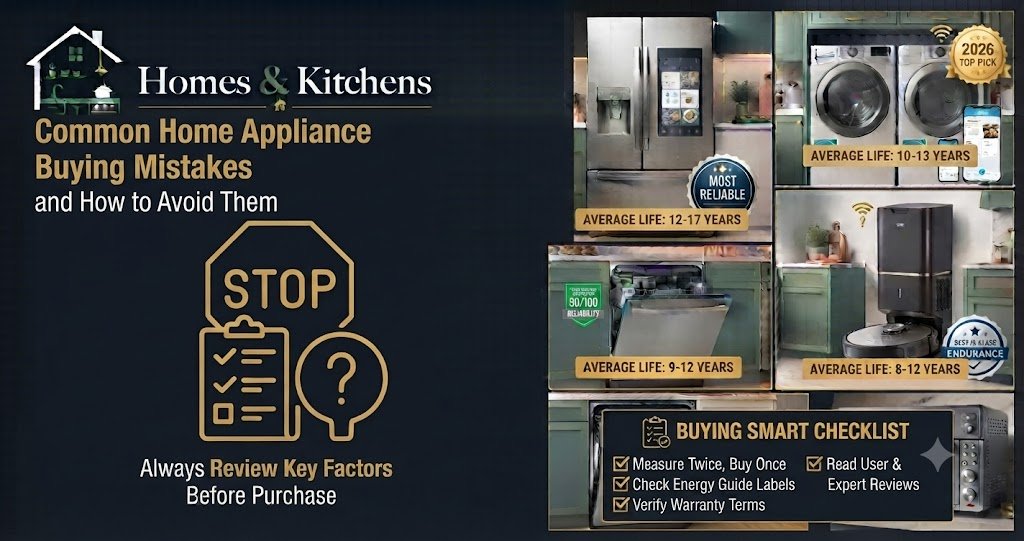
Summary Checklist for Smart Appliance Shopping
To ensure your next appliance purchase goes smoothly, keep this quick reference checklist handy:
| Shopping Step | Key Action Item | Why It Matters |
| 1. Spatial Audit | Measure doorways, stairwells, and cutouts twice. | Prevents delivery day clearance failures. |
| 2. Utility Check | Verify gas lines, 240V circuits, and water valves. | Avoids unexpected electrician and plumber bills. |
| 3. Core Focus | Prioritize cleaning/cooling performance over gimmicks. | Ensures long-term satisfaction and reliability. |
| 4. Efficiency Check | Look for ENERGY STAR ratings and local rebates. | Lowers monthly utility and operating costs. |
| 5. Warranty Review | Skip retail extended warranties; check credit card perks. | Protects your budget from unnecessary padding. |
Frequently Asked Questions
1. What is the most common mistake people make when buying a refrigerator?
Failing to measure door swing clearance against adjacent kitchen islands or walls is the most frequent error. Many homeowners discover too late that their refrigerator doors cannot open past 90 degrees, trapping crisper drawers inside.
2. Should I always buy matching appliance brands?
Not necessarily. While matching brands ensures finish uniformity, no single manufacturer builds the absolute best refrigerator, dishwasher, and range simultaneously. You can mix brands successfully by maintaining consistent stainless steel finishes and neutral handle styles.
3. Are scratch-and-dent appliance sales worth the risk?
Yes, provided you inspect the unit carefully. Scratch-and-dent appliances often feature deep discounts due to cosmetic blemishes on the side or rear panels (which are hidden once installed) while retaining full manufacturer warranties on internal mechanical parts.
4. How can I avoid delivery and installation hidden fees?
Always ask retailers upfront what is included in the delivery fee. Clarify whether haul-away of old units, uncrating, leveling, anti-tip bracket installation for ranges, and water line connection are included or charged as separate line items.
Final Verdict
Buying home appliances successfully requires patience, careful measurement, and a focus on practical utility over showroom hype. By avoiding spatial miscalculations, respecting your home’s utility limits, prioritizing core performance, and skipping costly extended warranties, you ensure your investment delivers reliable service for years to come.
Conclusion
Avoiding common appliance buying mistakes saves you from unnecessary financial stress and household disruptions. By approaching your purchase with a clear measurement plan, an understanding of long-term efficiency, and realistic expectations of what features you actually need, you build a resilient, comfortable home environment.
For further guidance on upgrading your living space, explore our related resources on Kitchen Remodel Cost Guide, Kitchen Cabinets Guide, and Countertop Materials.