Introduction
Picture this: It is a crisp autumn Saturday morning. Instead of idling in a five-car drive-thru queue or dropping seven dollars on a lukewarm flat white downtown, you step into your own kitchen. The rhythmic, heavy whir of a conical burr grinder kicks off on your counter, filling the room with the sweet, unmistakable aroma of freshly roasted Ethiopian beans. Moments later, rich, honey-like espresso pours from a heavy brass portafilter, pooling into your favorite ceramic mug with a thick, velvety layer of reddish-brown crema.
We have all felt the pull of the specialty coffee movement. Escalating café tabs and a growing appreciation for craftsmanship have turned American kitchens into destination coffee bars. Yet, transitioning from a basic drip machine or a push-button pod brewer to a legitimate home espresso setup can feel like stepping into a technical labyrinth. Do you need a dual boiler? What is PID temperature control? Why do some machines cost two hundred dollars while others run past two thousand?
As a home improvement writer and smart home consultant who has spent years benchmarking small appliances under strict real-world conditions, I have evaluated everything from ultra-budget starter pumps to high-end prosumer rigs. In many U.S. homes, counter space is a premium asset. You cannot afford to invest in equipment that produces sour extractions or clutters your kitchen layout.
This guide cuts through the technical jargon. We will explore the finest espresso machines on the market for every tier of home barista, break down the mechanics that separate mediocre shots from café-quality excellence, and help you choose a machine that elevates your daily ritual.
The Landscape of Home Espresso in 2026
The home espresso market has undergone a remarkable shift. Manufacturers have successfully shrunk commercial-grade extraction technologies—such as regulated 9-bar pressure limits, PID temperature stabilization, and automated milk texturing—into compact footprints designed for residential kitchens.
According to coffee extraction standards set by the Specialty Coffee Association (SCA), an optimal espresso extraction relies on precise variables: water heated consistently between 190°F and 205°F, pressurized extraction around 9 bars, and a uniform fine grind. If your equipment fluctuates wildly outside these parameters, your shots will taste aggressively bitter or unpleasantly sour, regardless of how expensive your coffee beans are.
Before diving into specific models, let’s look at the foundational categories of espresso machines available to home baristas today.
| Espresso Style | Best Use Case |
| Manual / Lever Machines | Best for purists who want total physical control over pressure profiles. |
| Semi-Automatic Machines | Best for aspiring baristas who want control over extraction timing and tamping. |
| Bean-to-Cup (Super-Auto) | Best for speed, convenience, and one-touch milk drinks without a learning curve. |
| Prosumer Dual Boilers | Best for serious enthusiasts pulling back-to-back milk drinks simultaneously. |
Best All-In-One Espresso Machines for Aspiring Baristas
For most homeowners stepping into the hobby, buying a separate grinder and espresso machine can feel intimidating and space-prohibitive. Integrated “all-in-one” systems bridge this gap brilliantly.
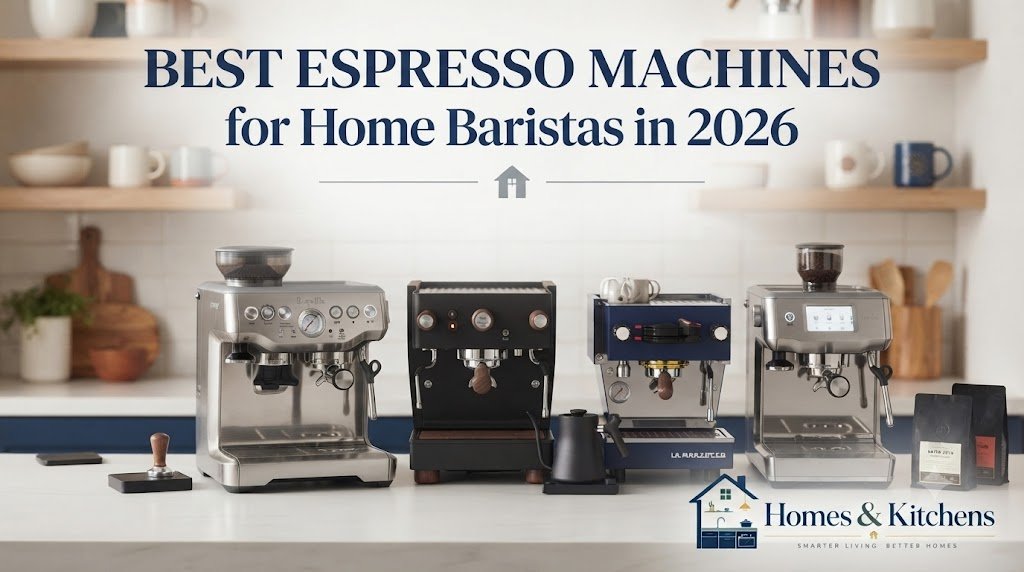
1. The Benchmark Choice: Breville Barista Express Impress
- Estimated Price: $750–$800
- Best For: Beginner to intermediate home baristas who want fresh grinding and consistent extraction without a steep learning curve. The Consumer’s Guide
Why it stands out: During testing, the Barista Express Impress solved one of the most persistent hurdles for beginners: inconsistent dosing and tamping. Its internal smart dosing system calculates precise coffee volumes, while the assisted tamping lever applies a steady, calibrated 10-kilogram push with a gentle twist. One practical lesson homeowners often discover is that tamping pressure consistency matters far more than raw muscle; this machine automates that variable while leaving manual control over your extraction timing.
The Consumer’s Guide+ 1
- Pros:
- Integrated conical burr grinder saves counter space.
- Assisted tamping mechanism drastically reduces mess and human error. The Plum Edit
- PID digital temperature control ensures thermal stability.
- Cons:
- Single boiler design means you must wait briefly to switch from brewing to steaming milk.
- Built-in grinder cannot easily be upgraded independently if you graduate to specialty single-origin light roasts later.
Best Compact & Entry-Level Machines
You do not need to clear half your kitchen counter or spend a thousand dollars to pull authentic espresso.
2. The Space-Saving Powerhouse: Breville Bambino Plus
- Estimated Price: $499 The Consumer’s Guide
- Best For: Small kitchens, apartment dwellers, and minimalists who demand true 9-bar extraction.
Why it stands out: Measuring just 7.7 inches wide, the Bambino Plus packs commercial-spec performance into a featherlight footprint. It utilizes a ThermoJet heating system that reaches brewing temperature in an astonishing three seconds. Furthermore, its automated milk texturing wand features selectable temperature and texture settings, making microfoam creation effortless for beginners.
- Pros:
- Ultra-compact footprint fits tight apartment kitchen counters.
- Rapid 3-second warm-up time.
- Automated hands-free milk frothing with adjustable textures.
- Cons:
- Lightweight body can shift slightly when locking in a tight portafilter.
- Requires purchasing a separate standalone grinder.
Best Prosumer & Classic Manual Machines
For purists dedicated to mastering the craft, traditional mechanical builds offer unmatched longevity and commercial-grade architecture.
3. The Heritage Standard: Gaggia Classic Evo Pro
- Estimated Price: $450–$550
- Best For: Coffee enthusiasts committed to learning manual technique and investing in a machine with a multi-decade lifespan. The Plum Edit
Why it stands out: Manufactured in Italy, the Gaggia Classic Evo Pro features a commercial-size 58mm portafilter—the exact same standard used in high-end commercial cafés. This allows you to use professional aftermarket accessories like precision filter baskets. One practical observation from long-term testing is that machines with heavy brass brew groups and three-way solenoid valves (which dry out the coffee puck after extraction) make cleanup remarkably clean and repeatable.
The Consumer’s Guide+ 1
- Pros:
- Commercial 58mm group head and portafilter. The Consumer’s Guide
- Highly modifiable with a massive global community of enthusiast upgrades.
- Built like a tank with stainless steel housing.
- Cons:
- Steep learning curve for dialing in grind size and manual tamping.
- Stock steam wand requires practice to achieve true latte art microfoam.
Quick Comparison Table
| Machine Model | Type | Built-in Grinder | Group Size | Best Use Case |
|---|---|---|---|---|
| Breville Barista Express Impress | Semi-Automatic (All-in-One) | Yes | 54mm | Seamless workflow for aspiring home baristas |
| Breville Bambino Plus | Semi-Automatic (Compact) | No | 54mm | Small kitchens and fast warm-ups |
| Gaggia Classic Evo Pro | Traditional Manual | No | 58mm | Long-term durability and prosumer modding |
| De’Longhi Stilosa EC230 | Entry-Level Manual | No | 51mm | Budget-conscious beginners learning the ropes |
Visual Content Suggestion
Diagram Idea: Create an anatomical cross-section illustration titled “Inside the Espresso Machine.” Highlight the path of water from the rear reservoir through the vibration pump, the PID heating block/boiler, the three-way solenoid valve, and out through the portafilter basket to visually explain how pressure and temperature interact during extraction.
Step-by-Step Guide: Pulling Your First Perfect Shot
Owning a great machine is only half the battle. Mastering the extraction process turns good beans into extraordinary espresso. Follow this step-by-step workflow:
- Weigh Your Dose: Weigh out 18 grams of fresh whole-bean coffee on a digital kitchen scale. Precision matters immensely in espresso.
- Grind Fresh: Grind your beans to a fine consistency (resembling table salt) directly into your portafilter basket just seconds before brewing.
- Distribute and Tamp: Level the coffee grounds evenly across the basket to prevent channeling, then press down firmly and evenly with a tamper to create a flat, compacted coffee puck.
- Flush the Group Head: Run hot water through the group head for two seconds to clear out old coffee oils and stabilize the thermal temperature.
- Lock and Extract: Lock the portafilter firmly into place, place your scale and cup underneath, and immediately start the shot. Aim for a yield of 36 grams of liquid espresso in roughly 25 to 30 seconds.
Common Mistakes to Avoid
Even seasoned home cooks stumble when transitioning to espresso. Avoid these frequent missteps to protect your palate and your machine:
- Using Stale or Pre-Ground Coffee: Pre-ground coffee loses its soluble aromatic compounds within hours. Buying oily supermarket beans roasted months ago will yield flat, lifeless espresso devoid of crema.
- Ignoring Water Hardness: High mineral content in tap water causes internal scale buildup that chokes pumps and ruins heating elements. Always use filtered water or a machine-integrated softening filter.
- Skipping Backflushing: Failing to clean coffee oils out of a solenoid valve leads to rancid buildup that taints future shots and clogs internal lines. Backflush your machine with specialized cleaning powder monthly.
- Chasing High Bar Pressure Myths: Do not fall for marketing claims boasting “20-bar or 25-bar pumps.” Commercial espresso is universally extracted at a regulated 9 bars of pressure; higher unthrottled pressures often over-extract and bitter the shot.
Expert Tips for Home Baristas
Expert Tip: To elevate your milk texturing instantly, submerge the tip of your steam wand just beneath the surface of the milk slightly off-center to create a smooth, rolling vortex. If you hear loud, papery screeching sounds, the wand is too shallow; if you hear nothing, it is buried too deep. Aim for a gentle, rhythmic paper-tearing sound for the first few seconds to incorporate air, then submerge to heat.
Frequently Asked Questions
Do I really need a separate grinder for espresso?
Yes, unless you purchase an all-in-one machine with a built-in grinder. Standard drip coffee grinders cannot grind fine enough or offer the micro-adjustments required to dial in a proper 9-bar espresso extraction.
www.theconsumers.guide
Why is my espresso tasting sour?
Sourness is a classic sign of under-extraction. This usually happens because your grind is too coarse, your water temperature is too low, or your shot ran through the coffee puck too quickly. Try a finer grind setting to slow down the flow.
How often should I descale my espresso machine?
Depending on your local water hardness and frequency of use, you should run a dedicated descaling solution through your machine every two to three months to protect internal copper and aluminum components.
Final Verdict
If you want a streamlined, all-in-one setup that minimizes guesswork while delivering exceptional results, the Breville Barista Express Impress is our top recommendation for home baristas. For those with tight counter space or existing high-end grinders, the compact Breville Bambino Plus punches far above its weight class. And if you view espresso brewing as a hands-on craft built to last a lifetime, the Italian-made Gaggia Classic Evo Pro offers unbeatable long-term value and customizability.
The Consumer’s Guide+ 1
For more ways to outfit your culinary space, explore our guides on Kitchen essentials and smart Homes upgrades.
Key Takeaways
- Grind Quality is King: A great espresso machine cannot compensate for an inconsistent or inadequate grinder.
- Respect the 9-Bar Standard: Look for machines engineered to stabilize true extraction pressure around 9 bars rather than falling for inflated maximum pump numbers.
- Consistent Maintenance Protects Flavor: Routine backflushing and water filtration keep your machine performing at peak levels for years.
Conclusion
Mastering home espresso is a rewarding journey that blends kitchen science with daily ritual. By equipping yourself with a machine that suits your counter space, understanding the fundamentals of grind and temperature, and committing to proper maintenance, you can consistently pour coffee that rivals your favorite local café right from your own kitchen.