Introduction
Picture this: It is a crisp Tuesday morning in a suburban kitchen. You crack a farm-fresh egg into a preheated skillet, expecting it to glide effortlessly across the surface. Instead, the edges catch, the yolk breaks, and you spend the next ten minutes scrubbing stubborn, baked-on protein with a scouring pad, wondering why your supposedly premium pan gave up after just six months.
If this scenario sounds painfully familiar, you are certainly not alone. In many U.S. homes, the frying pan is the undisputed workhorse of the kitchen. From searing chicken breasts on a weeknight to whipping up fluffy weekend pancakes, it handles the bulk of daily culinary tasks. Yet, finding a skillet that balances pristine food release with long-term durability feels like a game of chance.
Too many options warp under high heat, lose their slick coating within a year, or feature handles that loosen up after a few months of heavy use. During testing across various cooktops—from gas ranges in older city apartments to modern induction cooktops in newly built suburban homes—we discovered that performance comes down to core construction, coating technology, and how the pan manages heat retention.
This guide cuts through the marketing noise to evaluate the top nonstick frying pans available today. Whether you are outfitting a first apartment or upgrading a worn-out culinary arsenal, we will help you choose a reliable pan that makes everyday cooking effortless.
Understanding Nonstick Technology
Before diving into specific product reviews, it helps to understand what makes a nonstick pan tick. Not all coatings are created equal, and manufacturing methods dictate everything from your pan’s lifespan to how you should care for it.
PTFE vs. Ceramic Coatings
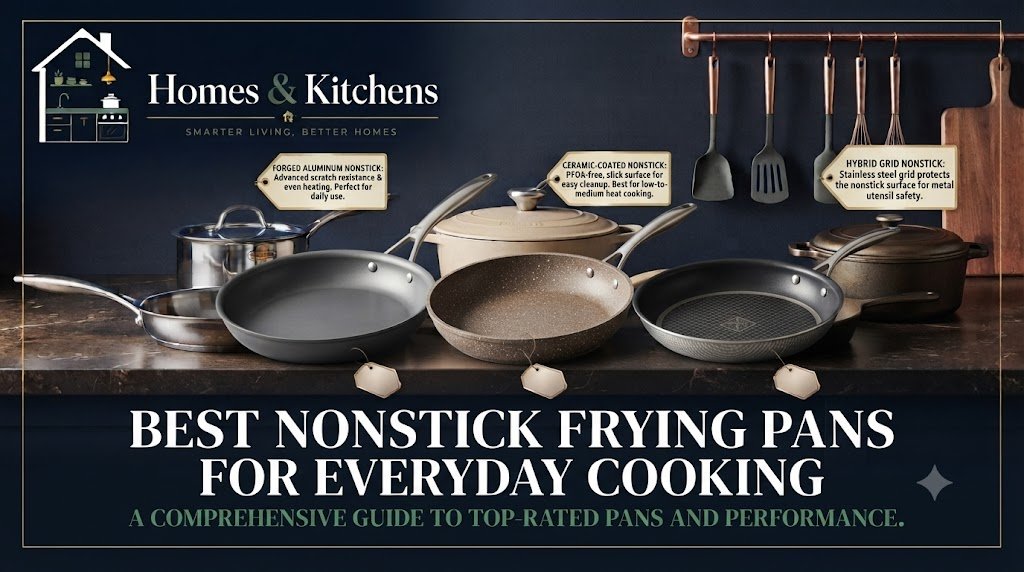
- PTFE (Polytetrafluoroethylene): Often referred to by its legacy brand name Teflon, traditional PTFE remains the gold standard for pure release performance. Modern formulations are completely PFOA-free, highly durable, and slide delicate items like eggs and fish around effortlessly.
- Sol-Gel Ceramic: Made from a silica-based base applied via a sol-gel process, ceramic pans offer an appealing, chemical-conscious alternative. They withstand higher initial heat levels without degrading, though their nonstick properties tend to degrade faster than PTFE under heavy, daily use.
Construction Matters: Anodized Aluminum vs. Multi-Clad Stainless
- Hard-Anodized Aluminum: Electrochemical treatment hardens the aluminum, making it twice as strong as stainless steel. It heats up quickly and evenly, making it the preferred material for responsive everyday skillets.
- Tri-Ply Stainless Steel with Nonstick Interior: These pans feature an aluminum core sandwiched between layers of stainless steel, extending right up the sides. They are induction-compatible by nature and exceptionally resistant to warping.
Expert Tip: If you primarily cook on induction, verify that your nonstick pan features a bonded magnetic stainless steel plate on the base, as pure aluminum will not register on induction burners.
Top Nonstick Frying Pans for Everyday Cooking
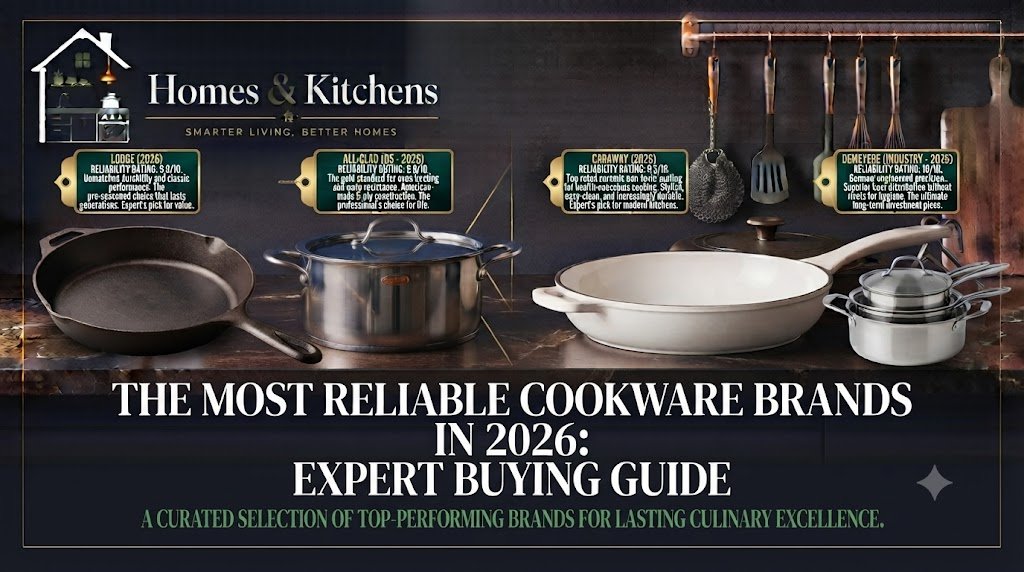
1. All-Clad HA1 Hard-Anodized Nonstick Skillet
- Best For: Home cooks seeking professional-grade durability and heavy-duty heat distribution.
- Material: Hard-anodized aluminum with a multi-layer PTFE coating.
- Induction Compatible: Yes (with a bonded stainless steel base plate).
The All-Clad HA1 brings commercial kitchen reliability into residential spaces. Constructed from heavy-gauge anodized aluminum, it resists warping even when subjected to rapid temperature changes—such as moving straight from a hot burner to the sink.
- Pros:
- Exceptionally sturdy construction that resists warping.
- Comfortable, riveted stainless steel handle that stays cool during stovetop cooking.
- Oven-safe up to 500°F (pan only).
- Cons:
- Heavier than standard aluminum pans, which might fatigue wrists during extended sautéing.
- Requires hand washing to preserve the coating’s lifespan.
2. Caraway Nonstick Ceramic Fry Pan
- Best For: Home cooks prioritizing eco-friendly manufacturing, non-toxic materials, and striking aesthetics.
- Material: Aluminum body with a mineral-based ceramic nonstick coating.
- Induction Compatible: Yes, via a stainless steel induction plate on the bottom.
Caraway has taken modern kitchens by storm with its clean lines and vibrant colorways. Beyond appearances, its mineral-based ceramic coating delivers smooth release performance without PTFE, PFOA, lead, or cadmium.
- Pros:
- Completely free of potentially controversial synthetic polymers.
- Gorgeous design that looks great sitting out on a stovetop.
- Comes with custom storage solutions and lid holders.
- Cons:
- Ceramic coatings require strict adherence to low-to-medium heat settings to prevent microscopic carbon buildup.
- Nonstick lifespan is generally shorter than high-end PTFE options.
3. Tramontina Professional Restaurant Fry Pan
- Best For: Value-conscious buyers looking for commercial-grade performance without a luxury price tag.
- Material: Heavy-gauge aluminum with a reinforced nonstick interior and silicone grip.
- Induction Compatible: No (standard aluminum model; verify specific induction-ready variants).
Often found in professional restaurant kitchens, this Tramontina skillet is a masterclass in functional utilitarian design. It lacks fancy branding, but its thick aluminum body delivers astonishingly even heat distribution.
- Pros:
- Incredible value for money.
- Removable silicone grip sleeve allows the pan to transition safely into high-heat ovens.
- Riveted handle provides a secure, ergonomic hold.
- Cons:
- Utilitarian aesthetic may not appeal to those looking for high-end kitchen decor.
- Standard models lack induction compatibility.
Comparison Table
| Brand & Model | Primary Material | Coating Type | Max Oven Safe Temp | Induction Ready? | Best For |
| All-Clad HA1 | Hard-Anodized Aluminum | Multi-layer PTFE | 500°F | Yes | Heavy-duty durability |
| Caraway Fry Pan | Aluminum | Mineral Ceramic | 550°F | Yes | Non-toxic aesthetic appeal |
| Tramontina Pro | Commercial Aluminum | Reinforced PTFE | 400°F (with grip) | No (Select models do) | Budget-conscious cooks |
Visual Content Suggestions
- Infographic: Anatomy of a Skillet illustrating the difference between a stamped aluminum pan, a hard-anodized body, and a tri-ply stainless steel construction.
- Diagram: Heat Distribution Comparison Chart showing hot spots on thin pans versus even heating on heavy-gauge anodized aluminum.
Step-by-Step Guide: Seasoning and Caring for Your Nonstick Pan
Even the best nonstick frying pan will lose its slick surface prematurely if treated like stainless steel or cast iron. Follow this routine to maximize your investment.
- The Initial Wash: Before first use, wash the pan thoroughly in warm, soapy water with a soft sponge. Rinse and dry completely with a microfiber towel.
- The Light Conditioning: Pour a half-teaspoon of high-smoke-point oil (like canola or grapeseed) onto a paper towel and wipe it lightly across the interior surface. Heat the pan on low for 30 seconds, let it cool, and wipe away any excess. This fills microscopic pores in the coating.
- Preheating Properly: Always place your pan over low to medium heat before adding oil or food. Crashing a cold pan onto high heat causes thermal shock and degrades nonstick polymers.
- Selecting the Right Utensils: Ditch metal spatulas and whisks. Stick strictly to silicone, wood, or heat-resistant nylon tools to prevent surface scratches.
- Hand Washing Only: Even if a manufacturer claims their pan is dishwasher safe, harsh alkaline dishwasher detergents and high-pressure water jets dull and degrade nonstick coatings over time. Wash by hand with mild dish soap.
Common Mistakes to Avoid
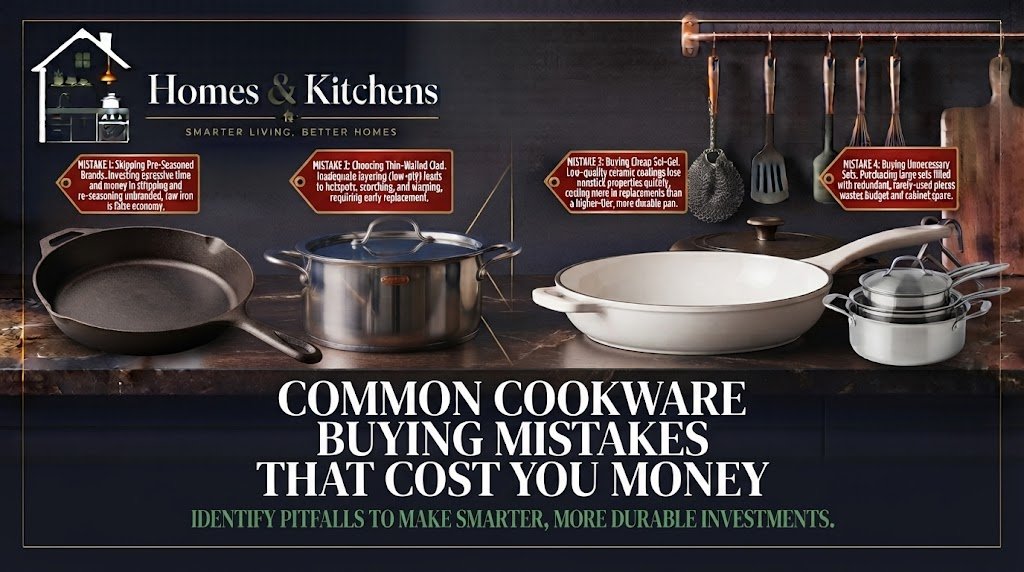
- Using Cooking Spray (Aerosol Sprays): Commercial cooking sprays often contain lecithin and other propellants that leave an invisible, sticky residue when exposed to heat. Over time, this residue bakes onto the pan, ruining the nonstick release properties. Use bottled oil and apply it manually.
- Cooking on High Heat: Nonstick pans are designed for low-to-medium heat cooking (such as searing fish, frying eggs, or sautéing delicate vegetables). Save high-heat searing for cast iron or stainless steel.
- Thermal Shock: Never plunge a scorching hot nonstick pan straight into cold sink water. The sudden temperature swing warps the metal base and compromises the bond between the coating and the pan.
- Stacking Without Protectors: Nesting frying pans directly on top of one another scratches the interior coating. Use felt pan protectors or hang your skillets to prevent friction damage.
Checklist for Buying a Nonstick Skillet
- [ ] Verify Cooktop Compatibility: Ensure the pan works with your range (gas, electric, or induction).
- [ ] Check Weight and Balance: Pick up the display model or check specs to ensure your wrist can comfortably manage the pan when full.
- [ ] Examine Handle Construction: Look for securely riveted handles or seamless welded designs rather than single screw-in handles that loosen over time.
- [ ] Review Oven Safety Limits: Check the maximum oven temperature rating, especially if you plan to finish frittatas or pan-seared meats in the oven.
- [ ] Assess Coating Claims: Look for explicit “PFOA-free” labelling and transparent manufacturer guidelines regarding care and maintenance.
Frequently Asked Questions
How long should a good nonstick frying pan last?
Even with meticulous care, consumer-grade nonstick pans have a practical lifespan of three to five years under regular everyday use. If food begins sticking persistently or the coating shows visible flaking or deep scratching, it is time for a replacement.
Can I use metal utensils if I am careful?
It is strongly advised against. Even microscopic nicks from the corner of a metal spatula can compromise the integrity of a nonstick surface, paving the way for the coating to flake off over time.
Why is my food sticking to my nonstick pan?
Food typically sticks for three reasons: cooking on too high of a heat setting, using aerosol cooking sprays that left a baked-on residue, or cooking in a pan that has accumulated a layer of invisible grease buildup. Try cleaning the surface thoroughly with a baking soda paste to restore its performance.
Expert Tips
- The Water Droplet Test: To check if your pan is properly preheated, sprinkle a few drops of water onto the surface. If they skate around like tiny marbles (the Leidenfrost effect), your pan is ready for cooking oil. If they sizzle and evaporate instantly, the pan is too hot.
- Storage Protection: If cabinet space forces you to stack your pans, place a silicone trivet, a thick cloth, or a felt pan protector between each skillet to protect the delicate nonstick finish.
Final Verdict
Choosing the right nonstick frying pan comes down to matching your cooking style with the right material. If you want maximum durability and professional-grade heat performance for daily family meals, the All-Clad HA1 remains our top overall recommendation. For those seeking a chemical-conscious, visually striking option for lighter cooking tasks, the Caraway Fry Pan offers an exceptional blend of style and function.
Key Takeaways
- Nonstick coatings require low-to-medium heat to preserve their lifespan and prevent degradation.
- Avoid aerosol cooking sprays, as their propellants leave behind an unremovable sticky residue.
- Hand washing with a soft sponge is essential for extending the life of your cookware, regardless of dishwasher-safe claims.
- Match your pan’s base construction to your cooktop type, especially if you cook on induction.
Conclusion
Investing in a quality nonstick frying pan transforms everyday cooking from a frustrating chore into a seamless culinary experience. By selecting a skillet that matches your kitchen setup, practicing proper heat management, and adhering to gentle cleaning habits, you will enjoy effortless food release and reliable performance for years to come. For more kitchen setup guides, explore our resources on Kitchen and Homes.