
Introduction
Walking through your front door after a long day at work should feel like an exhale. Yet, for millions of homeowners, stepping inside triggers an immediate wave of low-grade stress. You see a mail stack teetering on the kitchen counter, shoes strewn across the hallway floor, and crowded closets packed with clothes you haven’t worn in years. When physical clutter overtakes your living space, it quietly hijacks your mental bandwidth, creating constant visual static that drains your energy.
Most people approach decluttering as a sporadic, frantic weekend chore. They grab a trash bag, frantically toss a few broken items, shove everything else into plastic bins, and wonder why their home reverts to chaos two weeks later. True decluttering is not a one-time event; it is a systematic lifestyle practice rooted in intentionality and spatial reality. At Homes & Kitchens, our knowledge-first philosophy dictates that before you buy a single storage container or rearrange your furniture, you must master the mechanics of letting go. This comprehensive, step-by-step guide provides a definitive roadmap to purge household clutter room by room, overcome decision fatigue, and build sustainable maintenance habits that last a lifetime.
The Psychology of Clutter and Why We Hold On
Before touching a single drawer, you must understand why clutter accumulates in the first place. Environmental psychologists note that our physical spaces act as three-dimensional mirrors of our internal mental states. When life gets busy, our spaces fill up because our decision-making capacity becomes depleted.
The Anatomy of Decision Fatigue
Every single item in your home requires a micro-decision: Do I keep this? Do I throw it away? Where does it live? Will I need it later? Multiply that by thousands of items across multiple rooms, and your brain suffers severe decision fatigue. This exhaustion causes you to stall, shove items into closets, and abandon your organizational projects entirely. Recognizing that clutter is physical deferred decisions helps reframe the task from an emotional burden to a series of manageable choices.
The Scarcity Mindset vs. Intentional Abundance
Many households retain excessive items due to an underlying scarcity mindset—the lingering fear that discarding an unused item means you will regret it later or lack the financial means to replace it if needed. Shifting toward intentional abundance means recognizing that keeping unneeded items deprives you of the peace, calm, and functional square footage that open space provides.
The Master Decluttering Framework: The Four-Box Method
Jumping into a messy room without a sorting system guarantees chaos. To keep momentum high and confusion low, professional organizers rely on the universal Four-Box Method. Set up four distinct containers or marked areas before starting any room:
- Keep & Relocate: Items that actively serve your current lifestyle, fit your spatial dimensions, and belong in this specific room.
- Donate & Sell: Functional, high-quality items that no longer align with your daily routine or family stage.
- Trash & Recycle: Broken, expired, or structurally compromised items beyond practical repair.
- Relocate: Items that belong in your home, but have migrated to the wrong room (e.g., finding a rogue coffee mug in the master bedroom).
Step 1: The Warm-Up Strategy – Micro-Zoning High-Impact Areas
Never start your decluttering journey with deeply emotional spaces like childhood memorabilia boxes or family photo albums. Tackling sentimental items on day one guarantees emotional burnout. Instead, start with small, low-stakes micro-zones that deliver an instant psychological reward.
Conquering the Junk Drawer or Medicine Cabinet
- Empty It Completely: Dump every single item onto a flat surface. Seeing the contents gathered in one pile breaks the illusion of “not that much stuff.”
- Group Like with Like: Cluster dead batteries with dead batteries, expired aspirin with expired aspirin, and stray paperclips together.
- Purge the Excess: Discard expired medications safely at a local pharmacy take-back site, throw away dried-out pens, and return stray tools to your garage workbench.
Step 2: The Entryway and Mudroom (Stopping Clutter at the Door)
The entryway is the primary choke point for household clutter. Because it is the transition zone between the outside world and your private living quarters, chaos here quickly spreads throughout the rest of the house.
The Room-Specific Purge
- Shoe Audit: Pull every pair of shoes out of the entryway. Discard single gloves, broken umbrellas, and outgrown footwear. Limit active footwear near the front door to seasonal shoes worn on a weekly basis.
- Mail and Paper Sorting: Set up a vertical sorting tray right by the door. Immediately shred junk mail and place bills into an action folder rather than letting them sprawl across horizontal surfaces.
Step 3: The Kitchen and Pantry (Reclaiming the Heart of the Home)
The kitchen handles more daily physical turnover than any other space in the house. Organizing it requires dividing the room into functional culinary zones: prep, cooking, baking, and cleaning.
The Pantry Purge
- Expiration Date Check: Pull every item off your pantry shelves. Check expiration dates and discard expired spices, baking mixes, and canned goods.
- Cookware Editing: Evaluate pots, pans, and small appliances. If an appliance hasn’t been used in over a year (such as a single-use specialty maker), place it in your donation box. For further guidance on optimizing cooking workflows, explore our detailed Kitchen Organization Ideas.
Step 4: The Living Room and Family Spaces
Living rooms are designed for relaxation and gathering, making them prone to accumulating remote controls, chargers, books, and children’s toys.
Surface Clearing and Media Audits
- Surface Sweep: Clear off coffee tables, end tables, and media consoles entirely. Move items that don’t belong back to their correct rooms using your relocation box.
- Media & Tech Audit: Test old gaming controllers, discard dead batteries, and untangle cable clusters. To streamline your entertainment and living room layout, consider investing in multi-functional furniture as outlined in our guide on the Best Storage Furniture for Small Homes and Apartments.
Step 5: Bedrooms and Closets
Your bedroom should function as a personal sanctuary focused on rest, not a storage locker for unworn clothing or unread books.
Wardrobe Curation
- The Backward Hanger Trick: Turn all your clothing hangers backward at the start of a season. Once you wear and wash an item, hang it back up the normal way. After six months, evaluate every hanger remaining backward—those items are prime candidates for donation. For comprehensive wardrobe strategies, reference our in-depth guide on Closet Organization Ideas.
Step 6: Handling Sentimental Items Without Guilt
Sentimental clutter is the hardest hurdle in any decluttering journey. Old greeting cards, children’s art projects, and inherited heirlooms carry heavy emotional weight that makes physical purging feel like erasing a memory.
The Memory Box Boundary
- The One-Box Rule: Give every family member one dedicated, appropriately sized memory box. If an item holds deep emotional value but exceeds that physical box boundary, you must make a choice: let it go or swap it out for a more meaningful piece.
- Digital Preservation: For bulky sentimental items like artwork or voluminous childhood journals, use a high-resolution scanning app to create a digital archive album before letting the physical object go.
Comprehensive Decluttering Strategies Comparison Matrix
Review the methods, ideal rooms, difficulty levels, and expected outcomes of major decluttering strategies below:
| Strategy Name | Ideal Application | Difficulty Level | Time Commitment | Primary Benefit |
| Four-Box Method | Whole-room sorting & deep purges | Moderate | 2–4 Hours per room | Clear categorization & instant sorting |
| Micro-Zoning | Junk drawers, vanities, & desks | Low | 15–30 Minutes | Quick psychological wins & momentum |
| Backward Hanger Trick | Closets & seasonal wardrobes | Low | 6 Months (Passive) | Data-driven clothing evaluation |
| One-In, One-Out Rule | Ongoing maintenance across all zones | Low | Daily Habit | Prevents future clutter accumulation |
Common Decluttering Mistakes to Avoid
Even well-intentioned homeowners often fall into common traps that stall their progress. Keep these expert warnings in mind:
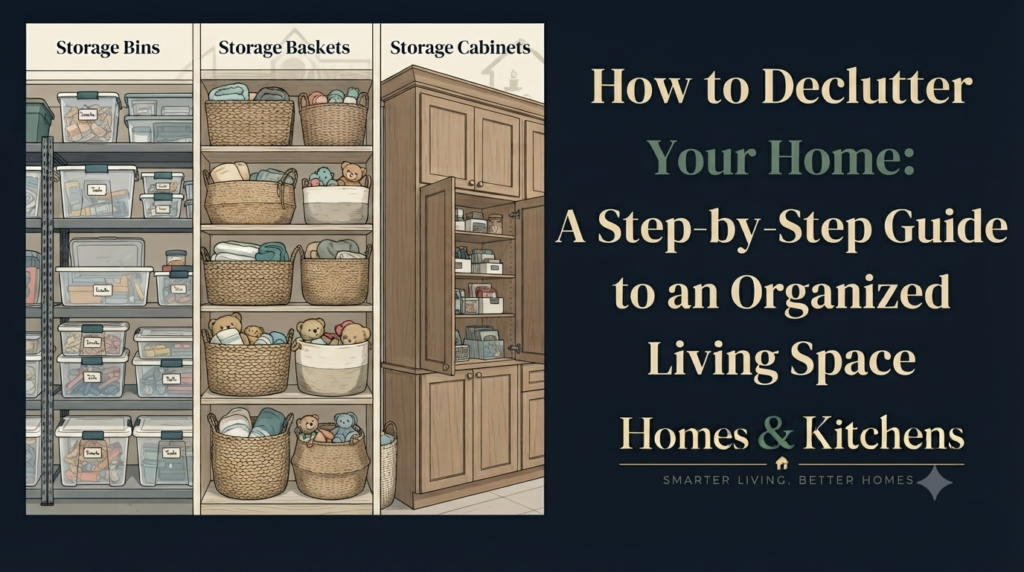
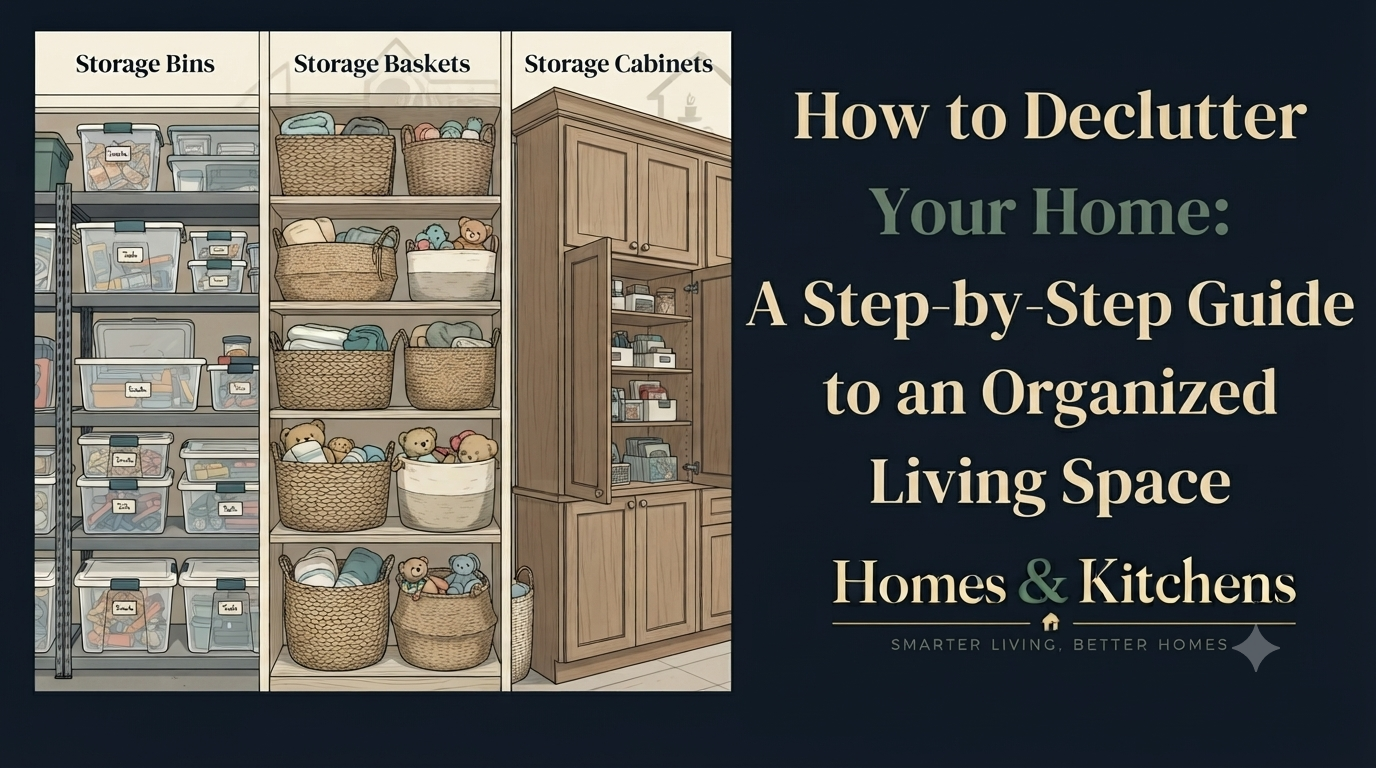
- Buying Storage Bins Too Soon: Purchasing bins before decluttering leaves you with containers that don’t match your actual inventory or spatial dimensions. Always purge first.
- Decluttering Without a Plan: Wandering aimlessly from room to room picking up random objects leads to severe decision fatigue and abandoned projects. Focus on one specific drawer or shelf at a time.
- Keeping Items Out of Guilt: Holding onto an expensive gift you never use or an heirloom that doesn’t fit your aesthetic out of obligation breeds resentment. Remember that the memory lives in your mind, not in the object.
- Doing Too Much Too Fast: Attempting to declutter an entire four-bedroom house over a single exhausting weekend guarantees physical burnout and abandoned messes. Pace yourself room by room.
Frequently Asked Questions
1. What is the easiest way to start decluttering when overwhelmed?
Start with a micro-zone like a single junk drawer, bathroom vanity, or bedside table. Completing a small space in fifteen minutes builds psychological momentum without causing burnout.
2. What room should you start with when decluttering a house?
Start with a low-stakes, high-impact zone like an entryway or guest bathroom. Avoid emotional spaces like bedrooms or sentimental storage areas until you have built up your decluttering stamina.
3. How do I let go of sentimental clutter without guilt?
Acknowledge that keeping an item out of guilt does not honor the person who gave it to you. Take a high-resolution photograph of the item for a digital memory album, then donate or discard the physical object.
4. What is the four-box decluttering method?
It is a sorting system where every item handled is immediately placed into one of four categories: Keep, Donate/Sell, Trash, or Relocate.
5. How do I stop family members from cluttering up shared spaces?
Establish designated micro-zones for each family member—such as personal drop-zone baskets by the door—and agree on a household rule that items left in common areas must be cleared nightly.
6. Should I sell my unwanted items or donate them?
If items are high-value (like electronics or designer clothing), selling them online or at a consignment shop can yield extra cash. For standard household goods, donating to local charities saves time and benefits your community immediately.
7. How often should I declutter my home?
Conduct a thorough, room-by-room organizational review twice a year during spring and fall seasonal transitions to adapt your living space to changing family routines.
8. What should I do with expired medications and chemicals?
Never toss liquid chemicals down the drain or dump medications in standard household trash. Take expired prescription drugs to a local pharmacy take-back box and hazardous chemicals to municipal recycling centers.
9. How do I handle books I have already read?
Unless a book holds deep personal reference value or is a treasured first edition, donate read books to local libraries, schools, or community book exchanges to free up valuable shelf space.
10. Is it better to declutter alone or with family?
Tackling personal spaces (like your closet or desk) is best done alone to avoid outside pressure. However, shared family spaces (like the living room or kitchen) require family participation to establish collective habits.
Key Takeaways
- Work Systematically: Tackle your home room by room and micro-zone by micro-zone to prevent decision fatigue and burnout.
- Purge Before You Purchase: Always complete the four-box sorting method to reduce inventory before buying any storage bins or organizers.
- Let Go of Guilt: Separate sentimental memories from physical objects by photographing cherished items before donating or discarding them.
- Commit to Maintenance Habits: Build simple, intuitive daily routines and seasonal resets to keep clutter from creeping back into your living space.
Final Recommendation
Decluttering your home is one of the most empowering self-care practices you can undertake, directly translating into reduced stress, improved focus, and a more peaceful living environment. Begin today by selecting a single small drawer or entryway drop-zone, applying the four-box method, and experiencing the immediate mental clarity that comes with intentional space. Once you taste that initial freedom, you will naturally feel motivated to carry those sustainable habits throughout the rest of your home.
Call to Action
Ready to take your home organization further? Explore our comprehensive Kitchen Cabinets Guide, review our expert advice on Kitchen Organization Ideas, or discover how to streamline your living quarters with our in-depth design breakdowns of the Best Storage Furniture for Small Homes and Apartments.