Introduction
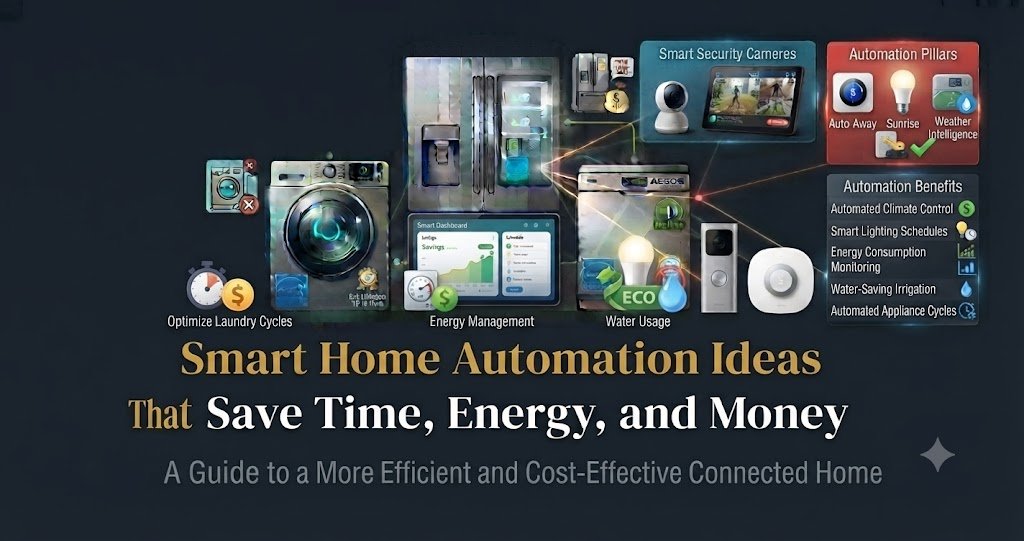
The true measure of a successful smart home isn’t how many flashing lights you can control from your phone, but how invisibly it improves your daily life. When configured thoughtfully, home automation acts as an efficient, tireless assistant that cuts down repetitive chores, minimizes wasted electricity, and lowers your monthly utility bills.
At Homes & Kitchens, our philosophy is Knowledge Before Products. Before purchasing random gadgets, you need to understand how specific automated routines operate, why they conserve resources, and how to implement them without cluttering your digital life.
Time-Saving Automations: Reclaiming Your Daily Minutes
Small, repetitive daily tasks—such as walking through the house to turn off lights, checking every window latch before bed, or adjusting window blinds against the afternoon sun—accumulate hours of wasted time over the course of a year.
The Multi-Device Morning and Bedtime Scenes
Instead of opening five different apps to prep your home for the day or wind down at night, trigger a coordinated scene with a single voice command or time-based schedule. At 7:00 AM, your bedroom smart blinds open gradually, your thermostat nudges up two degrees, and your kitchen coffee maker turns on. At bedtime, a single Goodnight command locks all exterior smart doors, turns off every indoor light, and arms your perimeter security sensors. This eliminates dozens of manual micro-actions and physical steps every single day.
Geofenced Arrival and Departure Routines
Smart home platforms can track your smartphone’s GPS coordinates to automate actions based on your physical location. When the last family member leaves the house, the system automatically switches your smart thermostat to eco-mode, turns off non-essential smart plugs, and activates security monitoring. As soon as the first person pulls into the driveway, exterior security lights illuminate and climate control resumes normal settings. You never have to worry about whether you forgot to adjust the AC or lock up when rushing out the door.
Energy-Saving Automations: Slashing Utility Bills
Energy efficiency is where home automation delivers its most compelling financial return. By ensuring appliances and climate systems only run when necessary, waste drops dramatically.
Presence-Based and Window-Aware Climate Control
Heating and cooling empty rooms is one of the largest sources of residential energy waste. Pair your smart thermostat with room occupancy sensors and window contact sensors. If a bedroom window is left open for more than five minutes, the HVAC vent or baseboard heater for that room automatically pauses. If no motion is detected in the house for two hours, the system shifts into energy-saving setback mode, trimming 8% to 15% off annual heating and cooling expenditures.
Automated Standby Power Elimination
Many electronic devices—such as television setups, gaming consoles, and desktop computer workstations—draw continuous power even when turned off. Use smart plugs on entertainment and office power strips programmed to cut electricity entirely between 2:00 AM and 6:00 AM, or whenever living room motion sensors indicate the area has been vacant for an extended period, eliminating silent phantom energy loads that quietly inflate monthly electric bills.
Money-Saving Automations: Smart Financial Protections
Beyond cutting utility consumption, automation can prevent catastrophic property damage and reduce long-term maintenance costs.
Automated Leak Detection and Water Shut-Off
Water damage is one of the most expensive household disasters, often starting from a slow plumbing leak behind a washing machine or under a kitchen sink. Place smart water leak sensors near high-risk areas like water heaters, washing machines, and under sinks. Link them to an automated smart water valve installed on your main home water supply line. If a drop of water touches a sensor, the main valve shuts off instantly and sends an emergency alert to your phone, preventing thousands of dollars in structural rot, flooring replacement, and mold remediation.
Automation Efficiency Matrix
| Automation Type | Primary Benefit | Implementation Cost | Estimated ROI / Value |
| Smart Thermostat Schedules | Energy & Money Savings | $80 – $250 | High (Pays for itself in 1–2 years) |
| Geofenced Arrival/Leaving | Convenience & Security | Free (Uses existing hub) | High (Eliminates daily user friction) |
| Smart Plug Standby Cutoffs | Energy Savings | $10 – $30 per plug | Moderate (Reduces phantom draw) |
| Water Leak Shut-Off Valves | Asset Protection | $100 – $400 | Massive (Prevents catastrophic damage) |
Step-by-Step Guide to Implementing Effective Automations
To build a streamlined automated home without creating software confusion, follow this implementation roadmap:
Audit Your Pain Points
Identify the chores you dislike most or the utility bills that sting the highest. Target those areas first rather than automating for the sake of technology.
Anchor to a Single Platform
Build your routines inside one unified application ecosystem, such as Apple Home, Google Home, or Amazon Alexa, to prevent conflicting commands between apps.
Keep Triggers Simple
Start with reliable triggers like time of day, sunrise/sunset, or basic location changes before experimenting with complex multi-sensor conditional logic.
Always Retain Manual Overrides
Ensure every automated light, blind, or thermostat can still be adjusted manually by hand if an automation fails or a guest visits.
Common Mistakes to Avoid
Over-Complicating Routines
Building complex chains of logic makes troubleshooting nearly impossible when something misfires. Keep automations straightforward and easy to test.
Ignoring Wi-Fi Load Limits
Running dozens of automated devices on an outdated router leads to delayed execution and dropped commands. Ensure your network can handle the traffic.
Failing to Test Safety Automations
If you set up automated water shut-off valves or security routines, test them manually once a month to verify sensors are communicating properly.
Frequently Asked Questions
What are the best smart home routines to save time?
The most effective time-saving routines bundle multiple manual actions into single triggers—such as a Goodnight routine that locks doors, turns off lights, and arms security, or morning schedules that open blinds and adjust thermostats automatically.
How can automation lower my electric bill?
Automations lower electric bills by removing human error. Smart thermostats prevent heating empty homes, smart lighting ensures fixtures never stay on in vacant rooms, and smart plugs cut off phantom power draws from idle electronics overnight.
Do I need coding experience to create smart home routines?
Not at all. Modern smart home platforms use intuitive, visual, rule-based interfaces that allow anyone to build powerful automated routines using simple smartphone menus.
Final Verdict & Recommendation
Smart home automation is most valuable when it operates quietly in the background to preserve your time, protect your assets, and conserve energy. By prioritizing high-impact routines—like smart climate adjustments, automated lighting schedules, and leak detection—you turn your residence into an efficient, responsive environment that pays dividends over time.
Key Takeaways
- Target Repetitive Tasks: Focus your automations on chores you repeat daily to reclaim lost time.
- Automate Resource Conservation: Use thermostats, window sensors, and smart plugs to actively shrink your utility bills.
- Prioritize Safety: Implement automated water shut-off and security triggers to protect your home from costly disasters.
Conclusion
The journey toward a fully optimized living space is not measured by the sheer volume of gadgets you manage, but by the seamless harmony they bring to your everyday routine. When technology operates with intention, it ceases to be a distraction and instead becomes an invisible foundation that supports your lifestyle, protects your financial resources, and safeguards your family home. Embracing smart home automation is ultimately an investment in peace of mind—freeing you from the mental friction of household micro-management so you can focus on what truly matters. As you implement these strategies, remember to start small, prioritize high-impact utility upgrades, and maintain a balanced approach that honors both digital convenience and timeless residential comfort for years to come.