Introduction
The conversation around smart home technology has matured dramatically. A few years ago, adding connected devices meant wrestling with competing apps, dropped Wi-Fi signals, and frustrating ecosystem lock-ins. Today, the landscape is defined by friction reduction, universal interoperability, and intelligent resource management.
The smart home market is driven not by gimmicky gadgets, but by practical systems that solve real household challenges. Whether you want to slash your monthly utility bills, automate your daily routines, or secure your property with precision, modern home automation offers unprecedented value—provided you approach it with a clear strategy.
At Homes & Kitchens, our philosophy is Knowledge Before Products. Before investing in hardware, you need to understand how unified ecosystems, open standards like Matter, and local processing are shaping the modern residence.
The Modern Smart Home Landscape: What Has Changed?
The core focus of home technology has shifted away from simply adding more devices to creating a unified, seamless living experience. Several major developments characterize today’s market:
- Unified Control Systems: Homeowners no longer want separate, disconnected applications for lighting, window shades, security cameras, climate control, and audio. Advanced operating platforms bridge residential components into a single, cohesive command center.
- Open Interoperability (Matter and Thread): The friction of brand-exclusive hardware is rapidly dissolving. Universal protocols expand support across cameras, smart closures, and energy monitors. Paired with low-power Thread mesh networks, devices communicate locally and instantly without congesting your primary home Wi-Fi.
- Intelligent Energy Management: Smart homes have moved past basic scheduled lighting. Contemporary platforms feature dedicated energy panels that monitor electricity consumption, track solar panel production, and automatically adjust climate zones or motorized sun shades to optimize thermal comfort and lower utility bills.
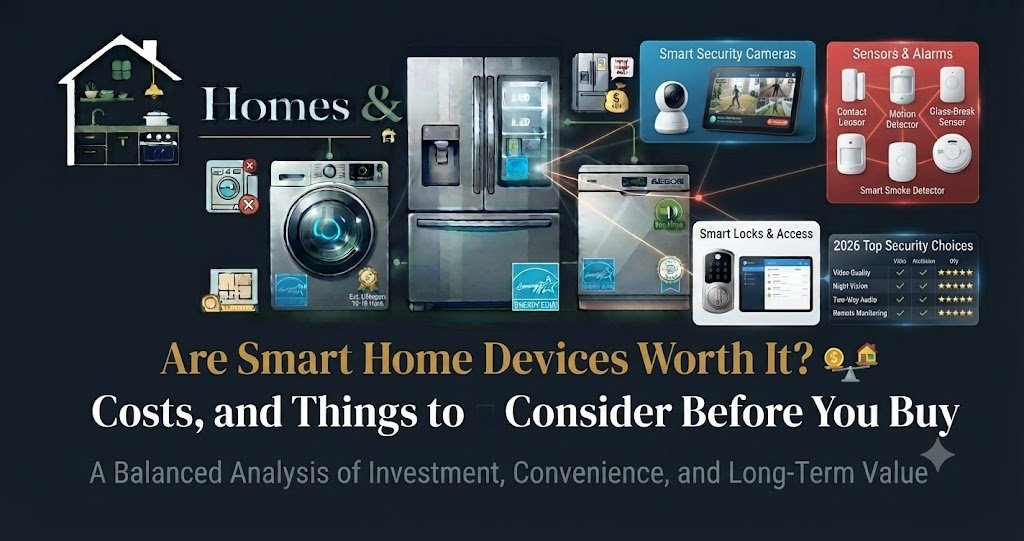
Are Smart Home Devices Worth It? The Real-World Return
Evaluating whether smart home technology is worth your hard-earned money requires looking past the marketing hype and examining practical utility.
Where Smart Devices Deliver High ROI
- Smart Thermostats: By learning your daily patterns and adjusting temperatures when rooms are empty, devices like the Nest or Ecobee reliably trim 8% to 15% off annual heating and cooling expenses.
- Smart Security & Monitored Entry: Real-time video doorbells and automated smart locks transform home security from a reactive police report into active, immediate deterrence. Knowing who is at the door before they knock provides unmatched peace of mind.
- Targeted Convenience: Small upgrades—such as automated morning blind routines or voice-controlled kitchen timers—compound over time to eliminate daily micro-frictions.
Where Caution Is Required
- Subscription Fatigue: Cloud storage fees for cameras and professional monitoring tiers can quietly inflate the long-term cost of ownership.
- Network Demands: A smart home is only as reliable as its underlying router. Without a robust mesh Wi-Fi network, heavy device loads lead to dropped connections and delayed responses.
Essential Categories: Top-Performing Upgrades
When building out a practical smart home system, focus your budget on categories that deliver immediate, tangible value.
- Climate Control and Comfort: Modern smart thermostats and automated window shading robots allow you to control solar heat gain dynamically. By closing blinds automatically during peak afternoon sun and adjusting HVAC output based on room occupancy, you maintain ideal indoor comfort while cutting energy waste.
- Security and Access Control: Traditional metal keys are steadily being replaced by smart deadbolts featuring fingerprint authentication and temporary guest passcodes. Combined with local storage security cameras, these devices give you complete oversight of your property without forcing you into expensive cloud contracts.
- Automated Floor Care and Air Quality: High-powered robot vacuums equipped with AI obstacle avoidance and self-emptying docks handle routine sweeping and mopping autonomously. Simultaneously, smart air purifiers monitor particulate levels in real time, ramping up filtration when indoor air quality drops.
Step-by-Step Strategy for Building Your Smart Home
To avoid buyer’s remorse and ecosystem clutter, follow a disciplined implementation path:
- Audit Your Network Infrastructure: Upgrade to a strong mesh Wi-Fi router capable of handling dozens of concurrent IoT connections before purchasing hardware.
- Choose a Core Ecosystem Hub: Anchor your home to a primary platform—such as Apple Home, Google Home, or Amazon Alexa—to keep your mobile device interface clean and organized.
- Insist on Matter and Thread: Verify that new purchases support universal standards so your devices remain flexible and future-proof.
- Prioritize Local Control: Select hardware that processes commands locally within your home network rather than routing every minor action through distant cloud servers. This ensures your smart home keeps working even during broadband outages.
Common Mistakes to Avoid
- Overcomplicating the Setup on Day One: Attempting to automate every room simultaneously leads to configuration fatigue. Start with a single high-impact area, such as the living room entertainment center or front entryway.
- Sacrificing Manual Switches: Never install smart switches or fixtures that completely eliminate physical manual controls. Family members and guests should always be able to turn on a light or adjust a thermostat by hand.
- Ignoring Data Privacy Policies: Review manufacturer privacy settings and enable two-factor authentication to protect your household data and camera feeds from unauthorized access.
Frequently Asked Questions
What are the primary smart home trends?
The top trends center on unified control systems that merge disparate apps into a single interface, open interoperability driven by Matter and Thread standards, and intelligent energy management panels that optimize electricity and solar resource usage.
How does the Matter standard improve smart homes?
Matter allows devices built by different manufacturers—whether Apple, Google, or Amazon—to communicate securely and natively on the same local network, eliminating the traditional barrier of brand-exclusive hardware.
Are smart home devices worth the money?
Yes, provided you target high-utility categories. Devices like smart thermostats deliver measurable savings on utility bills, while video doorbells and smart locks provide active security benefits that justify their upfront cost.
Do I need technical experience to set up a smart home?
Most contemporary smart devices are designed for plug-and-play installation via smartphone apps. However, complex multi-room automation networks or hardwired electrical switches may benefit from professional guidance.
Final Verdict & Recommendation
Smart home technology is a practical, highly customizable asset for modern homeowners and renters alike. By investing in devices that reduce energy consumption, secure entry points, and remove daily operational friction, you turn your residence into a responsive, efficient living environment.
Key Takeaways
- Knowledge Before Products: Align your tech purchases with your actual household habits and network capacity.
- Embrace Open Standards: Look for Matter and Thread compatibility to ensure long-term flexibility.
- Value Local Processing: Prioritize devices that retain functionality even when your internet connection drops.
Conclusion
Building a smart home is no longer about chasing fleeting tech trends; it is about establishing a reliable, resource-conscious foundation for everyday living. By keeping your setup unified, secure, and practical, you create a home that works smoothly in the background of your life.