Introduction
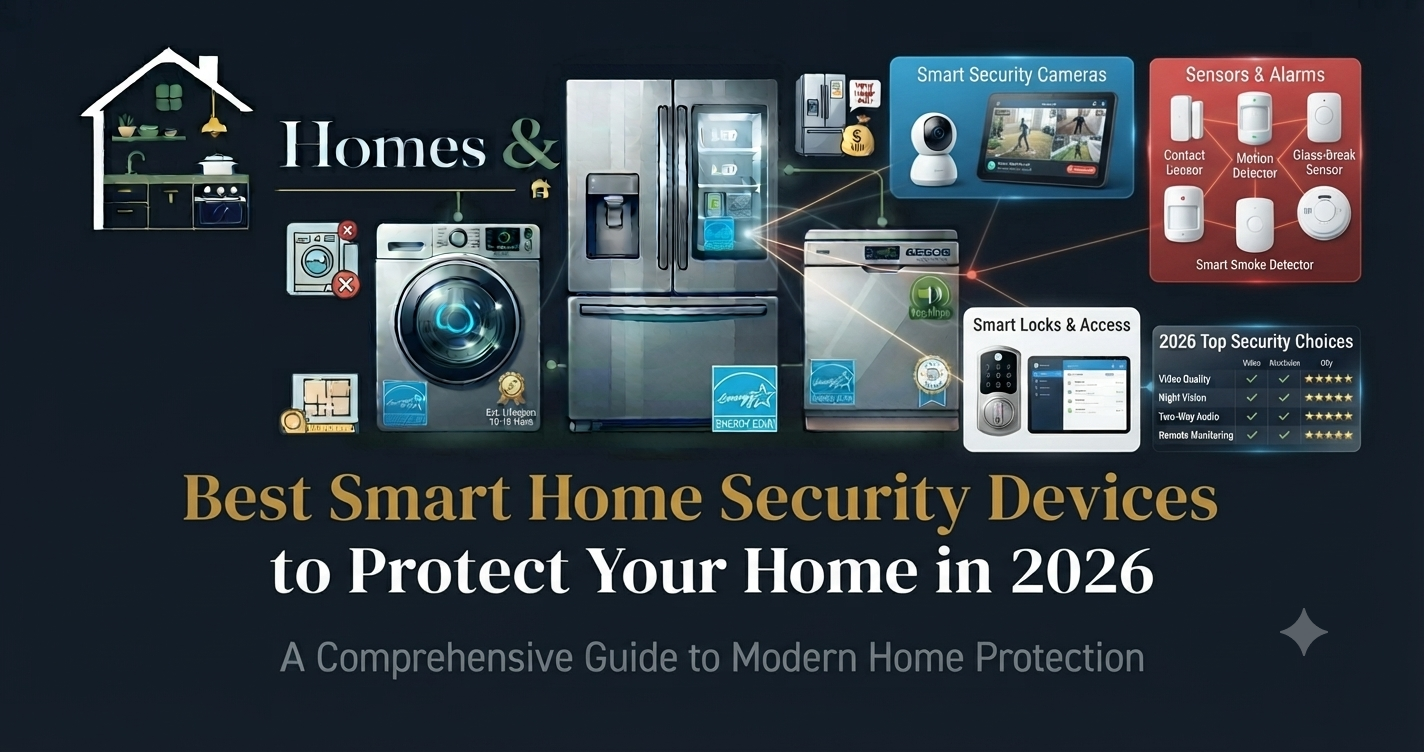
Securing a home used to mean relying on heavy deadbolts, barking dogs, and cumbersome hardwired alarm systems that triggered false alarms whenever a pet walked across the living room. Today, home protection is dynamic, intelligent, and deeply connected. Modern smart home security systems merge high-definition video, artificial intelligence, and instant smartphone alerts into a single cohesive network.
However, diving into the market of smart security can feel overwhelming. With hundreds of overlapping acronyms, proprietary cloud subscriptions, DIY kits versus professionally installed ecosystems, and varying levels of voice assistant compatibility, it is easy to make an expensive misstep.
At Homes & Kitchens, our philosophy is Knowledge Before Products. Before you spend a single dollar on a security camera bundle or a smart deadbolt, you need to understand how these systems operate, what features genuinely protect your household, and how to match the right hardware to your specific living situation.
Understanding Smart Home Security: Core Concepts
Before examining specific products, let’s break down the foundational anatomy of a modern smart security setup.
+-------------------------------------------------------------------------+
|                    THE SECURITY ECOSYSTEM LAYERS                        |
+---------------------+-------------------------+-------------------------+
| PERIMETER DEFENSE   | ENTRY CONTROL           | INTERIOR MONITORING     |
| • Video doorbells   | • Smart deadbolts       | • Motion sensors        |
| • Floodlight cams   | • Contact window sensors| • Glass-break detectors |
| • Yard signs        | • Geofencing locks      | • Environmental alarms  |
+---------------------+-------------------------+-------------------------+
1. Self-Monitoring vs. Professional Monitoring
- Self-Monitoring: You manage alerts entirely through your smartphone. When a motion sensor trips or a doorbell rings, a notification pops up on your screen. You decide whether to call emergency services. This route is typically subscription-free or requires a minimal cloud storage fee.
- Professional Monitoring: A certified monitoring center watches your system 24/7. If an alarm triggers (such as a smoke detector or a break-in sensor), a dispatcher contacts you. If you don’t respond, or if an emergency is confirmed, they dispatch local police, fire, or medical personnel. This requires a monthly subscription fee.
2. Local Storage vs. Cloud Storage
- Local Storage: Video footage and event logs are saved locally on a base station, hard drive, or microSD card inside your home. This keeps your data private and eliminates monthly fees.
- Cloud Storage: Footage streams directly to encrypted remote servers managed by the manufacturer. This allows you to access history even if the physical device is stolen, but it almost always requires a recurring subscription.
Evaluated Categories: Choosing Your System Type
Different living situations demand entirely different security approaches. What works for a sprawling suburban single-family home will overwhelm a compact city apartment.
1. Best Overall Smart Security System: SimpliSafe Home Security System
- Why We Picked It: SimpliSafe strikes the ultimate balance between flexible DIY installation, robust professional monitoring optionality, and zero long-term contracts. Its modular sensor ecosystem adapts easily to houses and large townhomes alike.
- Key Features: Wireless entry sensors, 1080p indoor/outdoor cameras, cellular backup, and optional Active Guard outdoor protection.
- Best For: Homeowners and renters seeking a reliable, high-performing system that doesn’t lock them into multi-year binding contracts.
2. Best Professional Installation & Smart Ecosystem: ADT Home Security (with Google Nest)
- Why We Picked It: ADT pairs its 150-year security legacy with industry-leading Google Nest hardware. The integration brings AI-powered facial recognition, 2K HDR video, and seamless voice orchestration via Nest Hubs directly into your security dashboard.
- Key Features: Professional installation by certified technicians, Google Nest Cams with familiar-face alerts, Yale smart locks, and the streamlined ADT+ app.
- Best For: Homeowners who want white-glove professional installation and deep smart home automation capabilities.
3. Best for Advanced Automation & Intruder Prevention: Vivint Smart Home
- Why We Picked It: Vivint delivers proactive security features designed to deter criminals before they break in, utilizing illuminated cameras, two-way audio warnings, and deeply integrated home automation.
- Key Features: 7-inch touchscreen smart hub, smart thermostats, automated garage door integration, and professional 24/7 monitoring.
- Best For: Tech enthusiasts looking for high-end automation and active outdoor deterrence.
4. Best Budget & Apartment-Friendly Option: Ring Alarm (2nd Gen)
- Why We Picked It: Ring offers affordable starter kits that rely on peel-and-stick magnetic sensors, making them entirely non-invasive for renters. It integrates smoothly with Amazon Alexa ecosystems.
- Key Features: Base station, keypad, contact sensors, motion detectors, and built-in Wi-Fi range extenders.
- Best For: Renters, DIY beginners, and budget-conscious households.
Comprehensive Feature Comparison Table
| Feature / Metric | SimpliSafe | ADT (Google Nest) | Vivint Smart Home | Ring Alarm |
| Installation Type | DIY or Professional | Professional (or ADT Blu DIY) | Professional | DIY (Peel-and-stick) |
| Contract Required | No | Yes (typically 36 months) | Optional / Financed equipment | No |
| Primary Camera Partner | Proprietary SimpliCam | Google Nest | Proprietary Vivint Cams | Ring & Blink |
| Voice Control Support | Alexa & Google Home | Google Assistant & Alexa | Alexa & Google Assistant | Alexa (Native) |
| Professional Monitoring | Optional ($18–$30/mo) | Included in monitored plans | Required with active plans | Optional (~$20/mo) |
| Best Suited For | Flexible DIY security | Premium monitored ecosystems | Advanced home automation | Budget-friendly apartments |
Essential Components of a Modern Smart Security Plan
To build a secure home, you must combine perimeter defense, entry points, and indoor awareness. Let’s examine each layer in detail.
1. Video Doorbells and Outdoor Cameras
Your first line of defense is visual deterrence. A smart video doorbell records package thieves and unwanted visitors while allowing you to answer the front door from anywhere in the world via your smartphone.
- What to look for: Look for a minimum resolution of 1080p (2K preferred), night vision, wide fields of view, and person/package detection filters to reduce false alerts from swaying tree branches or stray cats.
- Maintenance: Battery-powered cameras require recharging every 3 to 6 months unless paired with a dedicated solar panel. Hardwired models require a standard mechanical doorbell transformer (typically 16–24 VAC).
2. Smart Locks and Access Control
Physical keys are increasingly obsolete in smart home design. Smart deadbolts let you issue temporary passcodes to dog walkers, check if your door locked automatically when you left for work, and unlock your door with a fingerprint or smartphone tap.
- Key Safety Consideration: Always ensure any smart lock you install retains a physical mechanical key override or a 9V battery jump terminal on the exterior. Electronic failures do happen, and you never want to be locked out during a power outage.
3. Entry Sensors and Motion Detectors
Magnetic contact sensors placed on doors and windows trigger an immediate alert if forced open while the system is armed. Modern motion sensors use passive infrared (PIR) technology and often feature pet-immunity settings (ignoring pets under 40 to 50 pounds) to prevent false alarms.
Step-by-Step Installation & Setup Strategy
Whether you choose a DIY kit like SimpliSafe or a professionally installed system like ADT, following a structured setup sequence ensures optimal coverage.
+-------------------------------------------------------------------------+
|                    THE SECURITY SETUP SEQUENCE                          |
+---------------------+-------------------------+-------------------------+
| STEP 1              | STEP 2                  | STEP 3                  |
| • Map coverage zones| • Install base hub      | • Mount entry sensors   |
| • Test Wi-Fi signal | • Connect mobile app    | • Test alarm triggers   |
+---------------------+-------------------------+-------------------------+
- Map Your Vulnerability Points: Walk around your home’s exterior. Identify ground-floor windows, dark side doors, and blind spots not covered by streetlights.
- Establish a Strong Central Hub: Place your base station or security hub in a central location where Wi-Fi signal strength is robust and sirens can be heard clearly throughout the residence.
- Calibrate Camera Zones: Adjust motion detection zones on your outdoor cameras to exclude public sidewalks and roadways. This prevents your phone from buzzing constantly due to passing cars and pedestrians.
- Test the System Thoroughly: Put your system into “Test Mode” before activating live professional monitoring. Trigger every door sensor, window contact, and panic button to confirm signals reach the base station without interference.
Common Mistakes to Avoid in Smart Security
- Relying Solely on Weak Wi-Fi: Security cameras stream heavy video data. If your router is outdated, your cameras will drop connections during critical moments. Consider upgrading to a mesh Wi-Fi network.
- Neglecting Privacy Settings: Outdoor cameras facing your neighbor’s bedroom window violate privacy expectations and invite neighborhood friction. Use digital privacy masking zones in your camera app.
- Skipping Firmware Updates: Smart security hardware relies on continuous software patches to close cybersecurity vulnerabilities. Turn on automatic updates in your device companion app.
- Forgetting Battery Backups: Ensure your base station and internet router are plugged into an uninterruptible power supply (UPS) surge protector. Intursions often happen during storms or intentional power cuts.
Frequently Asked Questions
Do smart home security systems work during a power outage?
Most reputable systems include built-in cellular backup and rechargeable lithium-ion battery packs inside the base station. If your home loses power or internet, the system continues communicating via cellular networks. However, standard Wi-Fi-only cameras will lose connectivity unless your router is backed up by a battery surge protector.
Can I take my wireless security system with me if I move?
Yes. Systems designed for DIY installation—such as SimpliSafe or Ring Alarm—are entirely portable. You simply unplug the base station, remove the adhesive-backed sensors using dental floss or a plastic putty knife to preserve paint, and reinstall them in your new home.
Are smart locks easy to pick or hack?
Certified smart deadbolts (such as those carrying ANSI Grade 1 or Grade 2 ratings) feature physical lock cylinders just like traditional deadbolts, making them equally resistant to physical picking. Digital hacking is mitigated through encrypted wireless protocols (like Z-Wave, Zigbee, or secure Bluetooth), making physical forced entry far more likely than digital interception.
What is geofencing in home security?
Geofencing uses your smartphone’s GPS location to create a virtual boundary around your house. When you leave home, the system automatically reminds you to arm your security cameras and lock your doors. When you return, it disarms automatically.
Final Verdict & Recommendation
Securing your home is one of the most impactful investments you can make for your family’s peace of mind.
- Choose SimpliSafe if you want an affordable, highly rated DIY system that lets you control your monitoring level without binding multi-year contracts.
- Choose ADT if you prefer seamless professional installation paired with the advanced artificial intelligence of Google Nest cameras.
- Choose Vivint if your primary goal is high-end home automation paired with active, proactive intruder deterrence.
Key Takeaways
- Assess Your Risk Profile: Balance your need for professional emergency dispatch against the cost savings of self-monitoring.
- Prioritize Privacy and Storage: Decide whether you prefer local microSD storage or encrypted cloud backups.
- Secure Your Network: Pair your security hardware with a stable mesh Wi-Fi network and backup power supplies.
Conclusion
Modern smart home security delivers unprecedented control, visibility, and safety directly to the palm of your hand. By understanding the core differences between platforms, carefully mapping your home’s vulnerability points, and choosing equipment that matches your lifestyle, you create a robust protective shield for your household.
Ready to dive deeper into home improvement and organization? Explore our guides on Kitchen Remodel Cost Guide and Kitchen Lighting Ideas.