Introduction
Choosing kitchen countertops is one of the most high-impact decisions you will make during a home renovation. Beyond defining the aesthetic character of your kitchen, your countertops must withstand daily abuse—from hot pans and sharp knife blades to acidic spills, heavy appliances, and standing water.
With so many materials on the market, picking the right one can feel overwhelming. Homeowners often find themselves caught between the timeless luxury of natural stone, the low-maintenance resilience of engineered surfaces, and the warm, organic charm of wood.
This comprehensive guide breaks down the four most popular kitchen countertop materials: quartz, granite, marble, and butcher block. By examining their composition, real-world performance, maintenance requirements, and upfront costs, you will have the knowledge needed to make a confident investment that suits your lifestyle, cooking habits, and budget.
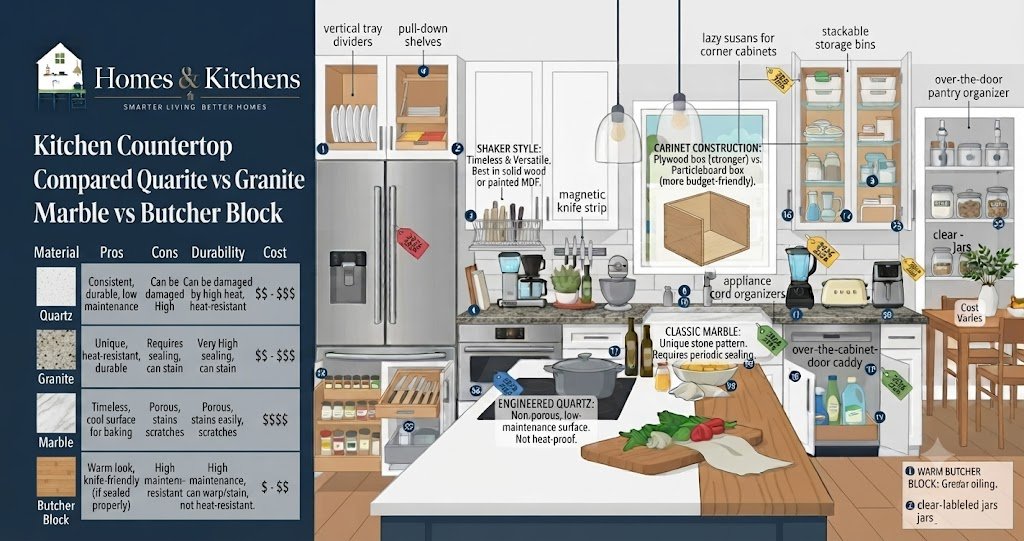
At-a-Glance Comparison Table
| Material | Cost per Sq. Ft. (Installed) | Durability | Heat Resistance | Maintenance Level | Best For |
| Quartz | $50 – $150+ | Extremely High | Moderate (Avoid direct heat) | Low (No sealing required) | Busy families, low-maintenance seekers |
| Granite | $45 – $200+ | Extremely High | High | Medium (Annual sealing) | Heavy cooks, traditional and modern homes |
| Marble | $60 – $250+ | Moderate | High | High (Frequent sealing, stains easily) | Bakers, luxury aesthetics, low-traffic areas |
| Butcher Block | $40 – $100+ | Moderate | Low to Moderate | High (Regular oiling/sanding) | Warm aesthetics, active prep cooks, budget DIYers |
1. Quartz Countertops
What Is Quartz?
Quartz countertops are an engineered stone product made from approximately 90 to 94 percent ground natural quartz crystals, bound together with high-performance polymer resins and pigments. Unlike granite or marble slabs, which are quarried directly from the earth, quartz is manufactured in industrial facilities under intense heat and pressure.
The Manufacturing Process and Composition
During fabrication, raw quartz aggregate is mixed with resins and colorants. This mixture is poured into molds and subjected to vacuum-vibrating compression. This process eliminates trapped air pockets, resulting in a completely non-porous, ultra-dense slab. Leading manufacturers like Caesarstone, Cambria, and Silestone dominate the market with proprietary manufacturing techniques that mimic the random beauty of natural stone while delivering superior structural consistency.
Pros and Cons
- Pros:
- Non-porous surface: Does not absorb liquids, making it naturally resistant to staining from wine, coffee, and oil.
- Zero maintenance: Never requires sealing, waxing, or specialized chemical treatments.
- Design consistency: Color and veining patterns remain uniform from sample to installation.
- High impact resistance: Highly resistant to chipping and cracking under normal kitchen use.
- Cons:
- Vulnerable to direct heat: Resins can scorch or discolor if exposed to hot pots and pans removed straight from the oven.
- Visible seams: While professionally installed seams are tight, they can sometimes be seen in larger kitchen layouts.
- Not UV stable: Prolonged exposure to direct, intense sunlight can cause fading or discoloration, making outdoor quartz installations problematic.
Cost Breakdown
You can expect to pay anywhere from $50 to $150+ per square foot installed. Premium custom veining, specialty edge profiles, and complex waterfall island designs will push costs toward the higher end of that spectrum.
Maintenance and Cleaning Routine
Maintaining quartz requires minimal effort. Simply wipe down the surface with warm water, a mild dish soap, and a soft microfiber cloth. Avoid harsh chemical cleaners, bleach, or abrasive scouring pads, as these can dull the factory finish.
2. Granite Countertops
What Is Granite?
Granite is a 100% natural igneous rock formed deep within the earth’s crust under immense heat and pressure over millions of years. It is mined globally—primarily in Brazil, India, Italy, and parts of North America—then cut into massive blocks and sliced into slabs for residential use.
The Natural Stone Appeal
Every granite slab is entirely unique. No two kitchens in the world will feature the exact same mineral deposits, crystalline structures, or movement lines. This organic variety makes granite a prized centerpiece for custom kitchen designs.
Pros and Cons
- Pros:
- Exceptional heat resistance: You can place hot baking sheets and pans directly on granite without fear of scorching.
- Durability: Resistant to scratching from knives (though cutting on granite will dull your blades) and heavy impact.
- High ROI: Natural stone adds recognized value and timeless appeal during home resale.
- Unique aesthetics: Offers organic depth and character that engineered products cannot fully replicate.
- Cons:
- Porosity: Unsealed or poorly sealed granite can absorb oils, juices, and liquids, leading to stubborn stains.
- Requires periodic sealing: Homeowners must reapply a penetrating stone sealer every 1 to 3 years.
- Inconsistent movement: What looks like a small sample in a showroom may look drastically different when an entire slab is installed in your kitchen.
Cost Breakdown
Granite prices typically range from $45 to $200+ per square foot installed. Standard-grade, locally available granite is often quite affordable, while exotic stones imported from distant quarries command premium prices.
Maintenance and Cleaning Routine
Clean granite daily using pH-balanced stone cleaners or mild soap and water. Test your sealant annually by dropping a small amount of water on the surface; if it beads up, your seal is intact. If it darkens the stone within a few minutes, it is time to reapply a fresh coat of stone sealer.
3. Marble Countertops
What Is Marble?
Marble is a metamorphic rock formed when limestone is subjected to high heat and pressure beneath the earth’s surface. Composed primarily of calcite or dolomite, marble is famous for its classic white background and dramatic, sweeping gray or gold veining.
The Realities of Living with Marble
While marble has graced European palaces and high-end modern kitchens for centuries, it is a softer, more porous stone than granite or quartz. It is prone to etching—a chemical reaction caused by acidic substances like lemon juice, vinegar, wine, and tomato sauce that dulls the polished finish of the stone.
Pros and Cons
- Pros:
- Unmatched elegance: Visually stunning appearance that exudes luxury and timeless charm.
- Cool surface temperature: Ideal for bakers, as cold marble keeps pastry dough and pie crusts from melting.
- Patina development: Many homeowners embrace the gentle aging and etching over time, viewing it as a record of family life.
- Cons:
- High maintenance: Requires vigilant wiping of spills and frequent application of professional-grade sealers.
- Susceptible to etching and scratching: Knives, dropped pans, and acidic foods will leave permanent marks on polished surfaces.
- Softer composition: More vulnerable to chipping along edges and corners compared to quartz or granite.
Cost Breakdown
Marble generally costs between $60 and $250+ per square foot installed. Iconic varieties like Italian Carrara are moderately priced, while rare Calacatta or Statuary marbles rank among the most expensive countertop materials available.
Maintenance and Cleaning Routine
Use dedicated marble cleaner or mild soap and warm water. Wipe up acidic spills immediately—never let citrus or wine sit overnight. Homeowners should plan to seal marble every 6 to 12 months.
4. Butcher Block Countertops
What Is Butcher Block?
Butcher block countertops are constructed from thick strips of hardwood glued together to create a solid, stable working surface. Commonly manufactured from maple, walnut, cherry, oak, and teak, butcher block brings natural warmth and industrial utility into residential kitchens.
Construction Styles: Edge Grain vs. End Grain vs. Face Grain
- Edge Grain: Strips are laid on their narrow edges. It provides a durable, smooth surface that balances economy with everyday resilience.
- End Grain: The wood is arranged so the cut ends face upward, creating a classic checkerboard pattern. This is the ultimate surface for heavy-duty food preparation and direct chopping because knife blades slip between the wood fibers rather than slicing across them.
- Face Grain: Strips are laid flat, highlighting the wide, beautiful grain patterns of the tree. While visually stunning, it scratches and gouges more easily and is best suited for low-traffic islands or dry bar areas.
Pros and Cons
- Pros:
- Warm, organic aesthetic: Instantly softens sterile kitchen designs and adds natural texture.
- Repairable: Scratches, burns, and knife marks can be easily sanded out and refinished.
- Built-in cutting board: End-grain and edge-grain blocks can double as functional prep surfaces when treated with food-safe oils.
- DIY friendly: Easier for homeowners to cut, fit, and install compared to heavy stone slabs.
- Cons:
- Water vulnerability: Standing water left near sinks can cause wood to warp, crack, or harbor mold and bacteria.
- High maintenance: Requires regular oiling or conditioning with mineral oil and beeswax to prevent drying out.
- Susceptible to damage: Dents, deep knife cuts, and stains occur readily if unmaintained.
Cost Breakdown
Butcher block is relatively budget-friendly, costing $40 to $100+ per square foot installed. DIY installation can reduce expenses significantly, as standard sections are available at local home improvement stores.
Maintenance and Cleaning Routine
Wash with mild soap and warm water, and dry thoroughly. Sanitize occasionally with a mixture of water and white vinegar or hydrogen peroxide. Never submerge butcher block in water, and oil the wood monthly using food-grade mineral oil.
Head-to-Head Comparisons
Quartz vs. Granite: The Modern Debate
Choosing between quartz and granite comes down to maintenance philosophy and lifestyle. Quartz offers absolute predictability, stain resistance, and zero upkeep, making it ideal for busy family kitchens. Granite offers organic heat resistance and unique natural movement, appealing to purists who value natural stone over engineered products.
- Choose Quartz if: You have young children, frequently spill coffee or red wine, and want a surface that looks pristine without annual sealing chores.
- Choose Granite if: You love heavy baking, frequently pull scorching cast-iron pans from the oven, and want a one-of-a-kind natural centerpiece.
Marble vs. Butcher Block: Character and Patina
Both marble and butcher block share one defining trait: they change and evolve with use. Marble develops chemical etch marks and cool, worn patinas, while butcher block accumulates warm knife scars, amber tones, and oil-rich color variations.
- Choose Marble if: You desire high-end luxury aesthetics and are willing to embrace gentle aging and careful spill management.
- Choose Butcher Block if: You want an authentic working kitchen vibe, enjoy tactile natural materials, and don’t mind routine oil maintenance.
Expert Buying Advice: How to Choose for Your Lifestyle
When evaluating countertop materials, examine how your household actually operates rather than relying solely on showroom aesthetics.
For Busy Families with Children
- Top Pick: Quartz.
- Why: Children drop cups, spill juice, and leave art supplies on kitchen islands. Quartz requires no special sealers, resists staining effortlessly, and handles daily chaos without requiring constant vigilance.
For Avid Cooks and Bakers
- Top Pick: Granite or Marble (paired with Butcher Block prep zones).
- Why: Serious cooks need high heat resistance for hot pans and stable prep stations. Pairing a granite perimeter with a dedicated marble pastry station or a butcher block chopping island gives you the ultimate culinary workstation.
For Budget-Conscious Remodelers and DIYers
- Top Pick: Butcher Block or Standard-Grade Granite.
- Why: Prefabricated granite slabs and standard butcher block sections can be sourced affordably and installed without specialized stone-cutting equipment, saving thousands in labor costs.
Common Countertop Mistakes to Avoid
- Skipping Sample Testing: Always bring physical samples home. View them under your kitchen’s specific lighting conditions—both morning sunlight and evening under-cabinet lighting—before ordering full slabs.
- Ignoring Sink Integration: Undermount sinks require sturdy countertop materials and proper structural support. Ensure your fabricator accounts for sink weight, especially with heavy stone installations.
- Overlooking Edge Profiles: Ornate, heavily routed edge profiles (like ogee or waterfall edges) collect dust, trap crumbs, and increase overall fabrication costs. Clean, simple eased or mitered edges offer timeless appeal.
- Neglecting Sealing Schedules: If you choose natural stone or wood, failing to maintain your protective seal or oil coats will lead to permanent staining and water damage.
Frequently Asked Questions
1. Which countertop material is the most durable?
Engineered quartz and granite are tied for overall durability. Both resist cracking, chipping, and scratching under normal residential use. However, quartz is superior in stain resistance because it is non-porous.
2. Can I place hot pans directly on quartz countertops?
No. While quartz can tolerate moderate warmth, high heat from scorching pots and pans can melt or discolor the polymer resins binding the stone, leaving permanent burn marks. Always use trivets.
3. Do quartz countertops fade in sunlight?
Yes. The resins used in quartz manufacturing can yellow or fade when exposed to intense, direct ultraviolet light over long periods. Quartz is best kept out of direct sunlight or outdoor kitchens.
4. How often should granite be sealed?
Most granite countertops should be sealed every 1 to 3 years. Perform the water-drop test annually: if water absorbs into the stone within 15 minutes, it is time to reapply a penetrating sealer.
5. Can marble be repaired if it gets etched?
Yes. Unlike stains, which sit on or near the surface, an etch is actual physical damage where the stone’s polish has been eaten away. Professional stone restorers can hone and repolish marble to remove etches.
6. Is butcher block sanitary for food preparation?
Yes. Studies conducted by the Food Safety Network demonstrate that wood has natural antimicrobial properties. Wood fibers draw moisture away from bacteria, causing them to die. Regular cleaning with soap and warm water keeps butcher block safe.
7. What is the cheapest kitchen countertop material?
Laminate is generally the least expensive material on the market ($20–$50 per square foot). Among solid and natural surfaces, standard butcher block and entry-level granite offer the best balance of affordability and long-term value.
8. Which countertop adds the most resale value?
Granite and quartz consistently rank as the top investments for home resale value. Buyers recognize both materials as premium, durable upgrades that require minimal upfront renovation work.
9. How do I clean daily messes on quartz?
Use mild dish soap, warm water, and a soft cloth. For stubborn grease or dried food, use a non-abrasive plastic scraper and a specialized cleaner designed for engineered stone.
10. Can I install kitchen countertops myself?
Standard butcher block and laminate countertops are well-suited for experienced DIYers. However, heavy stone slabs like quartz, granite, and marble require specialized lifting equipment, precise measurements, and professional installation teams.
Final Verdict & Key Takeaways
Your kitchen countertops should balance beauty, durability, and practical maintenance. There is no single “best” material—only the right material for your home and lifestyle.
- Quartz wins on low maintenance and stain resistance.
- Granite wins on natural heat resistance and unique character.
- Marble wins on timeless luxury and pastry preparation.
- Butcher Block wins on warmth, repairability, and budget-friendly charm.
Evaluate your cooking habits, budget constraints, and cleaning routine carefully before visiting a showroom or requesting final fabrication quotes.
Call to Action
Ready to dive deeper into your kitchen renovation project? Explore our related guides on Kitchen Remodel Cost Guide, Kitchen Cabinets Guide, and Kitchen Organization Ideas to plan your dream kitchen layout from the ground up.